


Current and projected burden of heart failure in the Australian adult population: a substantive but still ill-defined major health issue
- PMID: 27654659
- PMCID: PMC5031369
- DOI: 10.1186/s12913-016-1748-0
Current and projected burden of heart failure in the Australian adult population: a substantive but still ill-defined major health issue
Abstract
Background: Comprehensive epidemiological data to describe the burden of heart failure (HF) in Australia remain lacking despite its importance as a major health issue. Herewith, we estimate the current and future burden of HF in Australia using best available data.
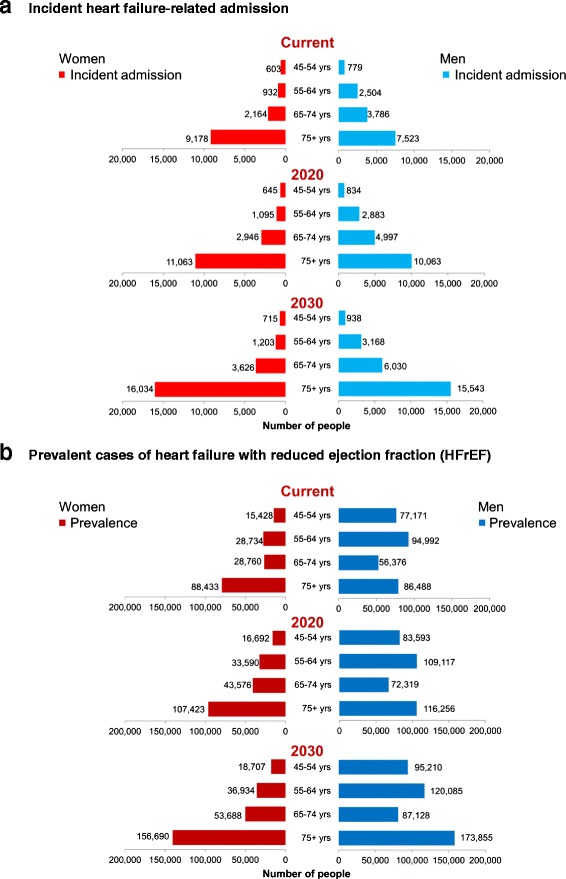
Methods: Australian-specific and the most congruent international epidemiological and health utilisation data were applied to the Australian population (adults aged ≥ 45 years, 8.9 of 22.7 million total population in 2014) on an age and sex-specific basis. We estimated the current incident and prevalent cases of clinically overt/symptomatic HF (predominately those with reduced ejection fraction), hospital activity (diagnosis of HF as a primary or secondary reason for admission) and health care costs in 2014 and future prevalence and burden of HF projected to 2030.
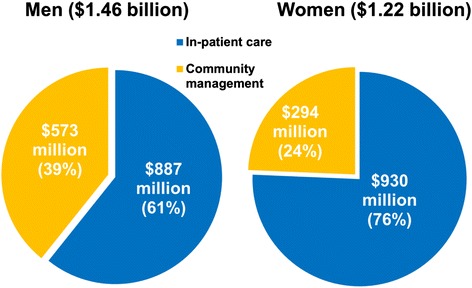
Results: We estimated that over 61,000 (6.9 per 1000 person-years) adult Australians aged ≥ 45 years (58 % women) are diagnosed with HF with clinically overt signs and symptoms every year. On a conservative basis, 480,000 (6.3 %, 95 % CI 2.6 to 10.0 %) Australians (66 % men) are now affected by the syndrome with > 150,000 hospitalisations in excess of 1 million days in hospital per annum. The annual cost of managing HF in the community is approximately $900 million and nearly $2.7 billion ($1.5 versus $1.2 billion, men versus women) when considering the additional cost of in-patient care. We predict that the prevalence and future burden of HF will continue to increase over the next 10-15 years to nearly 750,000 people with an estimated annual health care cost of $3.8 billion.
Conclusions: Australia is not immune to the growing magnitude and implications of a sustained epidemic of HF in an ageing population. However, its public health and economic burden will remain ill-defined until more definitive Australian-specific data are generated.
Keywords: Economic burden; Heart failure; Incidence; Prevalence.
Figures


References
-
- Paulus WJ, Tschope C, Sanderson JE, Rusconi C, Flachskampf FA, Rademakers FE, et al. How to diagnose diastolic heart failure: a consensus statement on the diagnosis of heart failure with normal left ventricular ejection fraction by the Heart Failure and Echocardiography Associations of the European Society of Cardiology. Eur Heart J. 2007;28(20):2539–2550. doi: 10.1093/eurheartj/ehm037. - DOI - PubMed
LinkOut - more resources
Full Text Sources
Other Literature Sources
Research Materials
Miscellaneous
