


Economic Burden of Disease-Associated Malnutrition at the State Level
- PMID: 27655372
- PMCID: PMC5031313
- DOI: 10.1371/journal.pone.0161833
Economic Burden of Disease-Associated Malnutrition at the State Level
Abstract
Background: Disease-associated malnutrition has been identified as a prevalent condition, particularly for the elderly, which has often been overlooked in the U.S. healthcare system. The state-level burden of community-based disease-associated malnutrition is unknown and there have been limited efforts by state policy makers to identify, quantify, and address malnutrition. The objective of this study was to examine and quantify the state-level economic burden of disease-associated malnutrition.
Methods: Direct medical costs of disease-associated malnutrition were calculated for 8 diseases: Stroke, Chronic Obstructive Pulmonary Disease, Coronary Heart Failure, Breast Cancer, Dementia, Musculoskeletal Disorders, Depression, and Colorectal Cancer. National disease and malnutrition prevalence rates were estimated for subgroups defined by age, race, and sex using the National Health and Nutrition Examination Survey and the National Health Interview Survey. State prevalence of disease-associated malnutrition was estimated by combining national prevalence estimates with states' demographic data from the U.S. Census. Direct medical cost for each state was estimated as the increased expenditures incurred as a result of malnutrition.
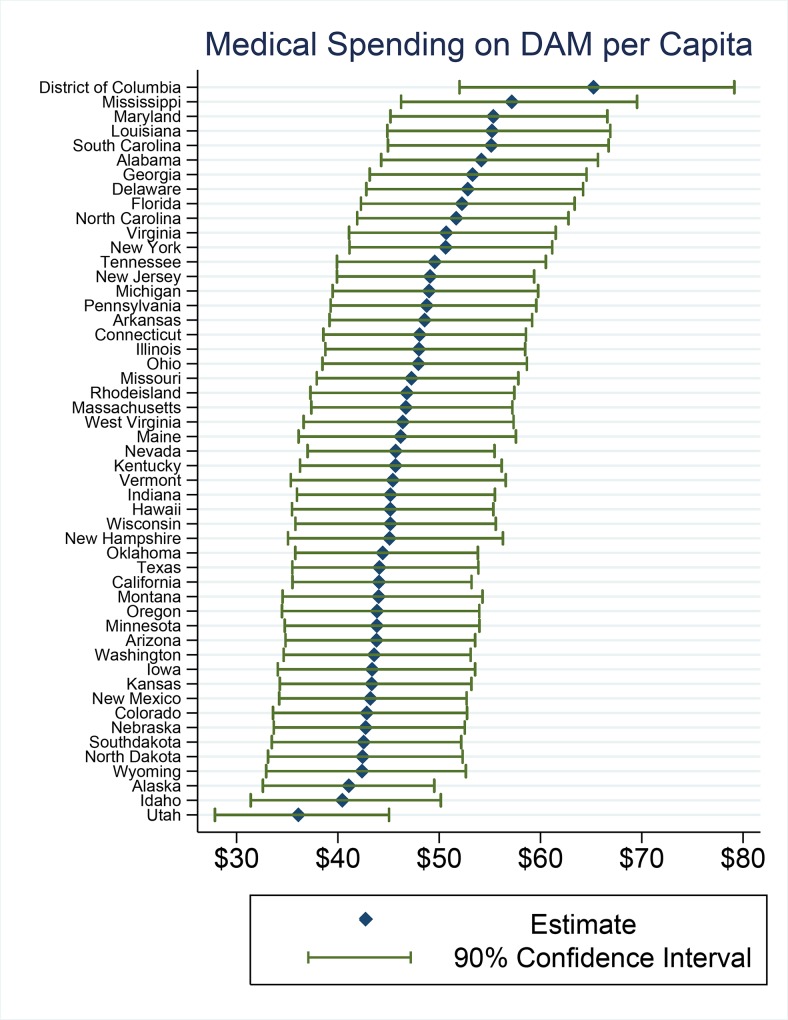
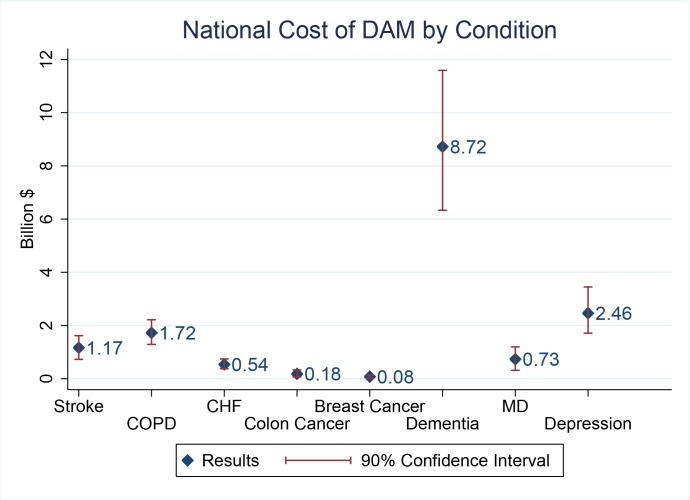
Principal findings: Direct medical costs attributable to disease-associated malnutrition vary among states from an annual cost of $36 per capita in Utah to $65 per capita in Washington, D.C. Nationally the annual cost of disease-associated malnutrition is over $15.5 billion. The elderly bear a disproportionate share of this cost on both the state and national level.
Conclusions: Additional action is needed to reduce the economic impact of disease-associated malnutrition, particularly at the state level. Nutrition may be a cost-effective way to help address high health care costs.
Conflict of interest statement
I have read the journal's policy and the authors of this manuscript have the following competing interests: KD SG MA are employed by Abbott Nutrition as previously disclosed. This does not alter our adherence to PLOS ONE policies on sharing data and materials.
Figures
References
-
- Jensen G, Mirtallo J, Compher C, Dhaliwal R, Forbes A, Grijalba R, et al. Adult starvation and disease-relate malnutrition: a proposal for etiology-based diagnosis in the clinical practice setting from the International Consensus Guideline Committee. JPEN J Parenter Enteral Nutr. 2010;34(2):156–159. 10.1177/0148607110361910 - DOI - PubMed
-
- Gallagher D, Visser M, De Meersman R, Sepulveda D, Baumgartner R, Pierson R, et al. Appendicular skeletal muscle mass: effects of age, gender, and ethnicity. J Appl Physiol (1985). 1997; 83(1):229–239. - PubMed
LinkOut - more resources
Full Text Sources
Other Literature Sources
