


Rewiring of Developing Spinal Nociceptive Circuits by Neonatal Injury and Its Implications for Pediatric Chronic Pain
- PMID: 27657152
- PMCID: PMC5039476
- DOI: 10.3390/children3030016
Rewiring of Developing Spinal Nociceptive Circuits by Neonatal Injury and Its Implications for Pediatric Chronic Pain
Abstract
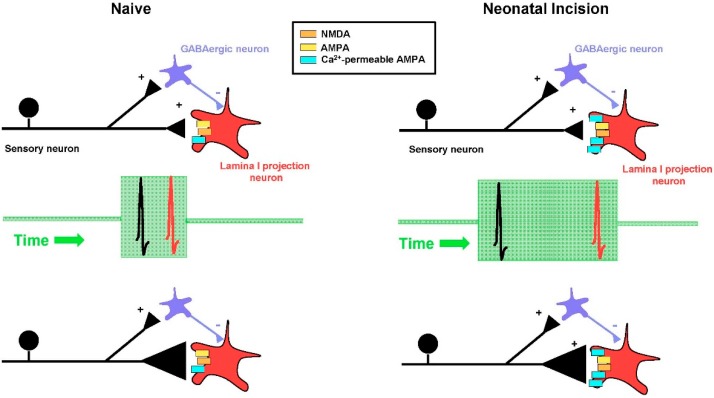
Significant evidence now suggests that neonatal tissue damage can evoke long-lasting changes in pain sensitivity, but the underlying cellular and molecular mechanisms remain unclear. This review highlights recent advances in our understanding of how injuries during a critical period of early life modulate the functional organization of synaptic networks in the superficial dorsal horn (SDH) of the spinal cord in a manner that favors the excessive amplification of ascending nociceptive signaling to the brain, which likely contributes to the generation and/or maintenance of pediatric chronic pain. These persistent alterations in synaptic function within the SDH may also contribute to the well-documented "priming" of developing pain pathways by neonatal tissue injury.
Keywords: GABA; dorsal horn; glutamate; glycine; incision; neonate; pain; rodent; spinal cord; synapse.
Conflict of interest statement
The author declares no conflict of interest.
Figures
References
-
- Sivilotti L., Woolf C.J. The contribution of GABAA and glycine receptors to central sensitization: Disinhibition and touch-evoked allodynia in the spinal cord. J. Neurophysiol. 1994;72:169–179. - PubMed
Publication types
Grants and funding
LinkOut - more resources
Full Text Sources
Other Literature Sources
