A case report of Grover's disease from immunotherapy-a skin toxicity induced by inhibition of CTLA-4 but not PD-1
- PMID: 27660709
- PMCID: PMC5028978
- DOI: 10.1186/s40425-016-0157-6
A case report of Grover's disease from immunotherapy-a skin toxicity induced by inhibition of CTLA-4 but not PD-1
Erratum in
-
Erratum to: A case report of Grover's disease from immunotherapy-a skin toxicity induced by inhibition of CTLA-4 but not PD-1.J Immunother Cancer. 2017 Jan 18;5:7. doi: 10.1186/s40425-017-0208-7. eCollection 2017. J Immunother Cancer. 2017. PMID: 28116090 Free PMC article.
Abstract
Background: Immune related adverse events (irAEs) are common side effects of checkpoint inhibitory (CPI) therapies targeting CTLA-4 and PD-1/PD-L1. Grover's disease is an uncommon dermatologic condition with unclear pathogenesis previously reported as an irAE with ipilimumab.
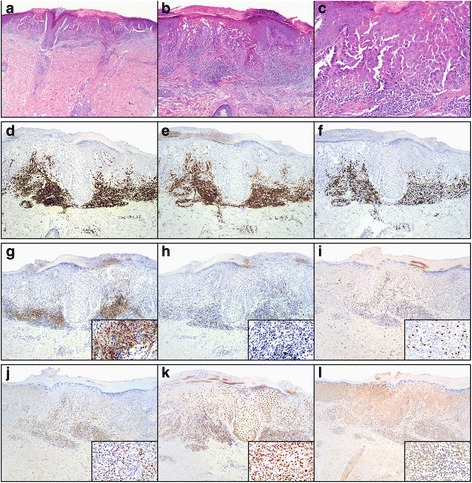
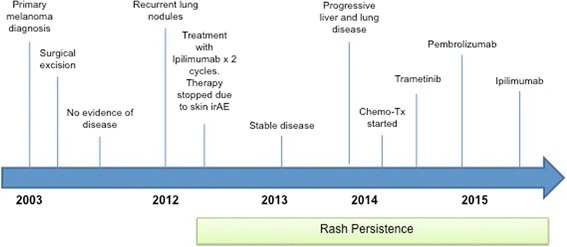
Case presentation: We report an additional case of ipilimumab-induced Grover's disease. Interestingly, this dermatologic side effect did not appear with use of anti-PD-1 therapy in our patient. Immune analysis was performed and suggests a possible role of Th2 cells in its patholgenesis.
Conclusion: This case suggests that Grover's disease is an irAE induced by Ipilimumab. Our immune analysis suggests that Th2 cells may be pathogenic mediators which warrants further study.
Figures
References
-
- Guana AL, Cohen PR. Transient acantholytic dermatosis in oncology patients. J Clin Oncol. 1994;12(8):1703–1709. - PubMed
LinkOut - more resources
Full Text Sources
Other Literature Sources
Research Materials