


Effect of the Children's Health Activity Motor Program on Motor Skills and Self-Regulation in Head Start Preschoolers: An Efficacy Trial
- PMID: 27660751
- PMCID: PMC5014876
- DOI: 10.3389/fpubh.2016.00173
Effect of the Children's Health Activity Motor Program on Motor Skills and Self-Regulation in Head Start Preschoolers: An Efficacy Trial
Abstract
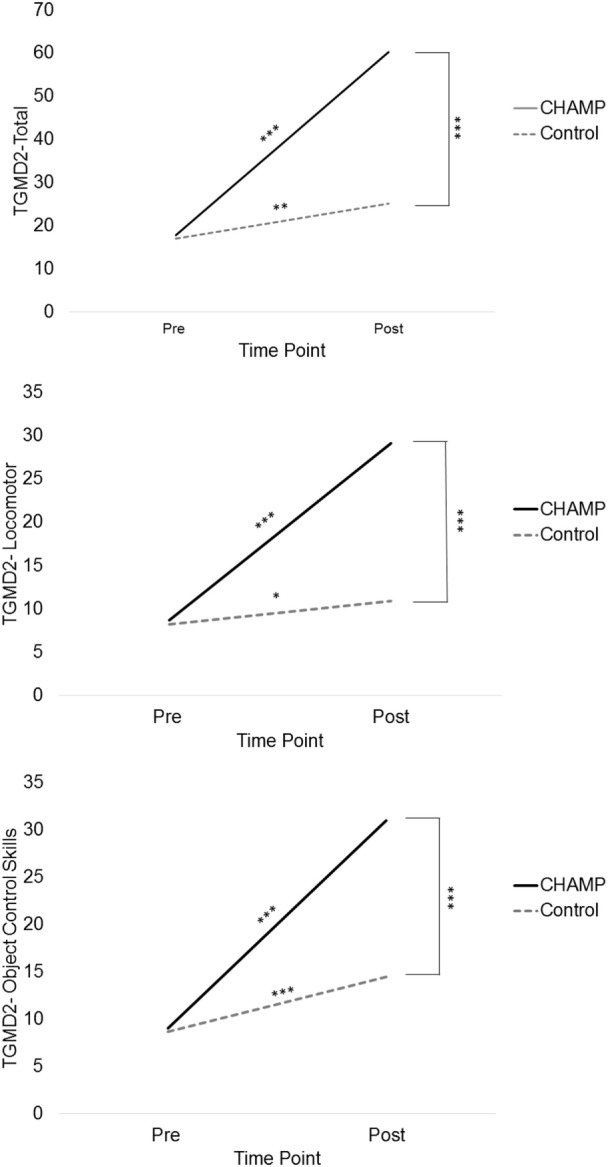
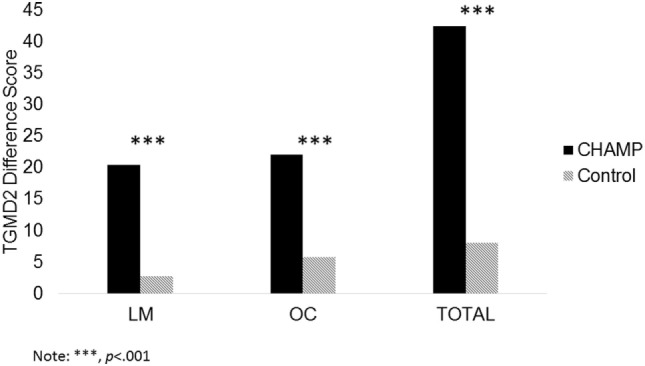
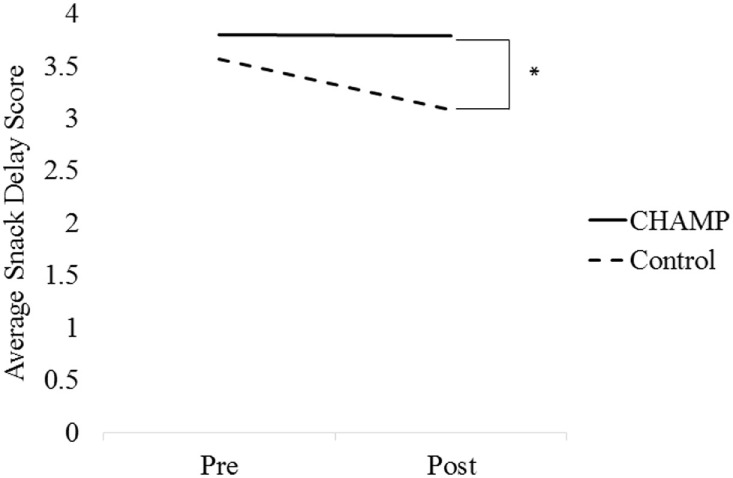
Self-regulatory skills are broadly defined as the ability to manage emotions, focus attention, and inhibit some behaviors while activating others in accordance with social expectations and are an established indicator of academic success. Growing evidence links motor skills and physical activity to self-regulation. This study examined the efficacy of a motor skills intervention (i.e., the Children's Health Activity Motor Program, CHAMP) that is theoretically grounded in Achievement Goal Theory on motor skill performance and self-regulation in Head Start preschoolers. A sample of 113 Head Start preschoolers (Mage = 51.91 ± 6.5 months; 49.5% males) were randomly assigned to a treatment (n = 68) or control (n = 45) program. CHAMP participants engaged in 15, 40-min sessions of a mastery climate intervention that focused on the development of motor skills over 5 weeks while control participants engaged in their normal outdoor recess period. The Delay of Gratification Snack Task was used to measure self-regulation and the Test of Gross Motor Development-2nd Edition was used to assess motor skills. All measures were assessed prior to and following the intervention. Linear mixed models were fit for both self-regulation and motor skills. Results revealed a significant time × treatment interaction (p < 0.001). In regard to motor skills, post hoc comparisons found that all children improved their motor skills (p < 0.05), but the CHAMP group improved significantly more than the control group (p < 0.001). Children in CHAMP maintained their self-regulation scores across time, while children in the control group scored significantly lower than the CHAMP group at the posttest (p < 0.05). CHAMP is a mastery climate movement program that enhance skills associated with healthy development in children (i.e., motor skills and self-regulation). This efficacy trial provided evidence that CHAMP helped maintain delay of gratification in preschool age children and significantly improved motor skills while participating in outdoor recess was not effective. CHAMP could help contribute to children's learning-related skills and physical development and subsequently to their academic success.
Keywords: delay of gratification; intervention; motor; motor skills; school readiness.
Figures
References
-
- United States Department of Health and Human Services. Head Start Impact Study: First Year Findings. Washington, DC: (2005).
-
- Douglas-Hall A, Chau M, Koball H. Basic Facts about Low-Income Children: Birth to Age 18. New York: National Center for Children in Poverty; (2008).
-
- Rimm-Kaufman SE, Pianta RC, Cox MJ. Teachers’ judgments of problems in the transition to kindergarten. Early Child Res Q (2000) 15(2):147–66. 10.1016/S0885-2006(00)00049-1 - DOI
-
- Ryan R, Fauth R, Brooks-Gunn J. Childhood poverty: implications for school readiness and early childhood education. In: Spodek B, Saracho ON, editors. Handbook of Research on the Education of Children [Internet]. Mahwah, NJ: Erlbaum Associates; (2006). p. 323–46.
LinkOut - more resources
Full Text Sources
Other Literature Sources
Medical
