A three-dimensional finite element analysis of molar distalization with a palatal plate, pendulum, and headgear according to molar eruption stage
- PMID: 27668192
- PMCID: PMC5033768
- DOI: 10.4041/kjod.2016.46.5.290
A three-dimensional finite element analysis of molar distalization with a palatal plate, pendulum, and headgear according to molar eruption stage
Abstract
Objective: This study aimed to (1) evaluate the effects of maxillary second and third molar eruption status on the distalization of first molars with a modified palatal anchorage plate (MPAP), and (2) compare the results to the outcomes of the use of a pendulum and that of a headgear using three-dimensional finite element analysis.
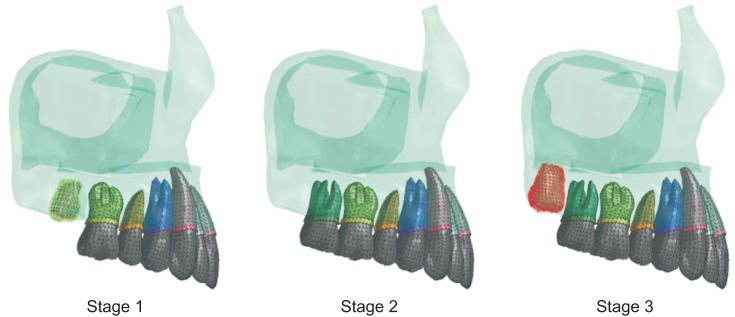
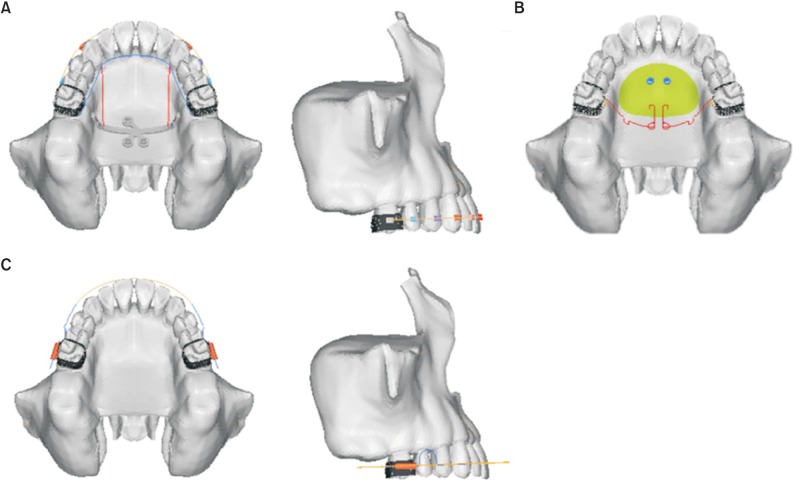
Methods: Three eruption stages were established: an erupting second molar at the cervical one-third of the first molar root (Stage 1), a fully erupted second molar (Stage 2), and an erupting third molar at the cervical one-third of the second molar root (Stage 3). Retraction forces were applied via three anchorage appliance models: an MPAP with bracket and archwire, a bone-anchored pendulum appliance, and cervical-pull headgear.
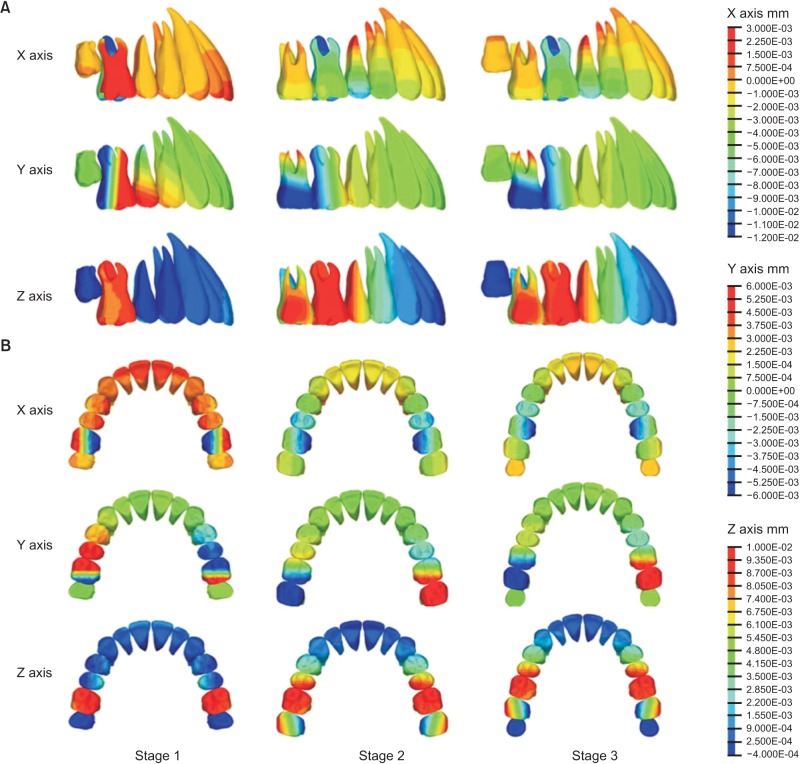
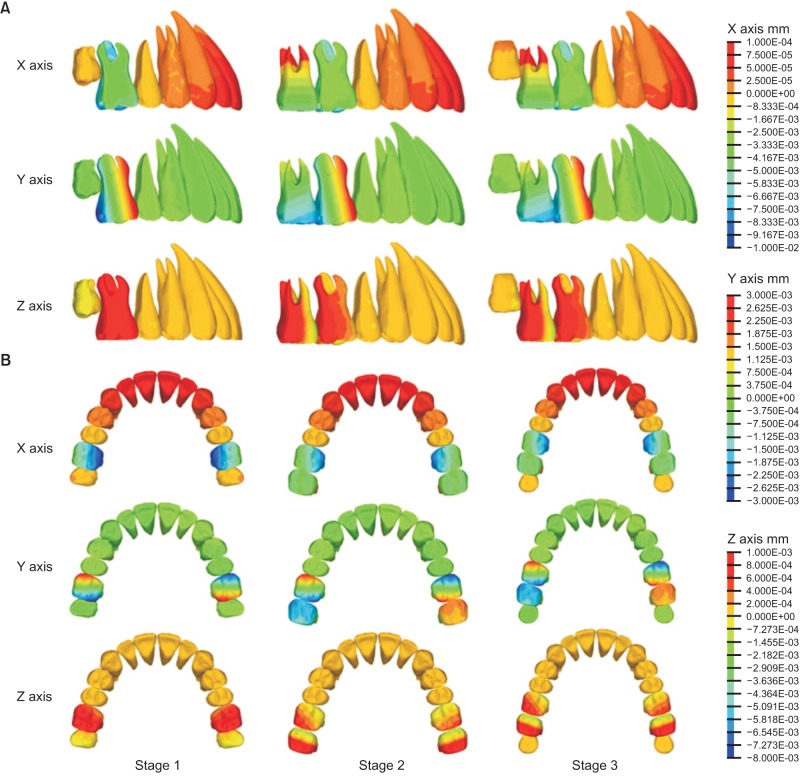
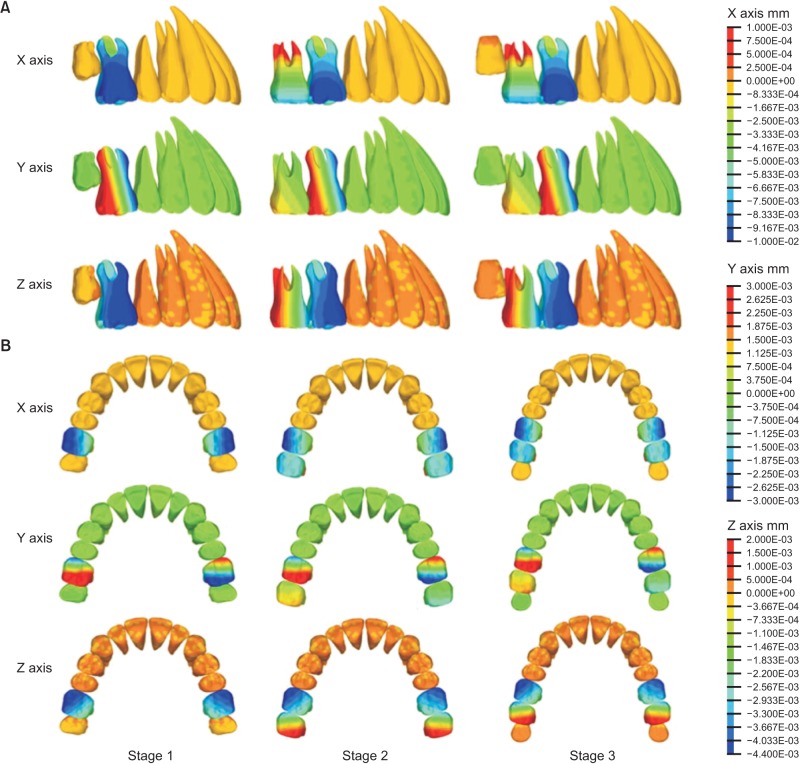
Results: An MPAP showed greater root movement of the first molar than crown movement, and this was more noticeable in Stages 2 and 3. With the other devices, the first molar showed distal tipping. Transversely, the first molar had mesial-out rotation with headgear and mesial-in rotation with the other devices. Vertically, the first molar was intruded with an MPAP, and extruded with the other appliances.
Conclusions: The second molar eruption stage had an effect on molar distalization, but the third molar follicle had no effect. The application of an MPAP may be an effective treatment option for maxillary molar distalization.
Keywords: Class II; Distalizing; Headgear; Palatal plate.
Conflict of interest statement
The authors report no commercial, proprietary, or financial interest in the products or companies described in this article.
Figures
Comment in
-
Reader's Forum.Korean J Orthod. 2016 Nov;46(6):343-344. doi: 10.4041/kjod.2016.46.6.343. Epub 2016 Nov 14. Korean J Orthod. 2016. PMID: 27896207 Free PMC article. No abstract available.
References
-
- Gianelly AA. Distal movement of the maxillary molars. Am J Orthod Dentofacial Orthop. 1998;114:66–72. - PubMed
-
- Kinzinger GS, Fritz UB, Sander FG, Diedrich PR. Efficiency of a pendulum appliance for molar distalization related to second and third molar eruption stage. Am J Orthod Dentofacial Orthop. 2004;125:8–23. - PubMed
-
- Karlsson I, Bondemark L. Intraoral maxillary molar distalization. Angle Orthod. 2006;76:923–929. - PubMed
-
- Egolf RJ, BeGole EA, Upshaw HS. Factors associated with orthodontic patient compliance with intraoral elastic and headgear wear. Am J Orthod Dentofacial Orthop. 1990;97:336–348. - PubMed
-
- Lima Filho RM, Lima AL, de Oliveira Ruellas AC. Longitudinal study of anteroposterior and vertical maxillary changes in skeletal class II patients treated with Kloehn cervical headgear. Angle Orthod. 2003;73:187–193. - PubMed
LinkOut - more resources
Full Text Sources
Other Literature Sources