


Excess Folic Acid Increases Lipid Storage, Weight Gain, and Adipose Tissue Inflammation in High Fat Diet-Fed Rats
- PMID: 27669293
- PMCID: PMC5083982
- DOI: 10.3390/nu8100594
Excess Folic Acid Increases Lipid Storage, Weight Gain, and Adipose Tissue Inflammation in High Fat Diet-Fed Rats
Abstract
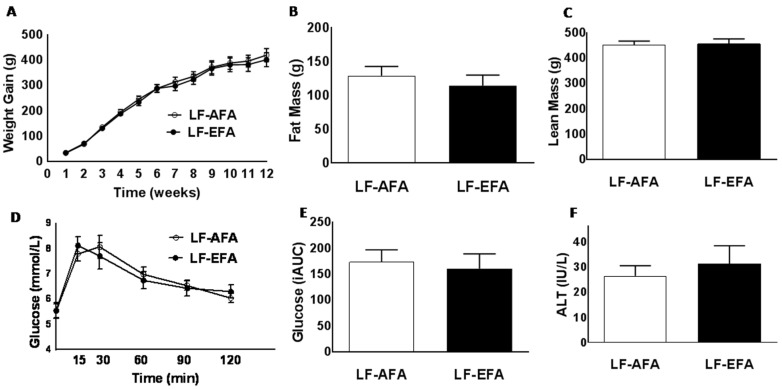
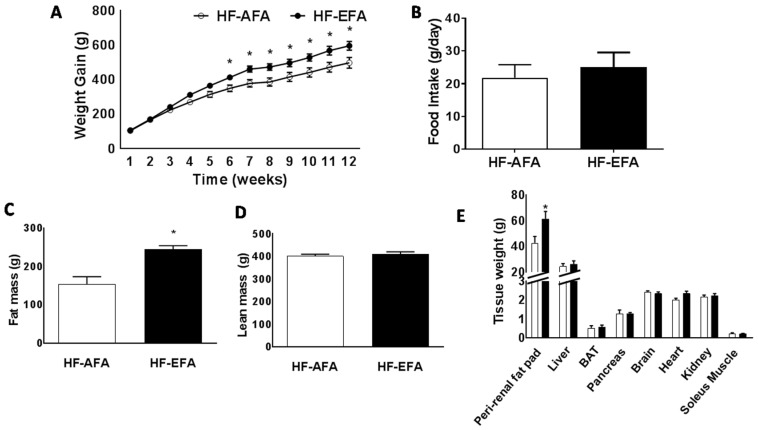
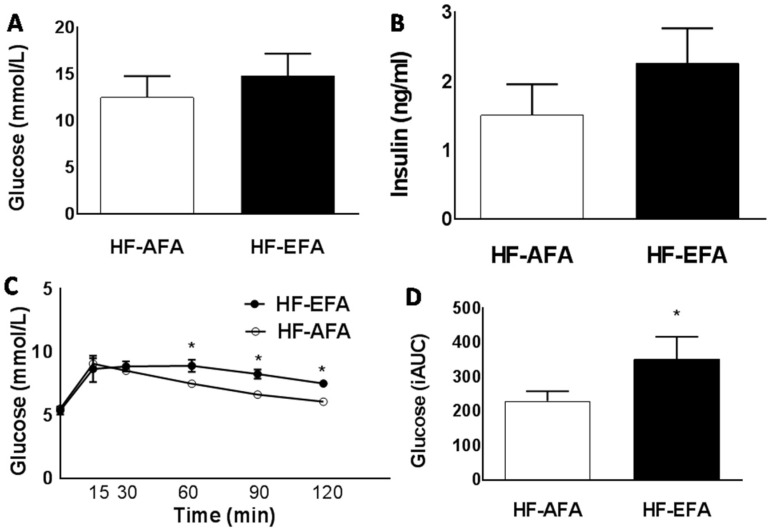
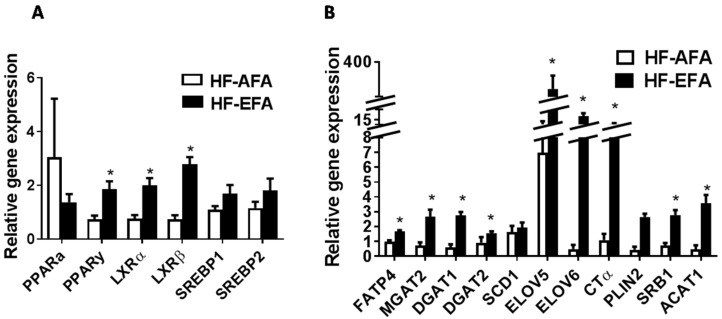
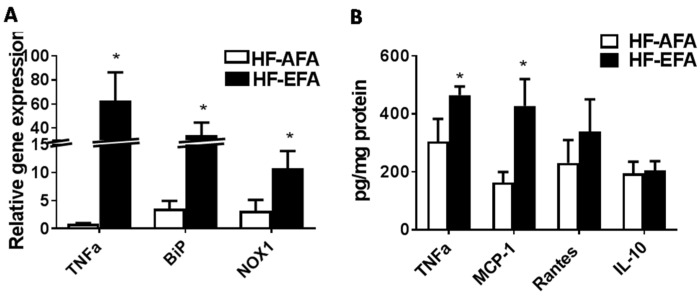
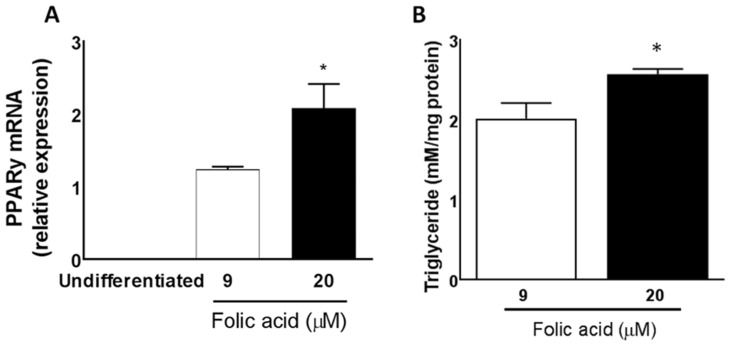
Folic acid intake has increased to high levels in many countries, raising concerns about possible adverse effects, including disturbances to energy and lipid metabolism. Our aim was to investigate the effects of excess folic acid (EFA) intake compared to adequate folic acid (AFA) intake on metabolic health in a rodent model. We conducted these investigations in the setting of either a 15% energy low fat (LF) diet or 60% energy high fat (HF) diet. There was no difference in weight gain, fat mass, or glucose tolerance in EFA-fed rats compared to AFA-fed rats when they were fed a LF diet. However, rats fed EFA in combination with a HF diet had significantly greater weight gain and fat mass compared to rats fed AFA (p < 0.05). Gene expression analysis showed increased mRNA levels of peroxisome proliferator-activated receptor γ (PPARγ) and some of its target genes in adipose tissue of high fat-excess folic acid (HF-EFA) fed rats. Inflammation was increased in HF-EFA fed rats, associated with impaired glucose tolerance compared to high fat-adequate folic acid (HF-AFA) fed rats (p < 0.05). In addition, folic acid induced PPARγ expression and triglyceride accumulation in 3T3-L1 cells. Our results suggest that excess folic acid may exacerbate weight gain, fat accumulation, and inflammation caused by consumption of a HF diet.
Keywords: adipose tissue; folic acid; metabolic syndrome; obesity.
Conflict of interest statement
The authors declare no conflict of interest.
Figures
References
-
- Cordain L., Eaton S.B., Sebastian A., Mann N., Lindeberg S., Watkins B.A., O’Keefe J.H., Brand-Miller J. Origins and evolution of the Western diet: Health implications for the 21st century. Am. J. Clin. Nutr. 2005;81:341–354. - PubMed
-
- Smith A.D., Kim Y.I., Refsum H. Is folic acid good for everyone? Am. J. Clin. Nutr. 2008;87:517–533. - PubMed
-
- Institute of Medicine (U.S.) Standing Committee on the Scientific Evaluation of Dietary Reference Intakes. Institute of Medicine (U.S.) Panel on Folate Other B Vitamins and Choline. Institute of Medicine (U.S.) Subcommittee on Upper Reference Levels of Nutrients . Dietary Reference Intakes for Thiamin, Riboflavin, Niacin, Vitamin B6, Folate, Vitamin B12, Pantothenic Acid, Biotin, and Choline. National Academy Press; Washington, DC, USA: 1998. p. 564.
MeSH terms
Substances
LinkOut - more resources
Full Text Sources
Other Literature Sources
Medical
Research Materials
Miscellaneous
