


Psychostimulant drugs for cocaine dependence
- PMID: 27670244
- PMCID: PMC6457633
- DOI: 10.1002/14651858.CD007380.pub4
Psychostimulant drugs for cocaine dependence
Abstract
Background: Cocaine dependence is a severe disorder for which no medication has been approved. Like opioids for heroin dependence, replacement therapy with psychostimulants could be an effective therapy for treatment.
Objectives: To assess the effects of psychostimulants for cocaine abuse and dependence. Specific outcomes include sustained cocaine abstinence and retention in treatment. We also studied the influence of type of drug and comorbid disorders on psychostimulant efficacy.
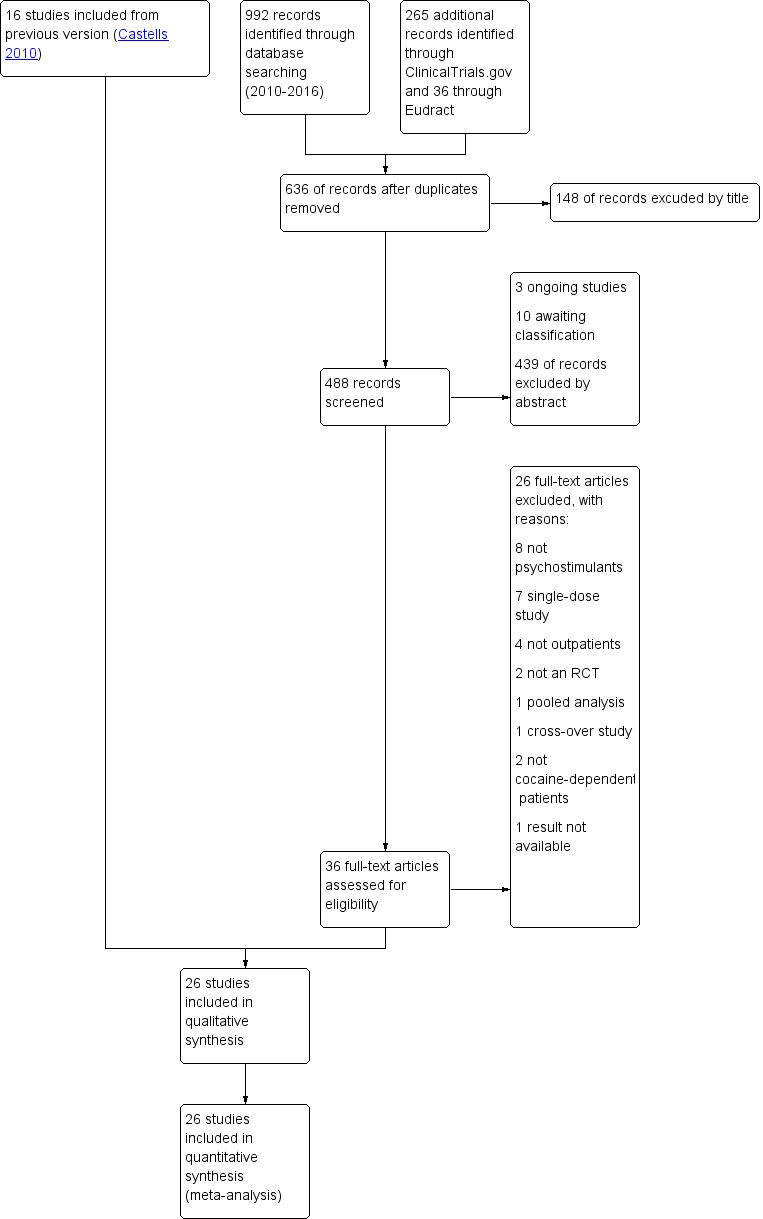
Search methods: This is an update of the review previously published in 2010. For this updated review, we searched the Cochrane Drugs and Alcohol Group Trials Register, CENTRAL, MEDLINE, Embase and PsycINFO up to 15 February 2016. We handsearched references of obtained articles and consulted experts in the field.
Selection criteria: We included randomised parallel group controlled clinical trials comparing the efficacy of a psychostimulant drug versus placebo.
Data collection and analysis: We used standard methodological procedures expected by Cochrane.
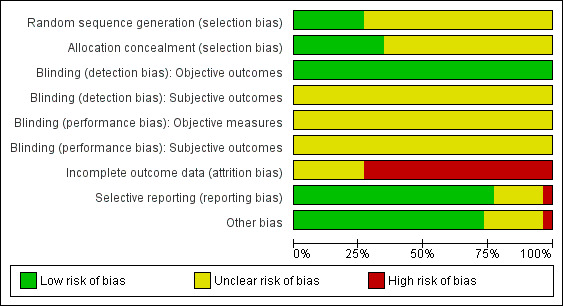
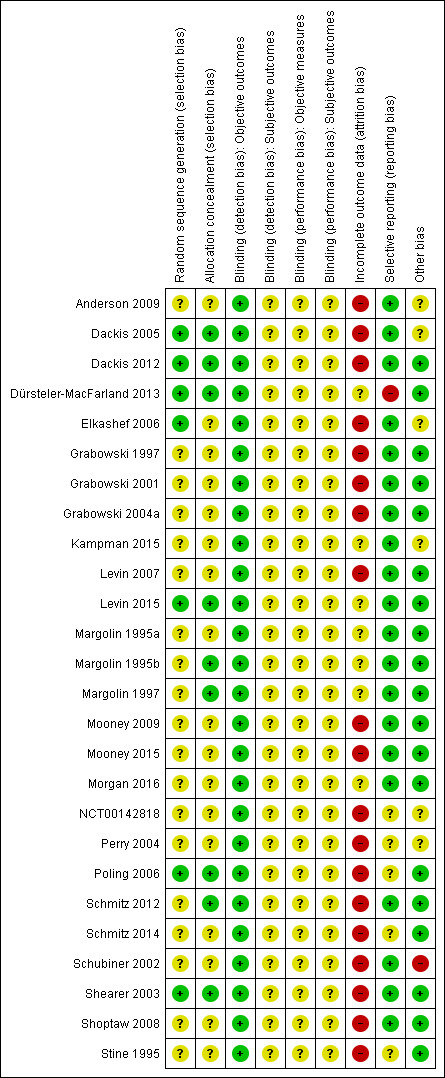
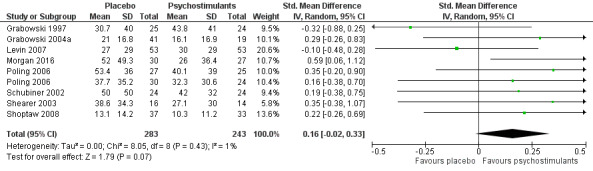
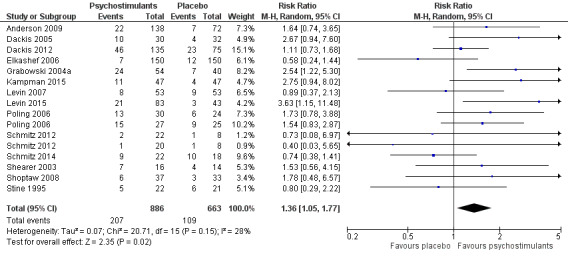
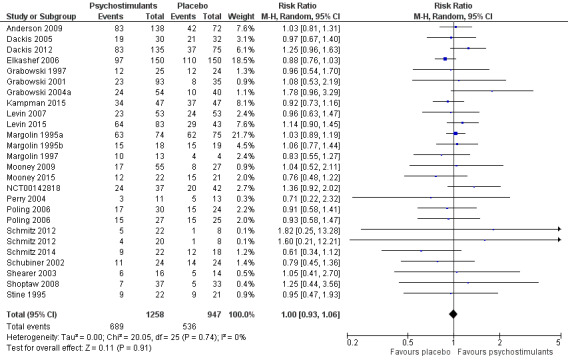
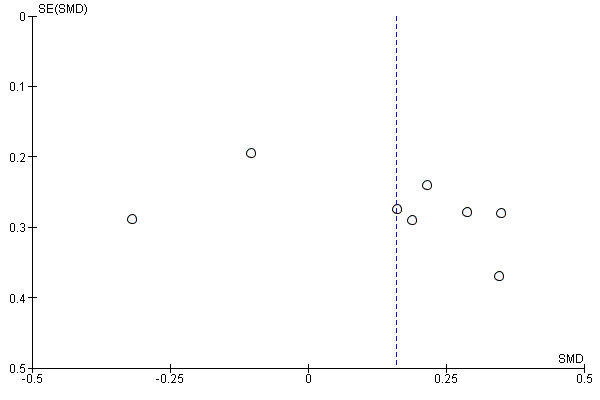
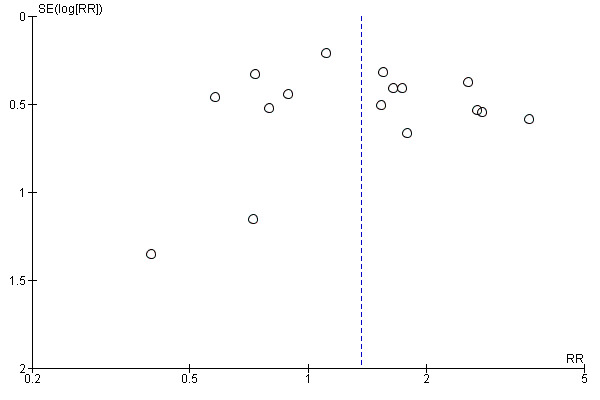
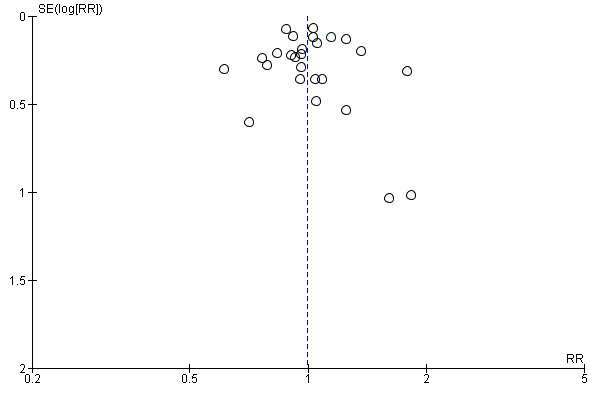
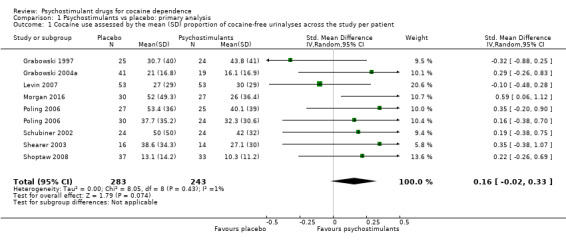
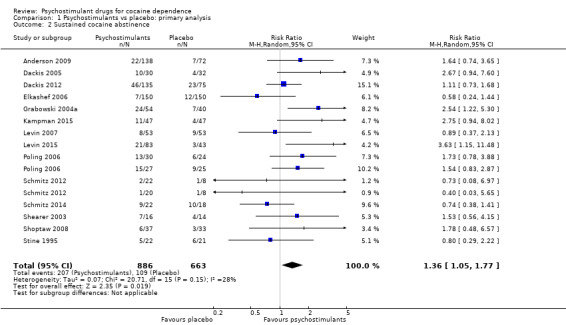
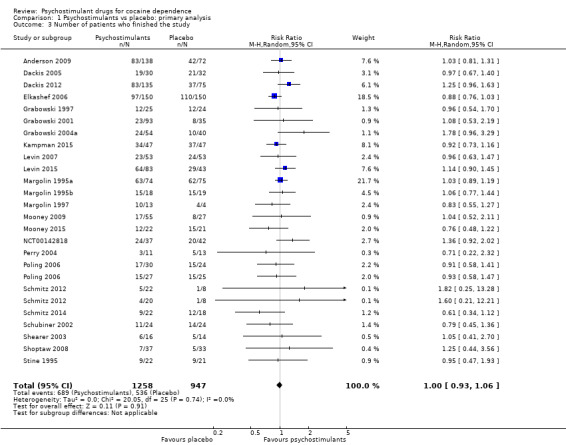
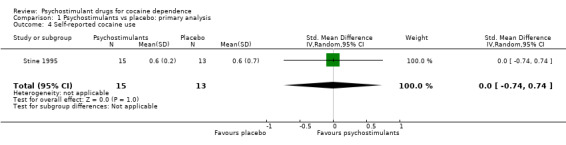
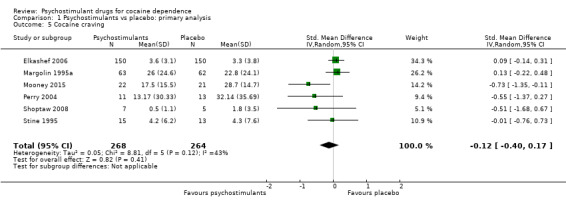
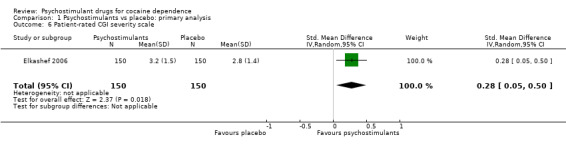
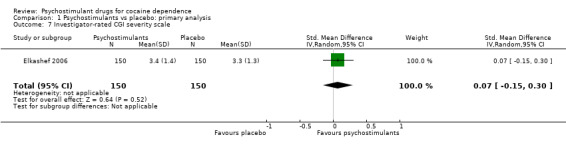
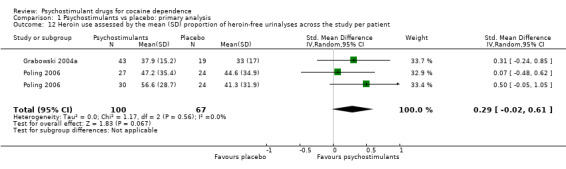
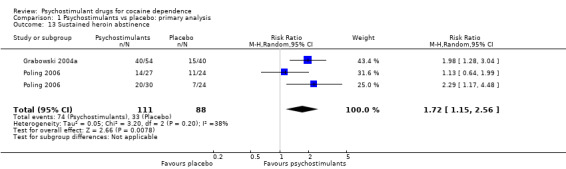
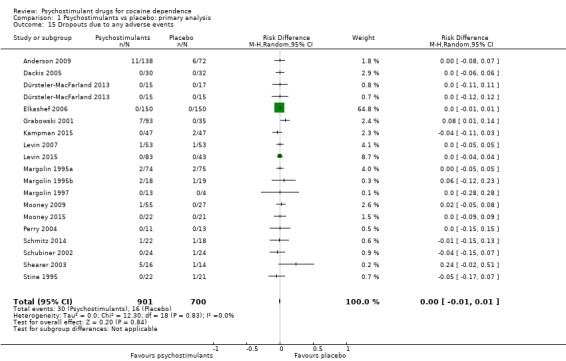
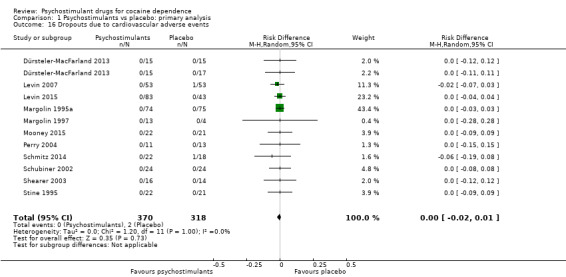
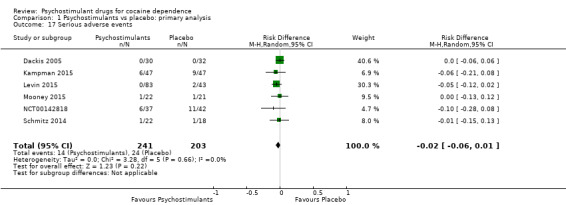
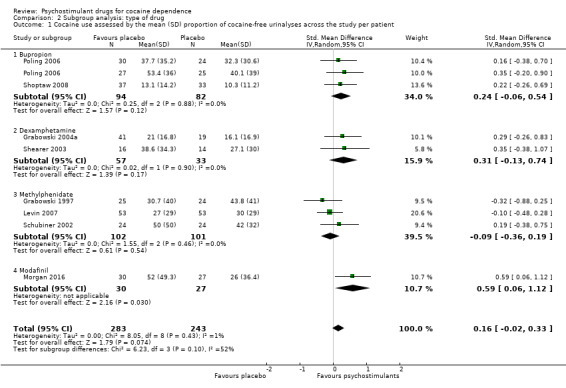
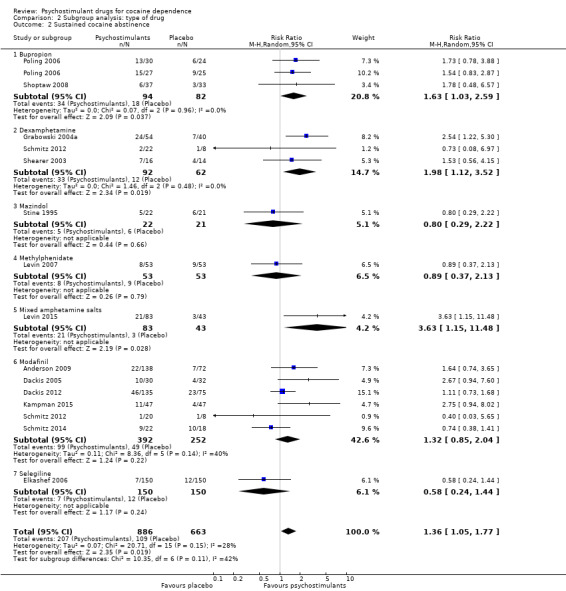
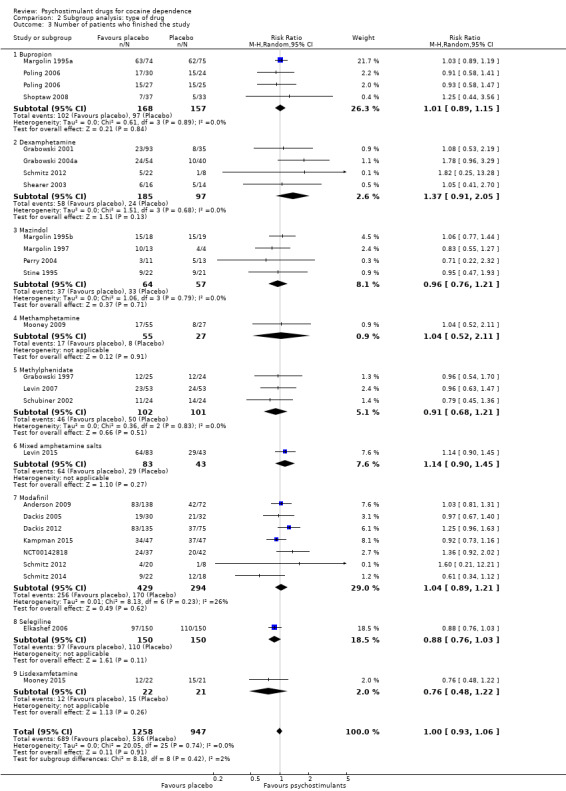
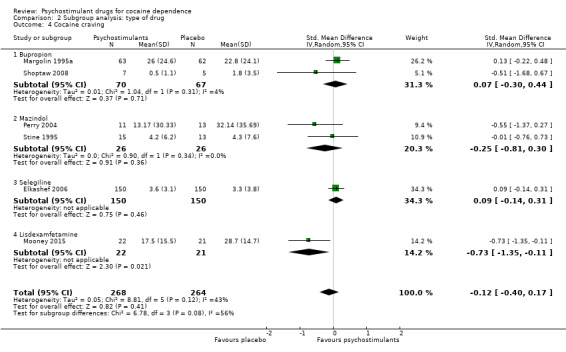
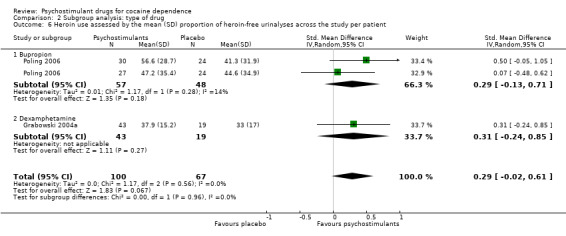
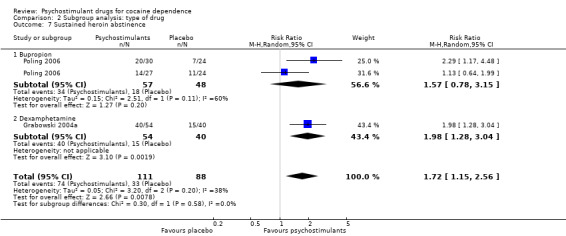
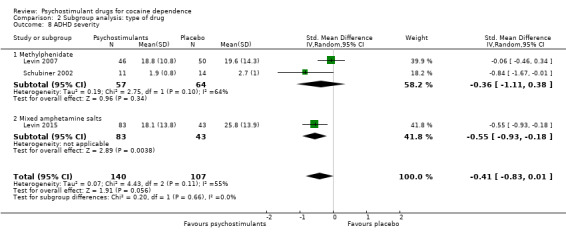
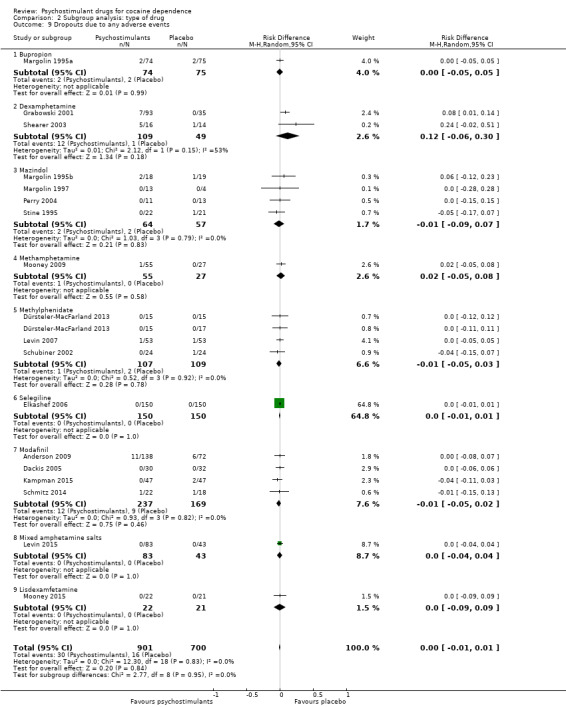
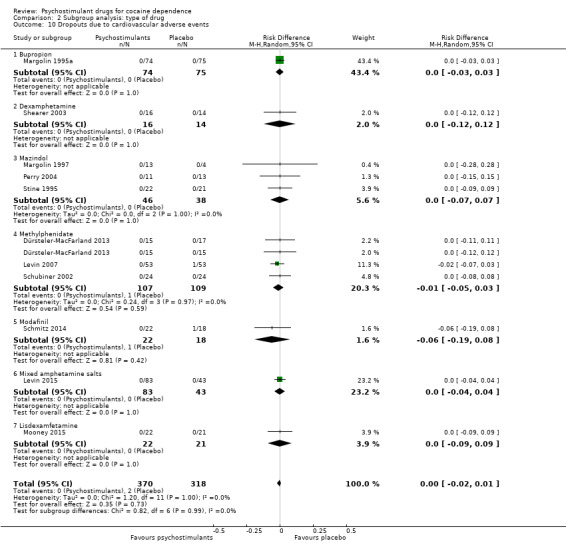
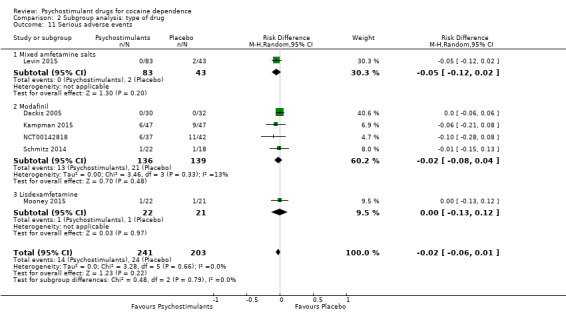
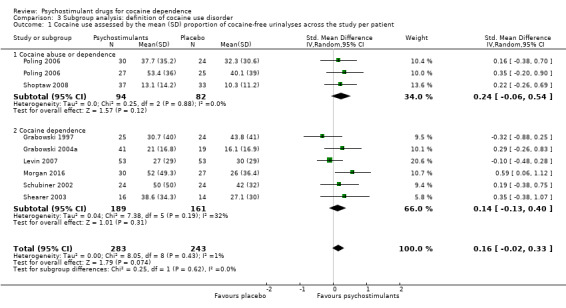
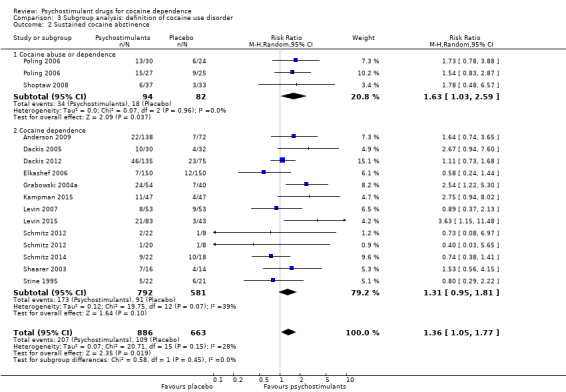
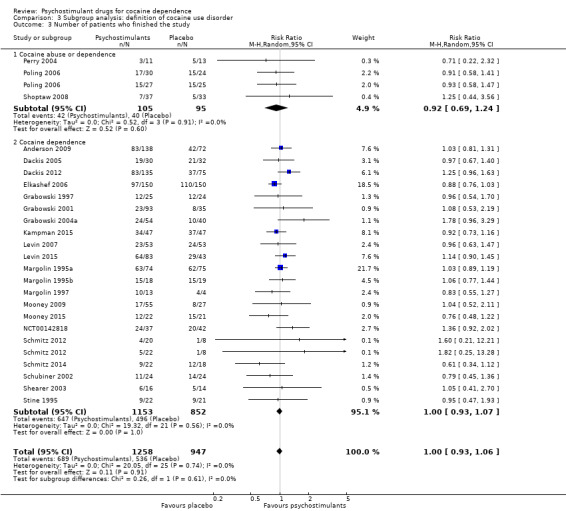
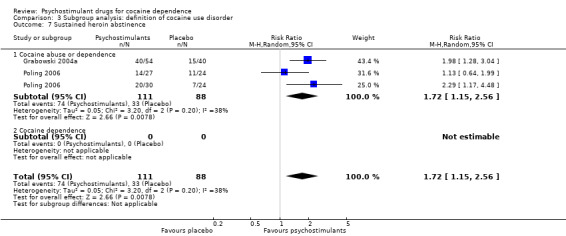
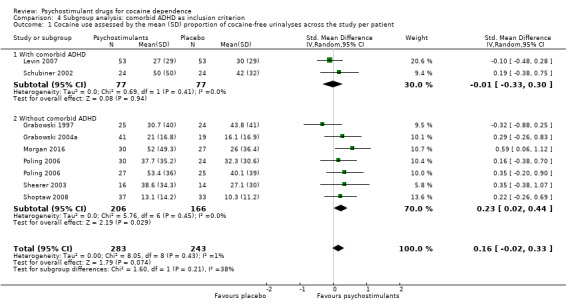
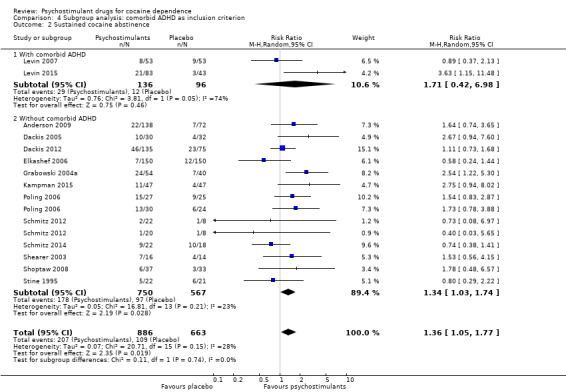
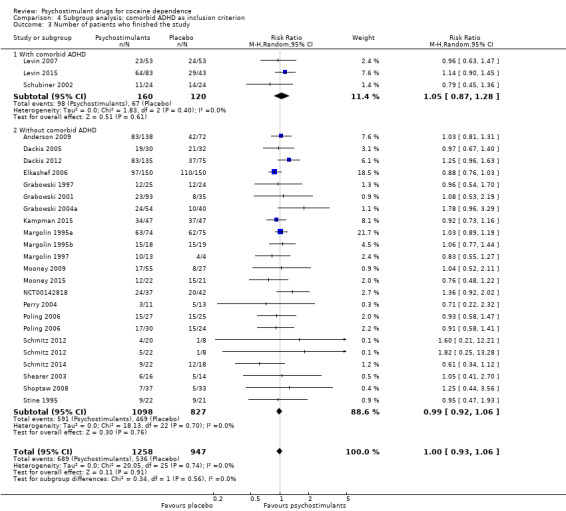
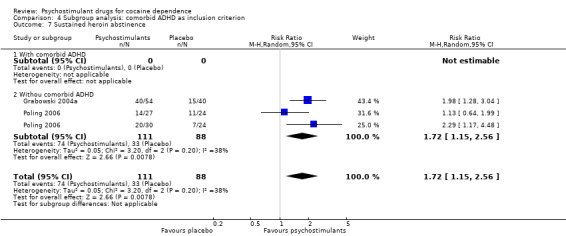
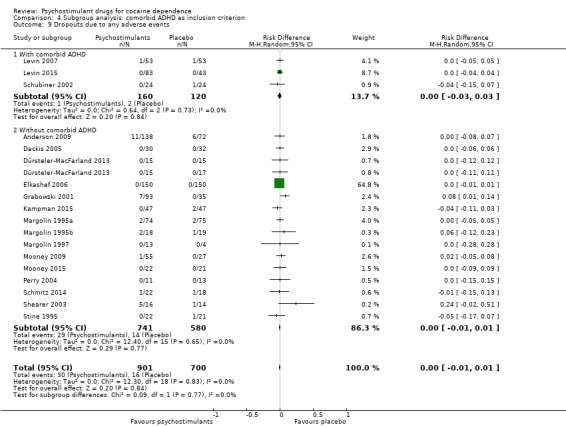
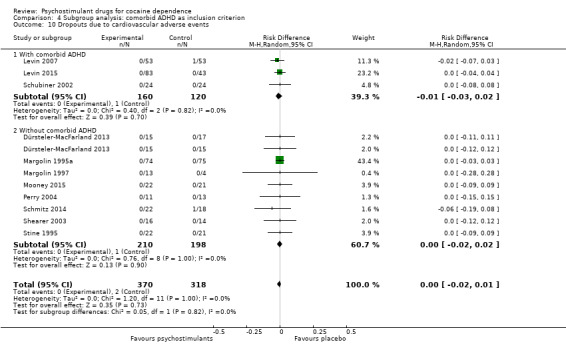
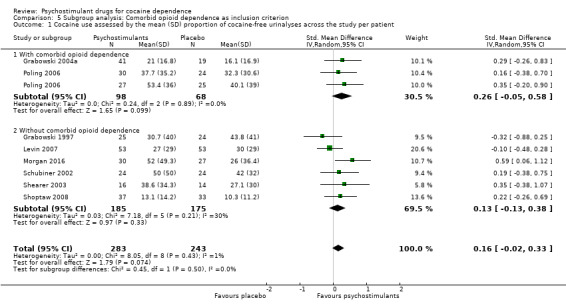
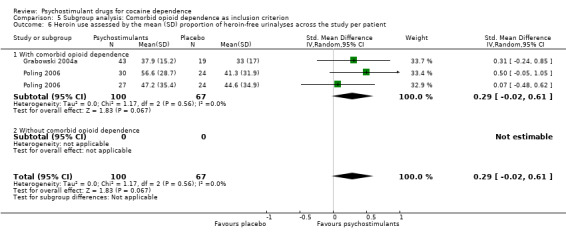
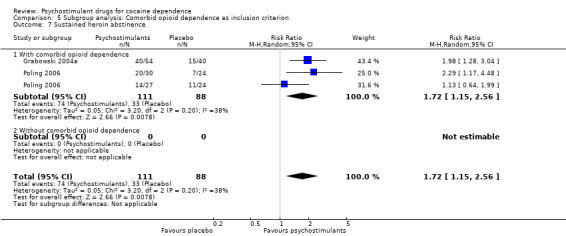
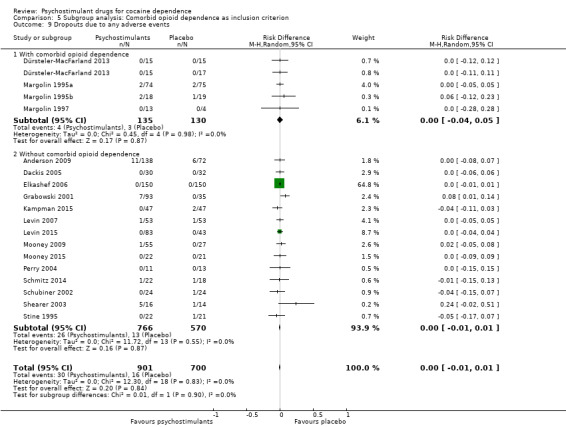
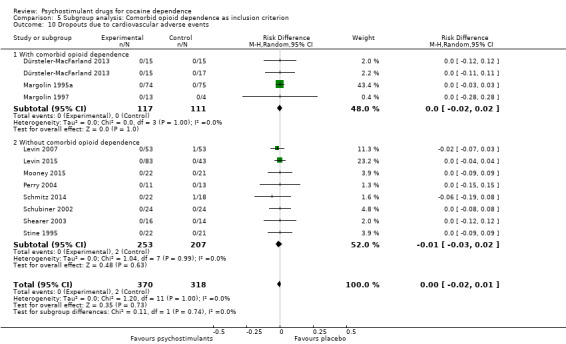
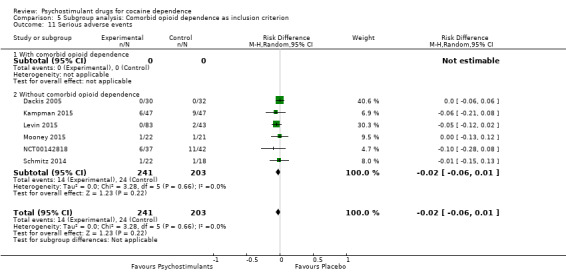
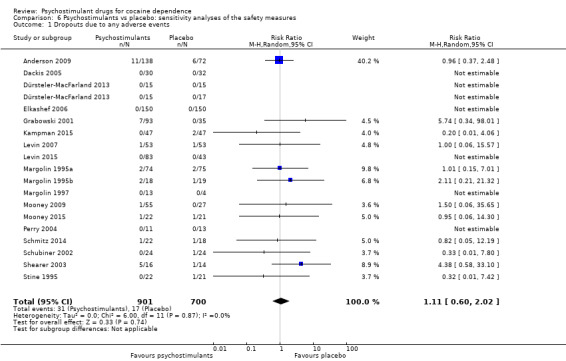
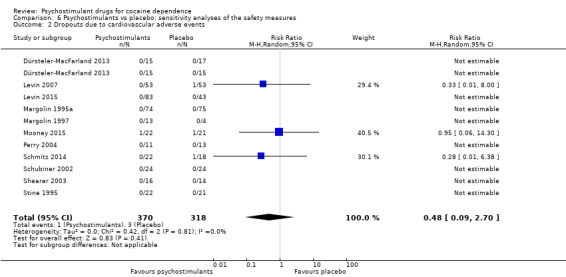
Main results: We included 26 studies involving 2366 participants. The included studies assessed nine drugs: bupropion, dexamphetamine, lisdexamfetamine, methylphenidate, modafinil, mazindol, methamphetamine, mixed amphetamine salts and selegiline. We did not consider any study to be at low risk of bias for all domains included in the Cochrane 'Risk of bias' tool. Attrition bias was the most frequently suspected potential source of bias of the included studies. We found very low quality evidence that psychostimulants improved sustained cocaine abstinence (risk ratio (RR) 1.36, 95% confidence interval (CI) 1.05 to 1.77, P = 0.02), but they did not reduce cocaine use (standardised mean difference (SMD) 0.16, 95% CI -0.02 to 0.33) among participants who continued to use it. Furthermore, we found moderate quality evidence that psychostimulants did not improve retention in treatment (RR 1.00, 95% CI 0.93 to 1.06). The proportion of adverse event-induced dropouts and cardiovascular adverse event-induced dropouts was similar for psychostimulants and placebo (RD 0.00, 95% CI -0.01 to 0.01; RD 0.00, 95% CI -0.02 to 0.01, respectively). When we included the type of drug as a moderating variable, the proportion of patients achieving sustained cocaine abstinence was higher with bupropion and dexamphetamine than with placebo. Psychostimulants also appeared to increase the proportion of patients achieving sustained cocaine and heroin abstinence amongst methadone-maintained, dual heroin-cocaine addicts. Retention to treatment was low, though, so our results may be compromised by attrition bias. We found no evidence of publication bias.
Authors' conclusions: This review found mixed results. Psychostimulants improved cocaine abstinence compared to placebo in some analyses but did not improve treatment retention. Since treatment dropout was high, we cannot rule out the possibility that these results were influenced by attrition bias. Existing evidence does not clearly demonstrate the efficacy of any pharmacological treatment for cocaine dependence, but substitution treatment with psychostimulants appears promising and deserves further investigation.
Conflict of interest statement
XC: none known.
RC: none known.
CP: none known.
XV: none known.
DC: none known.
Figures
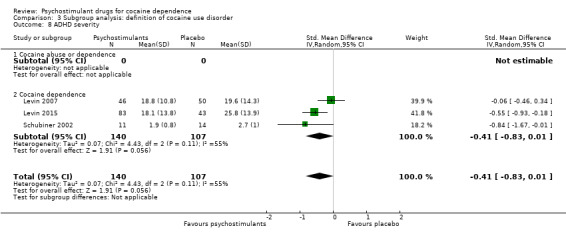
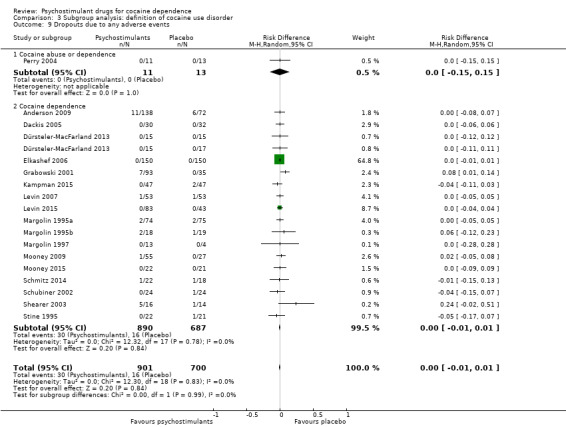
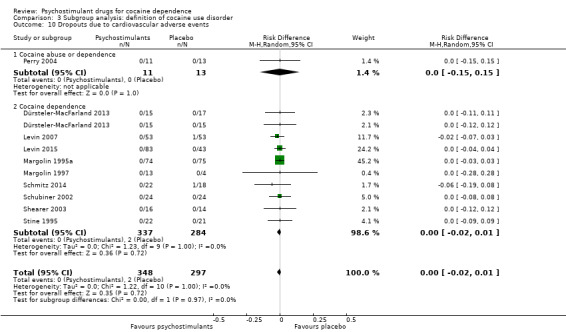
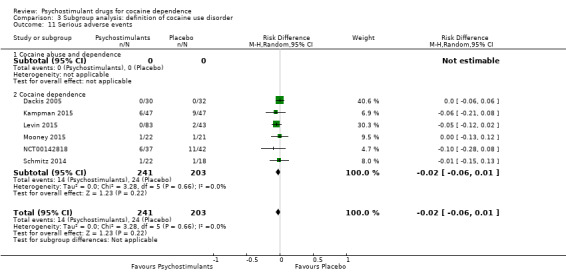
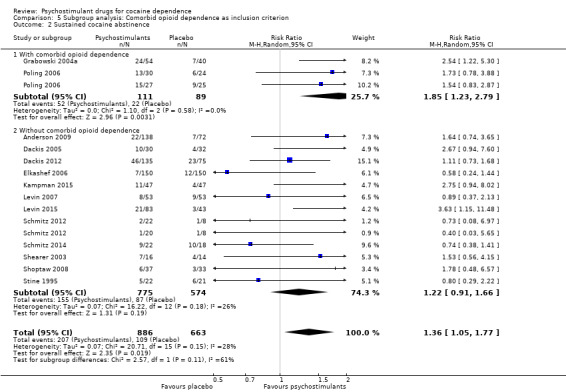
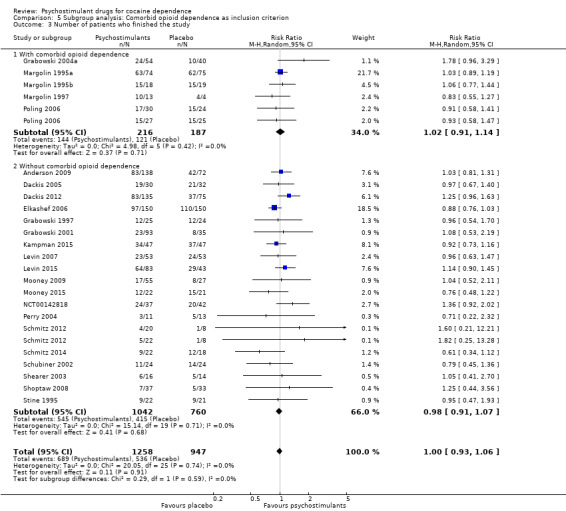
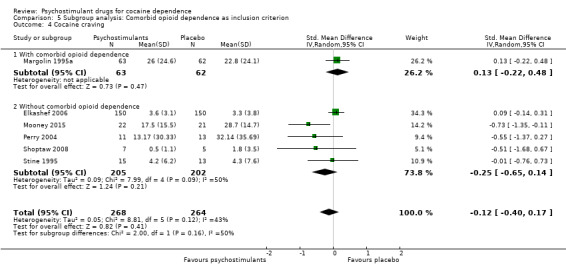
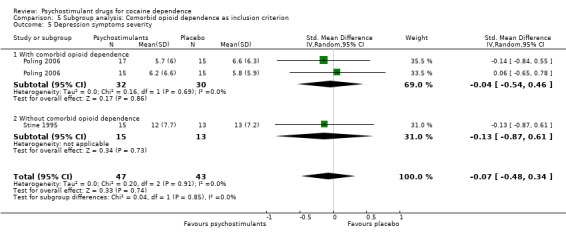
Update of
References
References to studies included in this review
Anderson 2009 {published and unpublished data}
Dackis 2005 {published data only (unpublished sought but not used)}
-
- Dackis CA, Kampman KM, Lynch KG, Pettinati H, O'Brien CP. A double‐blind, placebo‐controlled trial of modafinil for cocaine dependence. Neuropsychopharmacology 2005;30(1):205‐11. - PubMed
-
- Starosta AN, Rha C, Whitingham T. Factors involved in predicting the success of modafinil for the treatment of cocaine‐dependent subjects. 68th Annual Scientific Meeting of the College on Problems of Drug Dependence 2006 June 17‐22:www.cpdd.org/Pages/Meetings/Meetings_PDFs/2006abstractbook.pdf: College on Problems of Drug Dependence, 2006:186.
Dackis 2012 {published data only (unpublished sought but not used)}
Dürsteler‐MacFarland 2013 {published data only (unpublished sought but not used)}
-
- Dürsteler‐MacFarland KM, Farronato NS, Strasser J, Boss J, Kuntze MF, Petitjean SA, et al. A randomized, controlled, pilot trial of methylphenidate and cognitive‐behavioral group therapy for cocaine dependence in heroin prescription. Journal of Clinical Pharmacology 2013;33(1):104‐8. - PubMed
Elkashef 2006 {published data only (unpublished sought but not used)}
-
- Elkashef A, Fudala PJ, Gordon L, Li S‐H, Kahn R, Chiang N, et al. Double‐blind, placebo‐controlled trial of selegiline transdermal system (STS) for the treatment of cocaine dependence. Drug and Alcohol Dependence 2006;85(3):191‐7. - PubMed
Grabowski 1997 {published and unpublished data}
-
- Grabowki J, Schmitz J, Roache JD, Rhoades H, Elk R, Creson DL. Methylphenidate (MP) for initial treatment of cocaine dependence and a model for medication evaluation. NIDA Research Monograph 1994;141:436.
-
- Grabowski J, Roache JD, Schmitz JM, Rhoades H, Creson D, Korszun A. Replacement medication for cocaine dependence: methylphenidate. Journal of Clinical Psychopharmacology 1997;17(6):485‐8. - PubMed
Grabowski 2001 {published and unpublished data}
-
- Grabowski J, Rhoades H, Schmitz J, Stotts A, AnnDaruzska L, Creson D, et al. Dextroamphetamine for cocaine‐dependence treatment:a double‐blind randomised clinical trial. Journal of Clinical Psychopharmacology 2001;21(5):522‐6. - PubMed
Grabowski 2004a {published and unpublished data}
-
- Grabowski J, Rhoades H, Scotts A, Cowan K, Kopecky C, Dougherty A, et al. Agonist‐like or antagonist‐like treatment for cocaine dependence with methadone for heroin dependence: two double‐blind randomized clinical trials. Neuropsychopharmacology 2004;29(5):969‐81. - PubMed
Kampman 2015 {published data only (unpublished sought but not used)}
Levin 2007 {published data only (unpublished sought but not used)}
-
- Aharonovich E, Garawi F, Bisaga A, Brooks D, Raby WN, Rubin E, et al. Concurrent cannabis use during treatment for comorbid ADHD and cocaine dependence effects on outcome. American Journal of Drug and Alcohol Abuse 2006;32(4):629‐35. - PubMed
-
- Levin FR, Evans SM, Brooks DJ, Garawi F. Treatment of cocaine dependent treatment seekers with adult ADHD: double‐blind comparison of methylphenidate and placebo. Drug and Alcohol Dependence 2007;87(1):20‐9. - PubMed
Levin 2015 {published data only}
Margolin 1995a {published data only (unpublished sought but not used)}
-
- Margolin A, Kosten TR, Avants SK, Wilkins J, Ling W, Beckson M, et al. A multicenter trial of bupropion for cocaine dependence in methadone‐maintained patients. Drug and Alcohol Dependence 1995;40(2):125‐31. - PubMed
Margolin 1995b {published data only (unpublished sought but not used)}
-
- Margolin A, Avants SK, Kosten TR. Mazindol for relapse prevention to cocaine abuse in methadone‐maintained patients. American Journal of Drug and Alcohol Abuse 1995;21(4):469‐81. - PubMed
Margolin 1997 {published data only (unpublished sought but not used)}
-
- Margolin A, Avants K, Malison RT, Kosten TR. High‐ and low‐dose mazindol for cocaine dependence in methadone‐maintained patients:a preliminary evaluation. Substance Abuse 1997;18(3):125‐31.
Mooney 2009 {published data only (unpublished sought but not used)}
Mooney 2015 {published data only (unpublished sought but not used)}
Morgan 2016 {published data only (unpublished sought but not used)}
NCT00142818 {published data only}
-
- NCT00142818. Modafinil and naltrexone to reduce cocaine and alcohol dependence (Mod‐Nal). clinicaltrials.gov/show/NCT00142818 (first received 1 September 2005).
Perry 2004 {published and unpublished data}
-
- Perry EB, Gil R, Miles D, Brenner L, MacDougall L, Johson R, et al. Mazindol augmentation of antipsychotic treatment for schizophrenic patients with comorbid cocaine abuse or dependence: a preliminary double‐blind, randomized, placebo‐controlled trial. Journal of Dual Diagnosis 2004;1(1):37‐47.
Poling 2006 {published and unpublished data}
-
- Poling J, Oliveto A, Petry N, Sofuoglu M, Gonsai K, Gonzalez G, et al. Six‐month trial of bupropion with contingency management for cocaine dependence in a methadone‐maintained population. Archives of General Psychiatry 2006;63(2):219‐28. - PubMed
Schmitz 2012 {published and unpublished data}
Schmitz 2014 {published and unpublished data}
Schubiner 2002 {published data only (unpublished sought but not used)}
-
- Downey KK, Schubiner H, Schuster CR. Double‐blind placebo controlled stimulant trial for cocaine dependent ADHD adults. NIDA Research Monograph 2000;180:116.
-
- Schubiner H, Saules KK, Arfken CL, Johanson CE, Schuster CR, Lockhart N, et al. Double‐blind placebo‐controlled trial of methylphenidate in the treatment of adult ADHD patients with comorbid cocaine dependence. Experimental and Clinical Psychopharmacology 2002;10(3):286‐94. - PubMed
Shearer 2003 {published and unpublished data}
-
- Shearer J, Wodak A, Beek I, Mattick RP, Lewis J. Pilot randomized double blind placebo‐controlled study of dexamphetamine for cocaine dependence. Addiction 2003;98(8):1137‐41. - PubMed
Shoptaw 2008 {published and unpublished data}
-
- Shoptaw S, Heinzerling KG, Rotheram‐Fuller E, Kao UH, Wang P‐C, Bholat MA, et al. Bupropion hydrochloride versus placebo, in combination with cognitive behavioral therapy, for the treatment of cocaine abuse/dependence. Journal of Addictive Diseases 2008;27(1):13‐23. - PubMed
Stine 1995 {published data only (unpublished sought but not used)}
-
- Stine SM, Krystal JH, Kosten TR, Charney DS. Mazindol treatment for cocaine dependence. Drug and Alcohol Dependence 1995;39(3):245‐52. - PubMed
References to studies excluded from this review
Afshar 2012 {published data only}
Avants 1998 {published data only}
-
- Avants SK, Margolin A, DePhilippis D, Kosten TR. A comprehensive pharmacologic‐psychosocial treatment program for HIV‐seropositive cocaine‐and‐opioid‐dependent patients. Preliminary findings. Journal of Substance Abuse Treatment 1998;15(3):261‐5. - PubMed
Berger 1989 {published data only}
-
- Berger P, Gawin F, Kosten TR. Treatment of cocaine abuse with mazindol. Lancet 1989;1(8632):283. - PubMed
Cannavan 2014 {published data only}
Goldstein 2010 {published data only}
Goldstein 2011 {published data only}
Herin 2010 {published data only}
-
- Herin DV. Agonist‐like medications for cocaine dependence treatment: clinical studies. Neuropsychopharmacology 2010;35(Supplement):S21.
Kalechstein 2011 {published data only}
-
- Kalechstein A, Mahoney J, Bennett R, Shah RS, Yoon J, Chang LC, et al. Short‐term modafinil administration improves working memory and sustained attention in cocaine‐dependent volunteers. Neuropsychopharmacology 2011;36(Supplement):S176.
Kaleschtein 2013 {published data only}
-
- Kalechstein AD, Mahoney JJ 3rd, Yoon JH, Bennett R, Garza R 2nd. Modafinil, but not escitalopram, improves working memory and sustained attention in long‐term, high‐dose cocaine users. Neuropharmacology 2013;64(Jan):472‐8. - PubMed
Kampman 1997 {published data only}
-
- Kampman KM, Volpicelli J. Combination of the dopaminergic agent, phentermine, and the serotoninergic agent, fenfluramine, in the treatment of cocaine dependence. Journal of Substance Abuse Treatment 1997;14(4):401‐4. - PubMed
Levin 1998 {published data only}
-
- Levin FR, Evans SM, McDowell DM, Kleber HD. Methylphenidate treatment for cocaine abusers with adult attention‐deficit/hyperactivity disorder: a pilot study. Journal of Clinical Psychiatry 1998;59(6):300‐5. - PubMed
Levin 1999 {published data only}
-
- Levin FR, Evans SM, Kleber HD. Methylphenidate treatment for cocaine abusers with adult attention‐deficit/hyperactivity disorder. NIDA Research Monograph 1999;179:39.
Levin 2006 {published data only}
-
- Levin FR, Evans SM, Brooks DJ, Kalbag AS, Garawi F, Nunes EV. Treatment of methadone‐maintained patients with adult ADHD: double‐blind comparison of methylphenidate, bupropion and placebo. Drug and Alcohol Dependence 2006;81(2):137‐48. - PubMed
Levin 2008 {published data only}
Magee 2015 {published data only}
Magee 2016 {published data only}
Margolin 1991 {published data only}
-
- Margolin A, Kosten T, Petrakis I, Avants SK, Kosten T. Bupropion reduces cocaine abuse in methadone‐maintained patients. Archives of Geneneral Psychiatry 1991;48(1):87. - PubMed
Mariani 2012 {published data only}
Moeller 2011 {published data only}
-
- Moeller FG, Steinberg JL, Lane SD, Ma L, Kosten TR, Narayana PA. Pharmacological MRI of d‐amphetamine: effects of a go‐no/go task in cocaine dependent subjects. Neuropsychopharmacology 2011;36(Supplement):S285.
Moeller 2014 {published data only}
Montoya 1994 {published data only}
-
- Montoya ID, Preston KL, Rothman R, Cone E, Gorelick DA. Safety and efficacy of bupropion in combination with bromocriptine for treatment of cocaine dependence. NIDA Research Monograph 1994;153:304.
Mooney 2008 {published data only}
Morgan 2010 {published data only}
Nuitjen 2015 {published data only}
-
- Nuijten M, Blanken P, Brink W, Hendriks V. Modafinil in the treatment of crack‐cocaine dependence in the Netherlands: Results of an open‐label randomised controlled feasibility trial. Journal of Psychopharmacology 2015;29(6):678‐87. - PubMed
Ollo 1996 {published data only}
-
- Ollo C, Alim TN, Rosse RB, Lindquist T, Green T, Gillis T, et al. Lack of neurotoxic effect of diethylpropion in crack‐cocaine abusers. Clinical Neuropharmacology 1996;19(1):52‐8. - PubMed
Peirce 2009 {published data only}
Poling 2010 {published data only}
Rush 2010 {published data only}
-
- Rush CR, Stoops WW, Sevak RJ, Hays LR. Cocaine choice in humans during D‐amphetamine maintenance. Journal of Clinical Psychopharmacology 2010;30(2):152‐9. - PubMed
Seibyl 1992 {published data only}
-
- Seibyl JP, Brenner L, Krystal JH, Johson R, Charney DS. Mazindol and cocaine addiction in schizophrenia. Biological Psychiatry 1992;31(11):1179‐81. - PubMed
Shearer 2010 {published data only}
-
- Shearer J, Shanahan M, Darke S, Rodgers C, Beek I, McKetin R, et al. A cost‐effectiveness analysis of modafinil therapy for psychostimulant dependence. Drug and Alcohol Review 2010;39(3):235‐42. - PubMed
Shorter 2013 {published data only}
Tennant 1990 {published data only}
-
- Tennant F. Clinical trial of multiple treatment agents for cocaine dependence: a placebo‐controlled elimination study. NIDA Research Monograph 1990;105:512‐3. - PubMed
Vansickel 2008 {published data only}
-
- Vansickel AR, Fillmorex MT, Hays LR, Rush CR. Effects of potential agonist‐replacement therapies for stimulant dependence on inhibitory control in cocaine abusers. American Journal of Drug and Alcohol Abuse 2008;34(3):293‐305. - PubMed
Volkow 2010 {published data only}
-
- Volkow N. Decreased motivation in ADHD is associated with deficit in dopamine reward pathway. Neuropsychopharmacology 2010;35(Supplement):S39.
Vosburg 2010 {published data only}
Wang 2010 {published data only}
-
- Wang GJ, Volkow N, Telang F, Tomasi D, Logan J, Wong C, et al. Decreased striatal and prefrontal dopaminergic responses in active cocaine dependent subjects. Neuropsychopharmacology 2010;35(Supplement):S372.
Winhusen 2013 {published data only}
-
- Winhusen T, Lewis D, Adinoff B, Brigham G, Kropp F, Donovan DM, et al. Impulsivity is associated with treatment non‐completion in cocaine‐ and methamphetamine‐dependent patients but differs in nature as a function of stimulant‐dependence diagnosis. Journal of Substance Abuse Treatment 2013;44(5):541‐7. - PMC - PubMed
References to studies awaiting assessment
EudraCT 2013‐004024‐11 {published data only}
-
- EudraCT 2013‐004024‐11. New pharmacotherapeutic treatment options for crack‐cocaine dependent people in the Netherlands: A double‐blind, placebo‐controlled randomized feasibility study of sustained release dexamphetamine. www.clinicaltrialsregister.eu/ctr‐search/search?query=2013‐004024‐11 (first received 1 September 2014).
NCT00015223 {published data only}
-
- NCT00015223. Methylphenidate in the treatment of cocaine dependent patients with adult attention deficit hyperactivity disorder. clinicaltrials.gov/show/NCT00015223 (first received 18 April 2001).
NCT00218348 {published data only}
-
- NCT00218348. Treatment of cocaine dependence: comparison of three doses of dextro‐amphetamine sulfate and placebo. clinicaltrials.gov/show/NCT00218348 (first received 15 September 2005).
NCT00218387 {published data only}
-
- NCT00218387. Modafinil combined with cognitive behavior therapy to treat cocaine addiction. clinicaltrials.gov/show/study/NCT00218387 (first received 16 September 2005).
NCT00344565 {published data only}
-
- NCT00344565. A placebo‐controlled double‐blind combined treatment of modafinil and CBT for cocaine dependence. clinicaltrials.gov/show/NCT00344565 (first received 26 June 2006).
NCT00495092 {published data only}
-
- NCT00495092. Efficacy of caffeine, with and without biperiden, in the detoxification of cocaine dependent patients. clinicaltrials.gov/show/NCT00495092 (first received 29 June 2007).
NCT00514202 {published data only}
-
- NCT00514202. Pilot study examining effect for dextroamphetamine to treat cocaine dependence plus attention‐deficit hyperactivity disorder (ADHD). clinicaltrials.gov/ct2/show/NCT00514202 (first received 07 August 2007).
NCT00701532 {published data only}
-
- NCT00701532. Brain imaging study of the effects of modafinil in cocaine addiction. clinicaltrials.gov/ct2/show/NCT00701532 (First received: 18 June 2008).
NCT00733993 {published data only}
-
- NCT00733993. Caffeine and cocaine. clinicaltrials.gov/show/NCT00733993 (first received 12 August 12 2008).
NCT00838981 {published data only}
-
- NCT00838981. Pharmacotherapy and CM for opioid and cocaine dependence. clinicaltrials.gov/show/NCT00838981 (first received 6 February 2009).
References to ongoing studies
NCT00218036 {published data only}
-
- NCT00218036. Pharmacotherapy dosing regimen in cocaine and opiate dependent individuals ‐ 8 [Pharmacotherapy dosing regimen in cocaine and opiate dependent individuals]. clinicaltrials.gov/show/NCT00218036 (first received 16 September 2005).
NCT02111798 {published data only}
-
- NCT02111798. Bupropion‐enhanced contingency management for cocaine dependence [Bupropion‐enhanced CM for cocaine dependence]. clinicaltrials.gov/ct2/show/NCT02111798 (first received 28 March 2014).
NTC00123383 {published data only}
-
- NTC00123383. Randomized placebo‐controlled trial of modafinil for cocaine dependence [Randomized placebo‐controlled trial of modafinil for cocaine dependence]. clinicaltrials.gov/ct2/show/NTC00123383 (first received 21 July 2005).
Additional references
AHFS 2014
-
- American Society of Health‐System Pharmacists. AHFS. American Hospital Formulary Service. Drug Information 2009. Bethesda: American Society of Health‐System Pharmacists, 2014.
American Psychiatric Association 2000
-
- American Psychiatry Association. Diagnostic and Statistical Manual of Mental Disorders (4th ed.). Washington, DC: American Psychiatric Publishing, 2000.
American Psychiatric Association 2013
-
- American Psychiatric Association. Diagnostic and Statistical Manual of Mental Disorders (5th ed.). Washington, DC: American Psychiatric Publishing, 2013.
ATC 2015
-
- World Health Organization. ATC/DDD Index. www.whocc.no/atcddd/indexdatabase/ (accessed prior to 25 August 2016).
Brayfield 2014
-
- Brayfield A. Martindale: The Complete Drug Reference. 38. Pharmaceutical Press, 2014.
Brunton 2011
-
- Brunton L, Chabner B. Goodman and Gilman's The Pharmacological Basis of Therapeutics. 10th Edition. McGraw Hill, 2011.
Carroll 2004
Castells 2007
-
- Castells X, Casas M, Vidal X, Bosch R, Roncero C, Ramos‐Quiroga JA, et al. Efficacy of central nervous system stimulant treatment for cocaine dependence: a systematic review and meta‐analysis of randomised controlled clinical trials. Addiction 2007;1002(12):1871‐87. - PubMed
Castells 2009
-
- Castells X, Kosten TR, Capellà D, Vidal X, Colom J, Casas M. Efficacy of opiate maintenance therapy and adjunctive interventions for opioid dependence with comorbid cocaine use disorders: a systematic review and meta‐analysis of controlled clinical trials. The American Journal of Drug and Alcohol Abuse 2009;35(5):339‐49. - PubMed
Chinazo 2014
Cousins 2001
-
- Cousins MS, Stamat HM, Wit H. Acute doses of d‐amphetamine and bupropion increase cigarette smoking. Psychopharmacology 2001;157(3):243‐5. - PubMed
Craft 1996
-
- Craft RM, Stratmann JA. Discriminative stimulus effects of cocaine in female versus male rats. Drug and Alcohol Dependence 1996;42(1):27‐37. - PubMed
Cunill 2015
-
- Cunill R, Castells X, Tobias A, Capellà D. Pharmacological treatment of attention deficit hyperactivity disorder with co‐morbid drug dependence. Journal of Psychopharmacology 2015;29(1):15‐23. - PubMed
Dopheide 2007
-
- Dopheide MM, Morgan RE, Rodvelt KR, Schachtman TR, Miller DK. Modafinil evokes striatal [(3)H]dopamine release and alters the subjective properties of stimulants. European Journal of Pharmacology 2007;568(1‐3):112‐23. - PubMed
Dwoskin 2006
Egger 1997
EMCDDA 2015
-
- European Monitoring Centre for Drugs and Drug Addiction. European Drug Report. Trends and developments. www.emcdda.europa.eu/attachements.cfm/att_239505_EN_TDAT15001ENN.pdf (accessed prior to 25 August 2016).
Engberg 1991
-
- Engberg G, Elebring T, Nissbrandt H. Deprenyl (selegiline), a selective MAO‐B inhibitor with active metabolites; effects on locomotor activity, dopaminergic neurotransmission and firing rate of nigral dopamine neurons. Journal of Pharmacology and Experimental Therapeutics 1991;259(2):841‐47. - PubMed
Evans 1987
-
- Evans SM, Johanson CE. Amphetamine‐like effects of anorectics and related compounds in pigeons. The Journal of Pharmacology and Experimental Therapeutics 1987;241(3):817‐25. - PubMed
Gorelick 2004
-
- Gorelick DA, Gardner EL, Xi ZX. Agents in development for the management of cocaine abuse. Drugs 2004;64(14):1547‐73. - PubMed
Grabowski 2004b
-
- Grabowski J, Shearer J, Merrill J, Negus SS. Agonist‐like, replacement pharmacotherapy for stimulant abuse and dependence. Addictive Behaviors 2004;29(7):1439‐64. - PubMed
GRADE 2004
Guyatt 2008
Guyatt 2011
-
- Guyatt G, Oxman AD, Akl EA, Kunz R, Vist G, Brozek J, et al. GRADE guidelines 1. Introduction‐GRADE evidence profiles and summary of findings tables. Journal of Clinical Epidemiology 2011;64(4):383‐94. - PubMed
Hartmann‐Boyce 2014
-
- Hartmann‐Boyce J, Stead LF, Cahill K, Lancaster T. Efficacy of interventions to combat tobacco addiction: Cochrane update of 2013 reviews. Addiction 2014;109(9):1414‐25. - PubMed
Higgins 2011
-
- Higgins JPT, Green S (editors). Cochrane Handbook for Systematic Reviews of Interventions Version 5.1.0 (updated March 2011). The Cochrane Collaboration, 2011. Available from www.cochrane‐handbook.org.
Jasinski 2000
-
- Jasinski DR, Kovacević‐Ristanović R. Evaluation of the abuse liability of modafinil and other drugs for excessive daytime sleepiness associated with narcolepsy. Clinical Neuropharmacology 2000;23(3):149‐56. - PubMed
Jüni 2001
-
- Jüni P, Altman DG, Egger M. Assessing the quality of clinical trials. In: Egger M, Davey Smith G, Altman DG editor(s). Systematic Reviews in Health Care. Meta Analysis in Context. London: BMJ publishing group, 2001:87‐108.
Kalivas 2005
-
- Kalivas PW, Volkow ND. The neural basis of addiction: a pathology of motivation and choice. American Journal of Psychiatry 2005;162(8):1403‐13. - PubMed
Kalivas 2007
-
- Kalivas PW. Neurobiology of cocaine addiction: implications for new pharmacotherapy. American Journal on Addictions 2007;16(2):71‐8. - PubMed
Kampman 2004
-
- Kampman KM, Pettinati H, Lynch KG, Dackis C, Sparkman T, Weigley C, et al. A pilot trial of topiramate for the treatment of cocaine dependence. Drug and Alcohol Dependence 2004;75(3):233‐40. - PubMed
Karila 2008
-
- Karila L, Gorelick D, Weinstein A, Noble F, Benyamina A, Coscas S, et al. New treatments for cocaine dependence: a focused review. International Journal of Neuropsychopharmacology 2008;11(3):425‐38. - PubMed
Katz 2000
-
- Katz JL, Izenwasser S, Terry P. Relationships among dopamine transporter affinities and cocaine‐like discriminative‐stimulus effects. Psychopharmacology 2000;148(1):90‐8. - PubMed
Kidorf 2004
-
- Kidorf M, Disney ER, King VL, Neufeld K, Beilenson PL, Brooner RK. Prevalence of psychiatric and substance use disorders in opioid abusers in a community syringe exchange program. Drug and Alcohol Dependence 2004;74(2):115‐22. - PubMed
Kleber 2007
-
- Kleber HD, Weiss RD, Anton RF Jr, George TP, Greenfield SF, Kosten TR, et al. American Psychiatric Association Steering Committee on Practice Guidelines. Treatment of patients with substance use disorders, second edition. American Journal of Psychiatry 2007;164(4 Suppl):5‐123. - PubMed
Koob 1988
-
- Koob GF, Bloom FE. Cellular and molecular mechanisms of drug dependence. Science 1988;242(4879):715‐23. - PubMed
Kosten 2005
-
- Kosten T, Sofuoglu M, Poling J, Gonsai K, Oliveto A. Desipramine treatment for cocaine dependence in buprenorphine‐ or methadone‐treated patients: baseline urine results as predictor of response. American Journal on Addictions 2005;14(1):8‐17. - PubMed
Langguth 2009
-
- Langguth B, Hajak G, Landgrebe M, Unglaub W. Abuse potential of bupropion nasal insufflation: a case report. Journal of Clinical Psychopharmacology 2009;29(6):618‐9. - PubMed
Learned‐Coughlin 2003
-
- Learned‐Coughlin SM, Bergström M, Savitcheva I, Ascher J, Schmith VD, Långstrom B. In vivo activity of bupropion at the human dopamine transporter as measured by positron emission tomography. Biological Psychiatry 2003;54(8):800‐5. - PubMed
Leri 2003
-
- Leri F, Bruneau J, Stewart J. Understanding polydrug use: review of heroin and cocaine co‐use. Addiction 2003;98(1):7‐22. - PubMed
Madras 2006
-
- Madras BK, Xie Z, Lin Z, Jassen A, Panas H, Lynch L, et al. Modafinil occupies dopamine and norepinephrine transporters in vivo and modulates the transporters and trace amine activity in vitro. Journal of Pharmacology and Experimental Therapeutics 2006;319(2):561‐9. - PubMed
Mahmood 1997
-
- Mahmood I. Clinical pharmacokinetics and pharmacodynamics of selegiline. An update. Clinical Pharmacokinetics 1997;33(2):91‐102. - PubMed
Makris 2007
-
- Makris AP, Rush CR, Frederich RC, Taylor AC, Kelly TH. Behavioral andsubjective effects of d‐amphetamine and modafinil in healthy adults. Experimental and Clinical Psychopharmacology 2007;15(2):123‐33. - PubMed
Mattick 2003
Mattick 2009
McCormick 2002
McDowell 2005
-
- McDowell D, Nunes EV, Seracini AM, Rothenberg J, Vosburg SK, Ma GJ, et al. Desipramine treatment of cocaine‐dependent patients with depression: a placebo‐controlled trial. Drug and Alcohol Dependence 2005;80(2):209‐21. - PubMed
Minozzi 2015a
Minozzi 2015b
Moeller 2008
Pani 2011
Perez de los Cobos 2014
Redolat 2005
-
- Redolat R, Vidal J, Gomez MC, Carrasco MC. Effects of acute bupropion administration on locomotor activity in adolescent and adult mice. Behavioral Pharmacology 2005;16(1):59‐62. - PubMed
SAMSHA 2014
-
- Substance Abuse and Mental Health Services Administration (SAMSHA). Results from the 2013 National Survey on Drug Use and Health: Summary of National Findings, NSDUH Series H‐48, HHS Publication No. (SMA) 14‐4863. Rockville, MD: Substance Abuse and Mental Health Services Administration, 2014. Available from: www.samhsa.gov/data/sites/default/files/NSDUHresultsPDFWHTML2013/Web/NSD... (accessed prior to 25 August 2016).
Schmitz 2008
Schunemann 2006
Shin 1997
-
- Shin HS. Metabolism of selegiline in humans. Identification, excretion, and stereochemistry of urine metabolites. Drug Metabolism and Disposition 1997;25(6):657‐62. - PubMed
UNDOC 2015
-
- United Nations Office on Drug and Crime. World Drug Report. www.unodc.org/documents/wdr2015/World_Drug_Report_2015.pdf (accessed prior to 25 August 2016).
Van Emmerik‐Van Oortmerssen 2012
-
- Emmerik‐Van Oortmerssen K, Glind G, Brink W, Smit F, Crunelle CL, Swets M, et al. Prevalence of attention‐deficit hyperactivity disorder in substance use disorder patients: a meta‐analysis and meta‐regression analysis. Drug and Alcohol Dependence 2012;122(1‐2):11‐9. - PubMed
Volkow 1990
-
- Volkow ND, Fowler JS, Wolf AP, Schlyer D, Shiue CY, Alpert R, et al. Effects of chronic cocaine abuse on postsynaptic dopamine receptors. American Journal of Psychiatry 190;147(6):719‐24. - PubMed
Volkow 1996
-
- Volkow ND, Wang GJ, Fowler JS, Logan J, Hitzemannn R, Gatley SJ, et al. Cocaine uptake is decreased in the brain of detoxified cocaine abusers. Neuropsychopharmacology 1996;14(3):159‐68. - PubMed
Volkow 1997a
-
- Volkow ND, Wang GJ, Fischman MW, Foltin RW, Fowler JS, Abumrad NN, et al. Relationship between subjective effects of cocaine and dopamine transporter occupancy. Nature 1997;386(6627):827‐30. - PubMed
Volkow 1997b
-
- Volkow ND, Wang GJ, Fowler JS, Logan J, Gatley SJ, Hitzemann R, et al. Decreased striatal dopaminergic responsiveness in detoxified cocaine‐dependent subjects. Nature 1997;386(6627):830‐3. - PubMed
Volkow 2004
-
- Volkow ND, Fowler JS, Wang GJ, Swanson JM. Dopamine in drug abuse and addiction: results from imaging studies and treatment implications. Molecular Psychiatry 2004;9(6):557‐69. - PubMed
Volkow 2009
WADA 2016
-
- World Anti‐Doping Agency. List of Prohibited Substances and Methods (available from: http://list.wada‐ama.org/). Internet resource 2016.
Welsh 2002
-
- Welsh CJ, Doyon S. Seizure induced by insufflation of bupropion. New England Journal of Medicine 2002;347(12):951. - PubMed
Yasar 2006a
-
- Yasar S, Justinova Z, Lee SH, Stefanski R, Goldberg SR, Tanda G. Metabolic transformation plays a primary role in the psychostimulant‐like discriminative‐stimulus effects of selegiline [(R)‐(‐)‐deprenyl]. Journal of Pharmacology and Experimental Therapeutics 2006;317(1):387‐94. - PubMed
Yasar 2006b
References to other published versions of this review
Publication types
LinkOut - more resources
Full Text Sources
Other Literature Sources
Miscellaneous
