


Biomarkers for colitis-associated colorectal cancer
- PMID: 27672285
- PMCID: PMC5028804
- DOI: 10.3748/wjg.v22.i35.7882
Biomarkers for colitis-associated colorectal cancer
Abstract
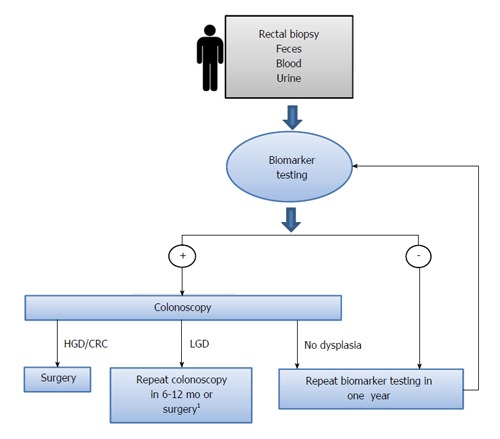
Patients with extensive ulcerative colitis (UC) of more than eight years duration have an increased risk of colorectal cancer. Molecular biomarkers for dysplasia and cancer could have a great clinical value in managing cancer risk in these UC patients. Using a wide range of molecular techniques - including cutting-edge OMICS technologies - recent studies have identified clinically relevant biomarker candidates from a variety of biosamples, including colonic biopsies, blood, stool, and urine. While the challenge remains to validate these candidate biomarkers in multi-center studies and with larger patient cohorts, it is certain that accurate biomarkers of colitis-associated neoplasia would improve clinical management of neoplastic risk in UC patients. This review highlights the ongoing avenues of research in biomarker development for colitis-associated colorectal cancer.
Keywords: Biomarker; Colitis; Colorectal cancer; Dysplasia; Non-progressor; Progressor; Surveillance.
Conflict of interest statement
Conflict-of-interest statement: The authors declare no conflict of interest.
Figures
References
-
- Ekbom A, Helmick C, Zack M, Adami HO. Ulcerative colitis and colorectal cancer. A population-based study. N Engl J Med. 1990;323:1228–1233. - PubMed
-
- Rutter M, Saunders B, Wilkinson K, Rumbles S, Schofield G, Kamm M, Williams C, Price A, Talbot I, Forbes A. Severity of inflammation is a risk factor for colorectal neoplasia in ulcerative colitis. Gastroenterology. 2004;126:451–459. - PubMed
Publication types
MeSH terms
Substances
Grants and funding
LinkOut - more resources
Full Text Sources
Other Literature Sources
Medical
