


The complete chloroplast genome sequences for four Amaranthus species (Amaranthaceae)
- PMID: 27672525
- PMCID: PMC5033369
- DOI: 10.3732/apps.1600063
The complete chloroplast genome sequences for four Amaranthus species (Amaranthaceae)
Abstract
Premise of the study: The amaranth genus contains many important grain and weedy species. We further our understanding of the genus through the development of a complete reference chloroplast genome.
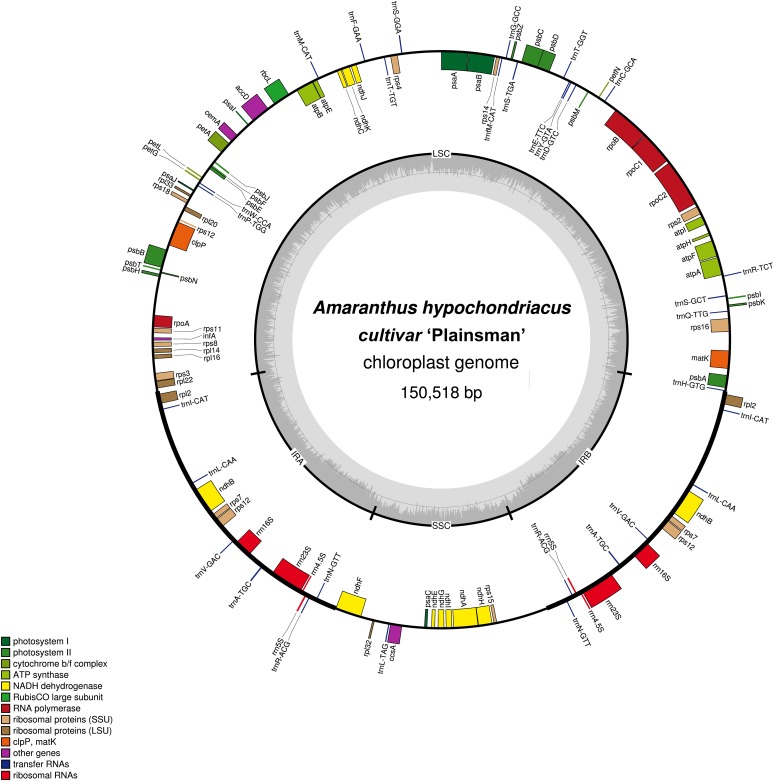
Methods and results: A high-quality Amaranthus hypochondriacus (Amaranthaceae) chloroplast genome assembly was developed using long-read technology. This reference genome was used to reconstruct the chloroplast genomes for two closely related grain species (A. cruentus and A. caudatus) and their putative progenitor (A. hybridus). The reference genome was 150,518 bp and possesses a circular structure of two inverted repeats (24,352 bp) separated by small (17,941 bp) and large (83,873 bp) single-copy regions; it encodes 111 genes, 72 for proteins. Relative to the reference chloroplast genome, an average of 210 single-nucleotide polymorphisms (SNPs) and 122 insertion/deletion polymorphisms (indels) were identified across the analyzed genomes.
Conclusions: This reference chloroplast genome, along with the reported simple sequence repeats, SNPs, and indels, is an invaluable genetic resource for studying the phylogeny and genetic diversity within the amaranth genus.
Keywords: Amaranthaceae; Amaranthus hypochondriacus; chloroplast genome; grain amaranths; next-generation sequencing; pigweed.
Figures
References
-
- Birky C. W. 2001. The inheritance of genes in mitochondria and chloroplasts: Laws, mechanisms, and models. Annual Review of Genetics 35: 125–148. - PubMed
-
- Bressani R., Sánchez-Marroquín A., Morales E. 1992. Chemical composition of grain amaranth cultivars and effects of processing on their nutritional quality. Food Reviews International 8: 23–49.
LinkOut - more resources
Full Text Sources
Other Literature Sources
Research Materials
