


Research in Medical School: A Survey Evaluating Why Medical Students Take Research Years
- PMID: 27672532
- PMCID: PMC5026499
- DOI: 10.7759/cureus.741
Research in Medical School: A Survey Evaluating Why Medical Students Take Research Years
Abstract
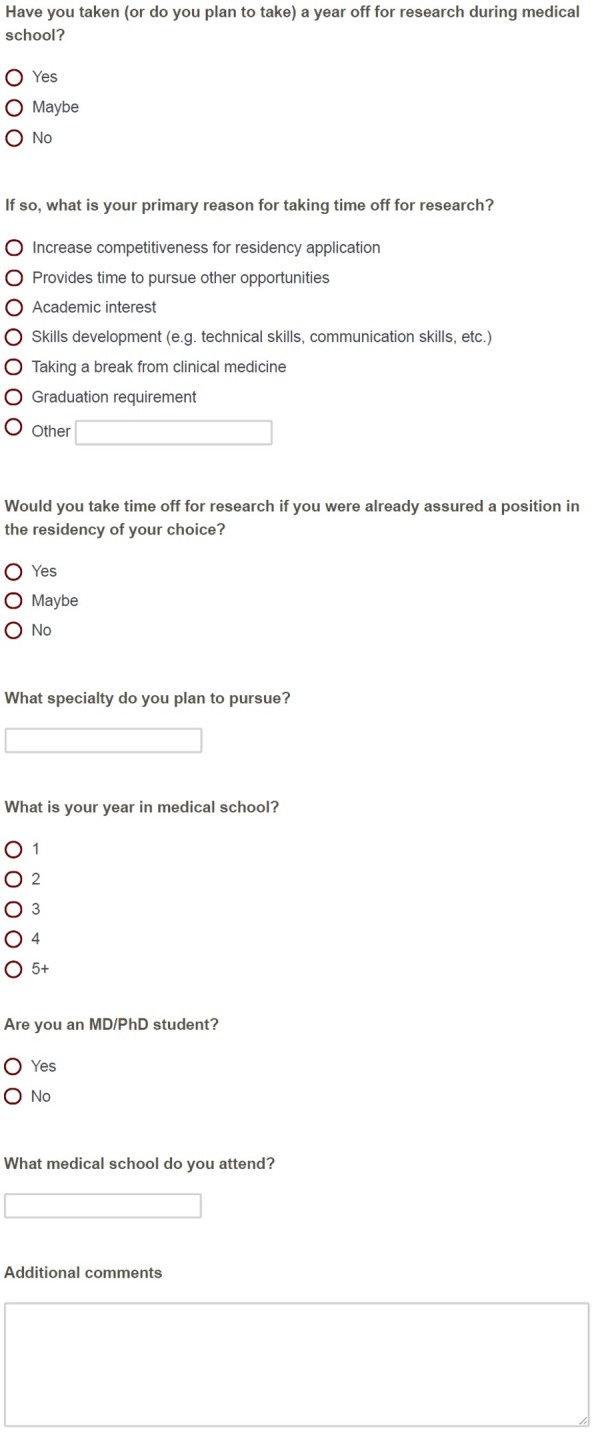
Introduction: In recent years, an increasing number of medical students have taken time off during medical school in order to conduct research. Schools and students have invested millions of dollars and thousands of person-years on research projects, but little is known as to why students choose to take this time off. We aim to characterize why students take research years during medical school.
Methods: The authors distributed an online survey about research in medical school to students at five medical schools that have highly regarded research programs.
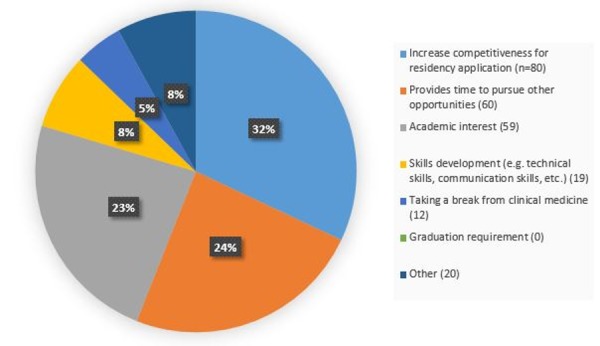
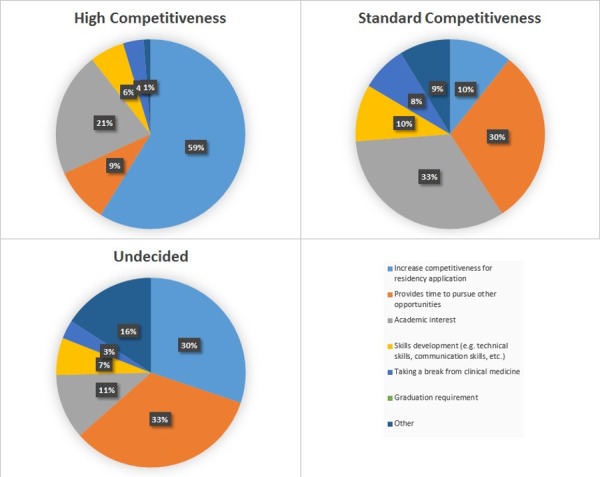
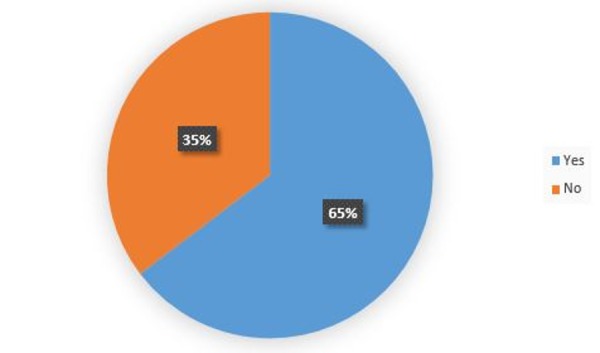
Results: 328 students responded to the survey. The most common reasons students take years off for research are: "increase competitiveness for residency application" (32%), "time to pursue other opportunities" (24%), and "academic interest" (23%). Students who would still take a research year even if they were already assured a position in a residency program of their choice were at 65%, while 35% would not take a research year. Responses varied based on whether students intended to go into a competitive specialty.
Discussion: Medical students take research years for multiple reasons, although they frequently are not motivated by an interest in the research itself. Many student projects consume a substantial amount of time and money despite having little educational value. Medical schools, residency programs, and policymakers should rethink incentives to increase value and help students better pursue their academic interests.
Keywords: medical education; medical school; research.
Conflict of interest statement
The authors have declared that no competing interests exist.
Figures
References
-
- In support of medical student research. Small AC, Levy LL. Acad Med. 2013;88:1592. - PubMed
-
- Impact of medical student research in the development of physician-scientists. [May;2016 ];Solomon SS, Tom SC, Pichert J, Wasserman D, Powers AC. http://onlinelibrary.wiley.com/doi/10.1111/cts.12289/pdf J Investig Med. 2003 51:149–156. - PubMed
-
- A review of literature on medical students and scholarly research: experiences, attitudes, and outcomes. Chang Y, Ramnanan CJ. Acad Med. 2015;90:1162–1173. - PubMed
-
- More on promoting medical student scholarly research. Rosenkranz SK, Hu W. Acad Med. 2016;91:159–160. - PubMed
LinkOut - more resources
Full Text Sources
Other Literature Sources