


The Prevalence of Vitiligo: A Meta-Analysis
- PMID: 27673680
- PMCID: PMC5038943
- DOI: 10.1371/journal.pone.0163806
The Prevalence of Vitiligo: A Meta-Analysis
Abstract
Objective: To conduct a meta-analysis assessing the prevalence of vitiligo.
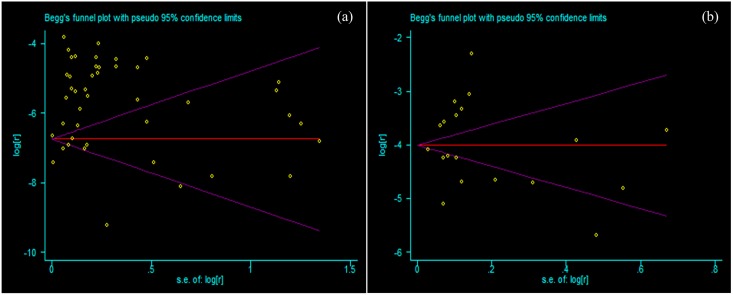
Methods: Literatures that reported prevalence rates of vitiligo were identified using EMBASE, PubMed, the Cochrane Library, China National Knowledge Infrastructure (CNKI), Wanfang database and Weipu database for the period from inception to May 2016. We performed stratified analyses on possible sources of bias, including areas difference, years of publication, gender and age. Publication bias was assessed with Egger's test method.
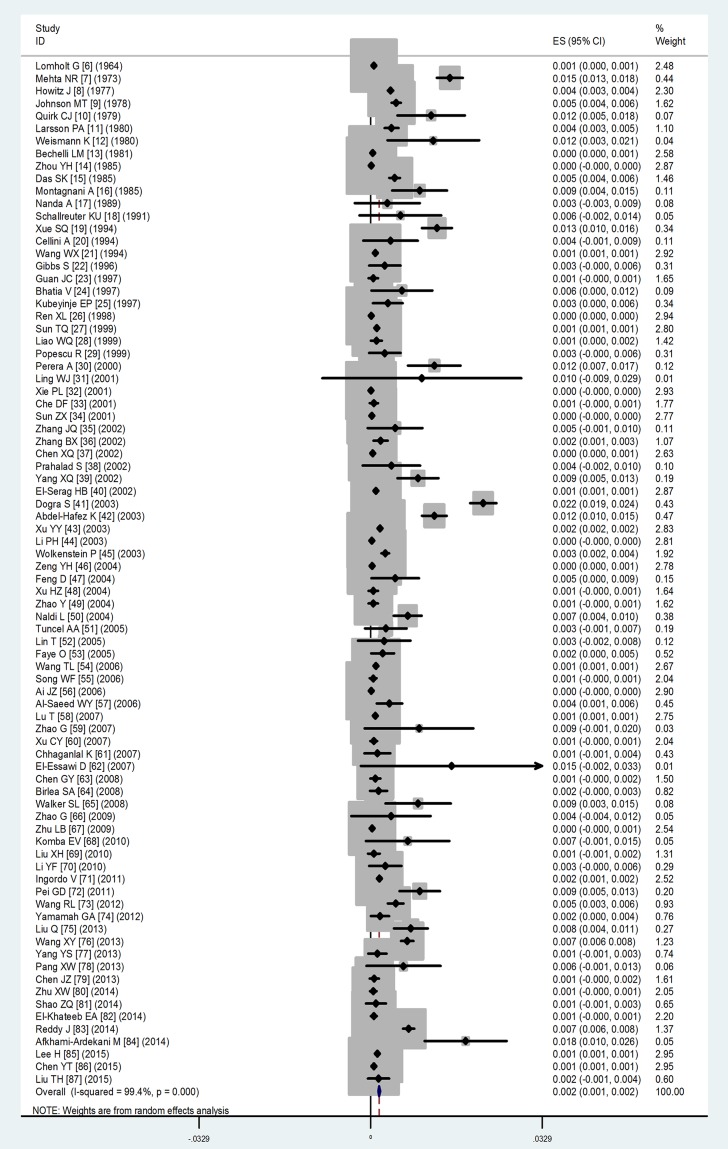
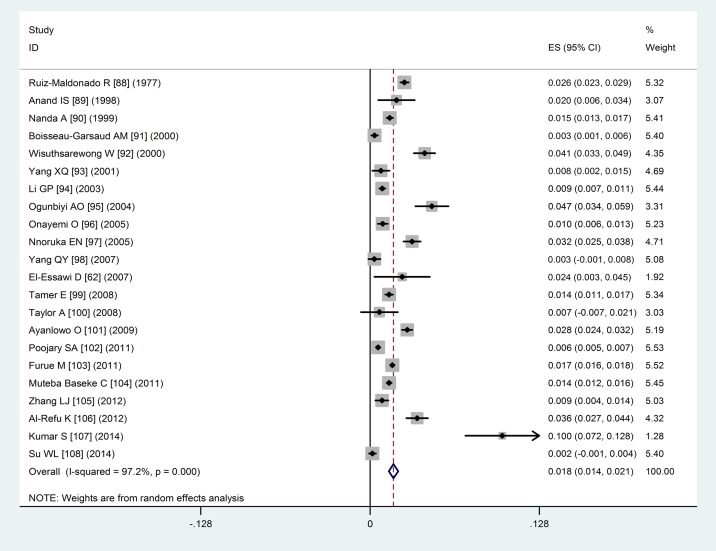
Results: A total of 103 studies were eligible for inclusion. The pooled prevalence of vitiligo from 82 population- or community-based studies was 0.2% (95%CI: 0.1%-0.2%) and from 22 hospital-based studies was 1.8% (95%CI: 1.4%-2.1%). A relatively high prevalence of vitiligo was found in Africa area and in female patients. For population- or community-based studies, the prevalence has maintained at a low level in recent 20 years and it has increased with age gradually. For hospital-based studies, the prevalence has showed a decreased trend from 60s till now or from young to old. No significant publication bias existed in hospital-based studies (t = 0.47, P = 0.643), while a significant publication bias existed in population- or community-based studies (t = 2.31, P = 0.026).
Conclusion: A relatively high prevalence of vitiligo was found in Africa area and in female patients. The prevalence has maintained at a low level in recent years. It showed an inverse trend with age increment in population- or community-based studies and hospital-based studies.
Conflict of interest statement
The authors have declared that no competing interests exist.
Figures
References
-
- Alikhan A, Felsten LM, Daly M, Petronic-Rosic. Vitiligo: a comprehensive overview Part I. Introduction, epidemiology, quality of life, diagnosis, differential diagnosis, associations, histopathology, etiology, and work-up. VJ Am Acad Dermatol. 2011. September;65(3):473–91. - PubMed
-
- Majumder PP. Genetics and prevalence of vitiligo vulgaris In:Hann SK, Nordlund JJ, editors. Vitiligo. Oxford: Blackwell Science; 2000;p.18–20.
-
- Alkhateeb A, Fain PR, Thody A, Bennett DC, Spritz RA. Epidemiology of vitiligo and associated autoimmune diseases in Caucasian probands and their families. Pigment Cell Res. 2003;16:208–14. - PubMed
LinkOut - more resources
Full Text Sources
Other Literature Sources
Medical
