


Pattern and Predictors of Hospital Readmission During the First Year After Lung Transplantation
- PMID: 27676226
- PMCID: PMC5368039
- DOI: 10.1111/ajt.14064
Pattern and Predictors of Hospital Readmission During the First Year After Lung Transplantation
Abstract
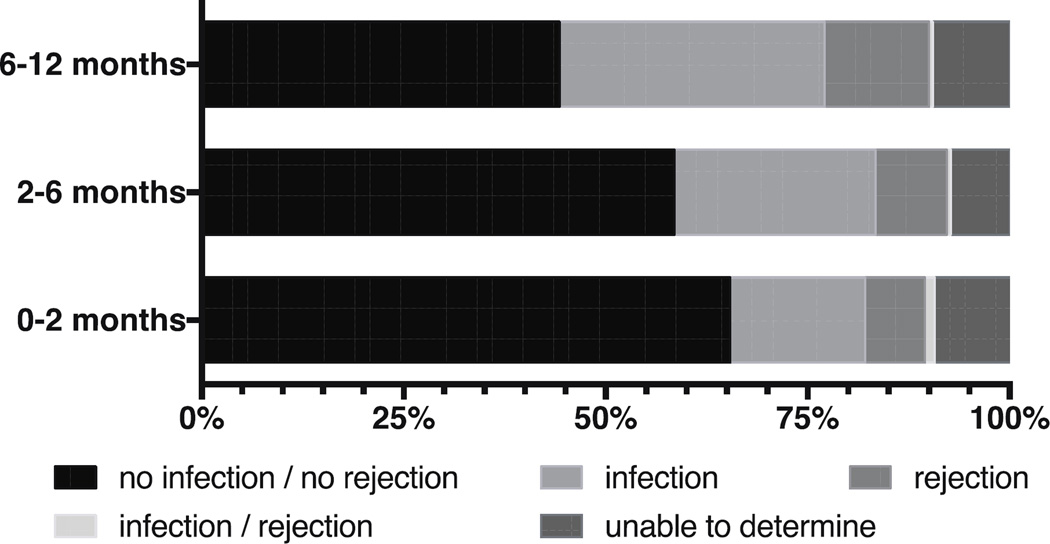
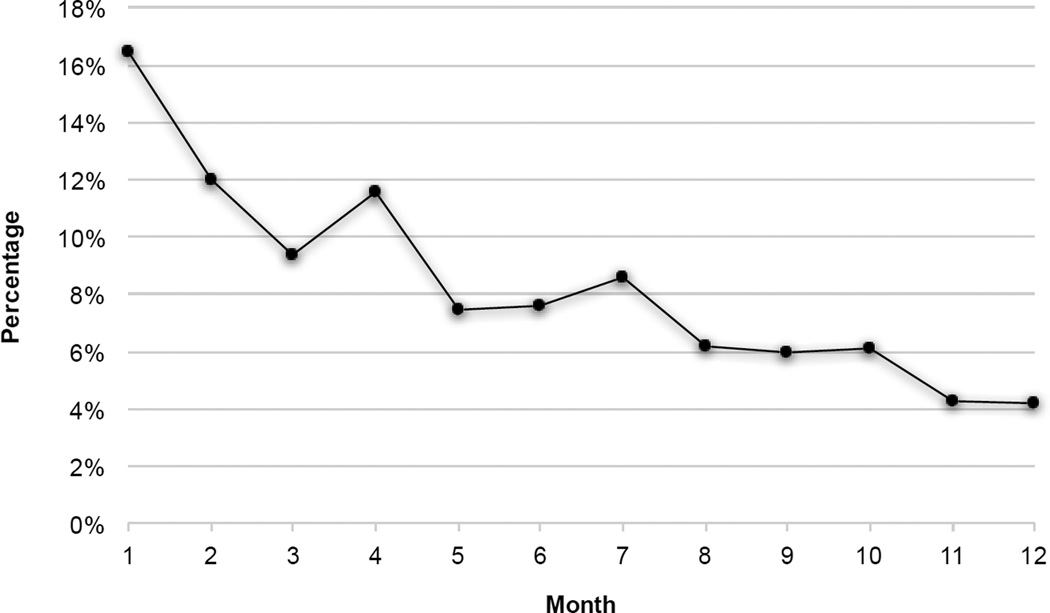
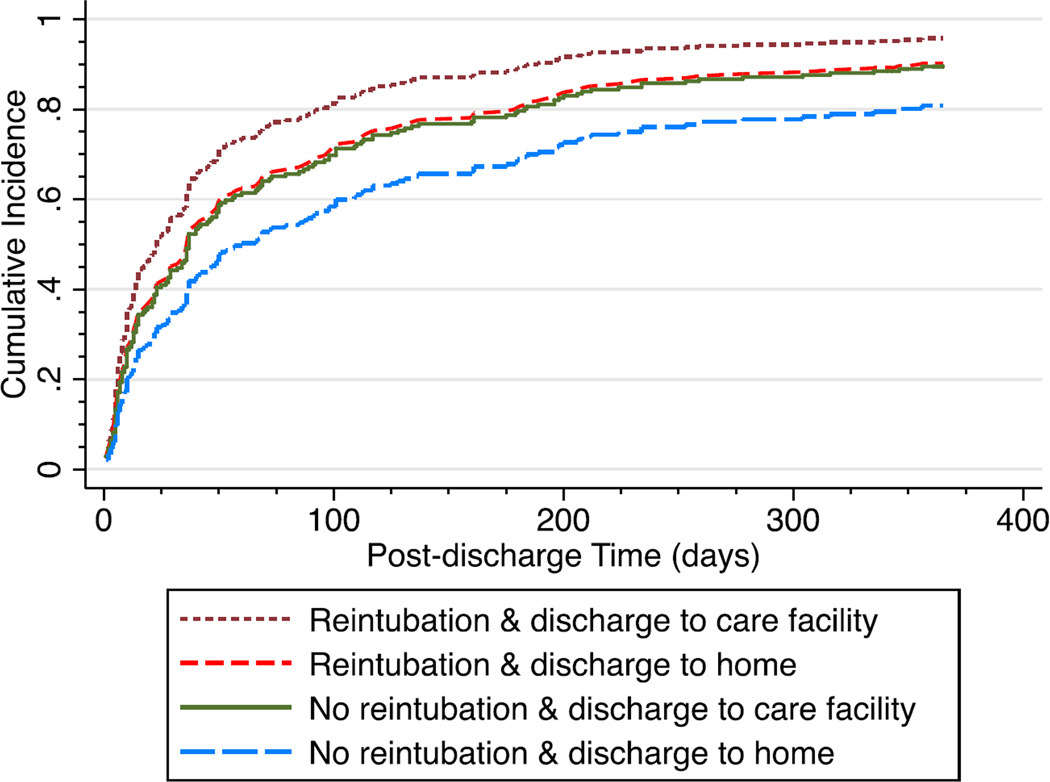
Hospital readmission after lung transplantation negatively affects quality of life and resource utilization. A secondary analysis of data collected prospectively was conducted to identify the pattern of (incidence, count, cumulative duration), reasons for and predictors of readmission for 201 lung transplant recipients (LTRs) assessed at 2, 6, and 12 mo after discharge. The majority of LTRs (83.6%) were readmitted, and 64.2% had multiple readmissions. The median cumulative readmission duration was 19 days. The main reasons for readmission were other than infection or rejection (55.5%), infection only (25.4%), rejection only (9.9%), and infection and rejection (0.7%). LTRs who required reintubation (odds ratio [OR] 1.92; p = 0.008) or were discharged to care facilities (OR 2.78; p = 0.008) were at higher risk for readmission, with a 95.7% cumulative incidence of readmission at 12 mo. Thirty-day readmission (40.8%) was not significantly predicted by baseline characteristics. Predictors of higher readmission count were lower capacity to engage in self-care (incidence rate ratio [IRR] 0.99; p = 0.03) and discharge to care facilities (IRR 1.45; p = 0.01). Predictors of longer cumulative readmission duration were older age (arithmetic mean ratio [AMR] 1.02; p = 0.009), return to the intensive care unit (AMR 2.00; p = 0.01) and lower capacity to engage in self-care (AMR 0.99; p = 0.03). Identifying LTRs at risk may assist in optimizing predischarge care, discharge planning and long-term follow-up.
Keywords: allied health/nursing; clinical research/practice; complication; health services and outcomes research; hospital discharge; hospital readmission; lung disease; lung transplantation/pulmonology; patient characteristics.
© 2016 The American Society of Transplantation and the American Society of Transplant Surgeons.
Conflict of interest statement
The authors of this manuscript have no conflicts of interest to disclose as described by the American Journal of Transplantation.
Figures
References
-
- Axon RN, Williams MV. Hospital Readmission as an Accountability Measure. Jama. 2011;305(5):504. - PubMed
-
- Chen P, Wang W, Yan L, Yang J, Wen T, Li B, et al. Risk factors for first-year hospital readmission after liver transplantation. Eur J Gastroenterol Hepatol. 2015;27(5):600–606. - PubMed
-
- Ashton CM, Kuykendall DH, Johnson ML, Wray NP, Wu L. The association between the quality of inpatient care and early readmission. Ann Intern Med. 1995;122(6):415–421. - PubMed
-
- Evans KA. Reducing readmission rates. Adv NPs PAs. 2013;4(2):12. - PubMed
Publication types
MeSH terms
Grants and funding
LinkOut - more resources
Full Text Sources
Other Literature Sources
Medical
