


Locomotive syndrome is associated with body composition and cardiometabolic disorders in elderly Japanese women
- PMID: 27677265
- PMCID: PMC5039907
- DOI: 10.1186/s12877-016-0339-6
Locomotive syndrome is associated with body composition and cardiometabolic disorders in elderly Japanese women
Abstract
Background: A concept referred to as locomotive syndrome (LS) was proposed by the Japanese Orthopaedic Association in order to help identify middle-aged and older adults who may be at high risk of requiring healthcare services because of problems associated with locomotion. Cardiometabolic disorders, including obesity, hypertension, diabetes, and dyslipidemia, have a high prevalence worldwide. The purpose of this study was to determine the associations between LS and both body composition and cardiometabolic disorders.
Methods: The study participants were 165 healthy adult Japanese women volunteers living in rural areas. LS was defined as a score ≥16 on the 25-question Geriatric Locomotive Function Scale (GLFS-25). Height, body weight, body fat percentage, body mass index (BMI), and bone status were measured. Bone status was evaluated by quantitative ultrasound (i.e., the speed of sound [SOS] of the calcaneus) and was expressed as the percent of Young Adult Mean of the SOS (%YAM). Comorbid conditions of hypertension, hyperlipidemia, and diabetes were assessed using self-report questionnaires.
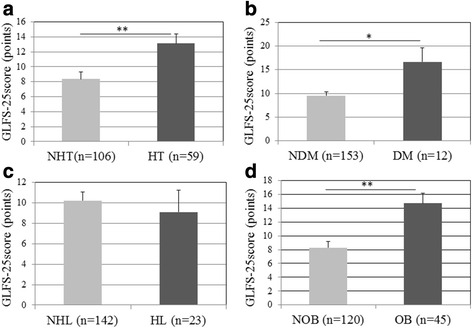
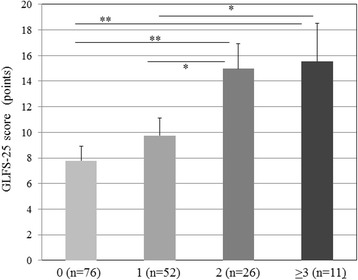
Results: Twenty-nine participants (17.6 %) were classed as having LS. The LS group was older, shorter, and had a higher body fat percentage, a higher BMI, and lower bone status than the non-LS group. Multiple logistic regression analysis showed that participants with a BMI ≥23.5 kg/m2 had a significantly higher risk for LS than those with a BMI <23.5 kg/m2 (odds ratio [OR] = 3.78, p < 0.01). Furthermore, GLFS-25 scores were higher in participants with than those without hypertension, diabetes, or obesity, and significantly increased with the number of present disorders.
Conclusions: These findings suggest that BMI may be a useful screening tool for LS. Furthermore, because hypertension and diabetes were associated with LS, the prevention of these disorders accompanied by weight management may help protect against LS.
Keywords: Body composition; Bone mass index; Cardiometabolic disorders; Locomotive syndrome.
Figures
References
-
- Statistics Bureau. Population estimates (March 2015). http://www.e-stat.go.jp/SG1/estat/ListE.do?lid=000001131732. Accessed 22 Sept 2016.
-
- Japanese Orthopaedic Association . Guidebook on locomotive syndrome. Tokyo: Bunkodo; 2010.
LinkOut - more resources
Full Text Sources
Other Literature Sources
