


Exclusion of patients with concomitant chronic conditions in ongoing randomised controlled trials targeting 10 common chronic conditions and registered at ClinicalTrials.gov: a systematic review of registration details
- PMID: 27678540
- PMCID: PMC5051474
- DOI: 10.1136/bmjopen-2016-012265
Exclusion of patients with concomitant chronic conditions in ongoing randomised controlled trials targeting 10 common chronic conditions and registered at ClinicalTrials.gov: a systematic review of registration details
Abstract
Objectives: To systematically assess registration details of ongoing randomised controlled trials (RCTs) targeting 10 common chronic conditions and registered at ClinicalTrials.gov and to determine the prevalence of (1) trial records excluding patients with concomitant chronic condition(s) and (2) those specifically targeting patients with concomitant chronic conditions.
Design: Systematic review of trial registration records.
Data sources: ClinicalTrials.gov register.
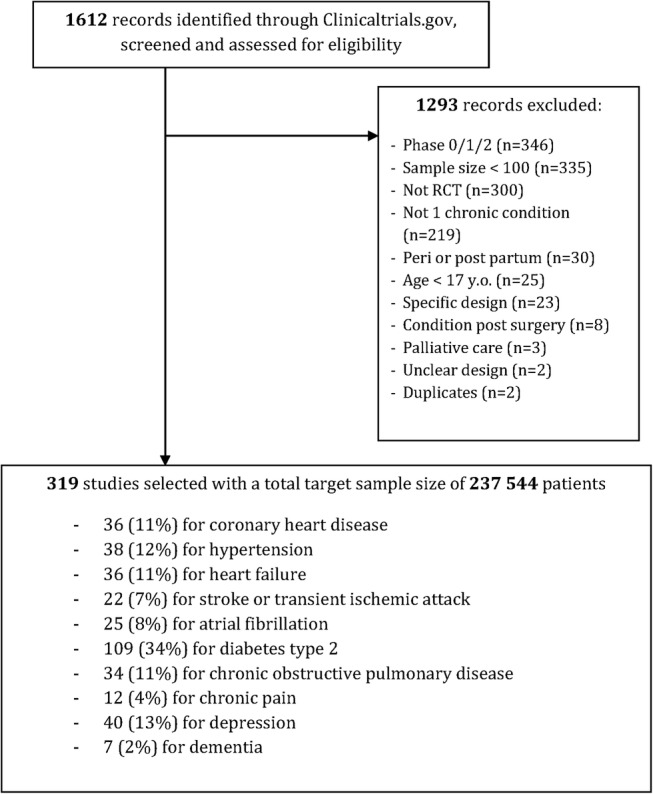
Study selection: All ongoing RCTs registered from 1 January 2014 to 31 January 2015 that assessed an intervention targeting adults with coronary heart disease (CHD), hypertension, heart failure, stroke/transient ischaemic attack, atrial fibrillation, type 2 diabetes, chronic obstructive pulmonary disease, painful condition, depression and dementia with a target sample size ≥100.
Data extraction: From the trial registration records, 2 researchers independently recorded the trial characteristics and the number of exclusion criteria and determined whether patients with concomitant chronic conditions were excluded or specifically targeted.
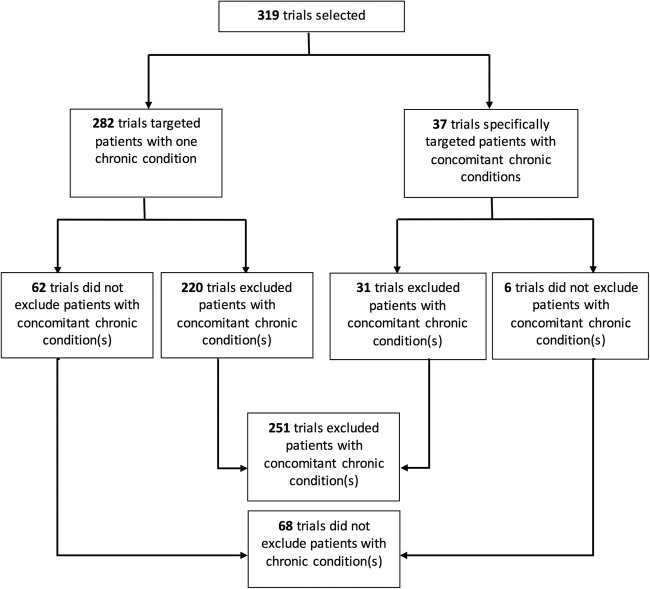
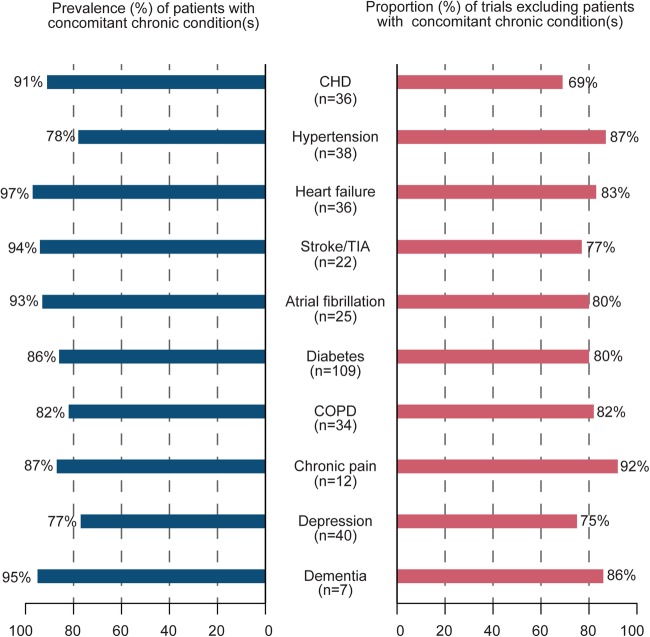
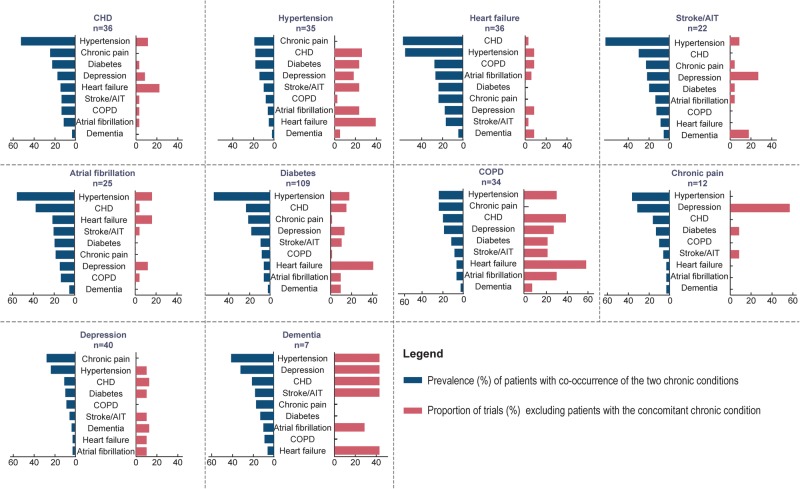
Results: Among 319 ongoing RCTs, despite the high prevalence of the concomitant chronic conditions, patients with these conditions were excluded in 251 trials (79%). For example, although 91% of patients with CHD had a concomitant chronic condition, 69% of trials targeting such patients excluded patients with concomitant chronic condition(s). When considering the co-occurrence of 2 chronic conditions, 31% of patients with chronic pain also had depression, but 58% of the trials targeting patients with chronic pain excluded patients with depression. Only 37 trials (12%) assessed interventions specifically targeting patients with concomitant chronic conditions; 31 (84%) excluded patients with concomitant chronic condition(s).
Conclusions: Despite widespread multimorbidity, more than three-quarters of ongoing trials assessing interventions for patients with chronic conditions excluded patients with concomitant chronic conditions.
Keywords: PRIMARY CARE; chronic condition; external validity; multimorbidity; randomized controlled trials.
Published by the BMJ Publishing Group Limited. For permission to use (where not already granted under a licence) please go to http://www.bmj.com/company/products-services/rights-and-licensing/
Figures
References
-
- Alwan A. Global status report on noncommunicable diseases 2010. World Health Organization, 2011.
LinkOut - more resources
Full Text Sources
Other Literature Sources
