


Ralstonia mannitolilytica-Induced Septicemia and Homology Analysis in Infected Patients: 3 Case Reports
- PMID: 27679705
- PMCID: PMC5035395
- DOI: 10.5812/jjm.34373
Ralstonia mannitolilytica-Induced Septicemia and Homology Analysis in Infected Patients: 3 Case Reports
Abstract
Background: Ralstonia mannitolilytica is an emerging opportunistic pathogen. Hospital outbreaks of Ralstonia spp. are mainly associated with contaminated treatment water or auxiliary instruments.
Objectives: In this report, we summarize the clinical infection characteristics of R. mannitolilytica, the drug-susceptibility testing of the bacterial strains, and the results of related infection investigations.
Patients and methods: We retrospectively analyzed the clinical information of 3 patients with R. mannitolilytica.
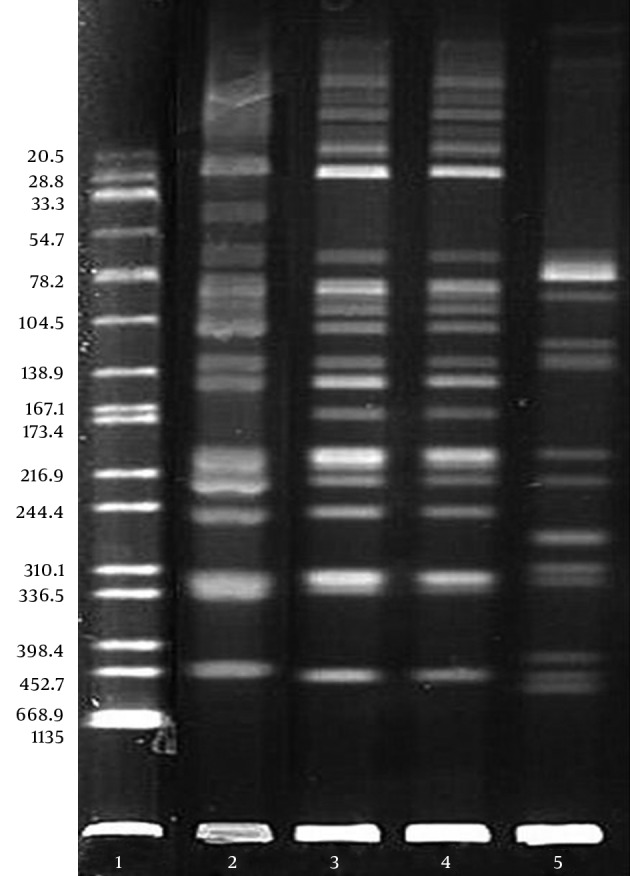
Results: The patients' primary-onset symptoms were chills and fever. The disease progressed rapidly and septic shock symptoms developed. Laboratory tests indicated progressively decreased white blood cells and platelets, as well as significant increases in certain inflammation indicators. The effect of treatment with Tazocin was good. The growth period of R. mannitolilytica in sterile distilled water was > 6 months. The pulsed-field gel electrophoresis (PFGE) results revealed that the infectious strains from these 3 patients were not the same clonal strain. This bacterium was not detected in the nosocomial infection samples.
Conclusions: Our results suggest that R. mannitolilytica-induced septicemia had an acute disease onset and rapid progression. The preferred empirical antibiotic was Tazocin. In these 3 cases, the R. mannitolilytica-induced septicemia was not due to clonal transmission.
Keywords: Drug Susceptibility; Nosocomial Infection; Pulsed-Field Gel Electrophoresis; Ralstonia mannitolilytica; Septicemia.
Figures
References
-
- Dowsett E. Hospital infections caused by contaminated fluids. Lancet. 1972;1(7764):1338. - PubMed
-
- Phillips I, Eykyn S, Laker M. Outbreak of hospital infection caused by contaminated autoclaved fluids. Lancet. 1972;1(7763):1258–60. - PubMed
-
- Daxboeck F, Stadler M, Assadian O, Marko E, Hirschl AM, Koller W. Characterization of clinically isolated Ralstonia mannitolilytica strains using random amplification of polymorphic DNA (RAPD) typing and antimicrobial sensitivity, and comparison of the classification efficacy of phenotypic and genotypic assays. J Med Microbiol. 2005;54(Pt 1):55–61. doi: 10.1099/jmm.0.45656-0. - DOI - PubMed
-
- Block C, Ergaz-Shaltiel Z, Valinsky L, Temper V, Hidalgo-Grass C, Minster N, et al. Deja vu: Ralstonia mannitolilytica infection associated with a humidifying respiratory therapy device, Israel, June to July 2011. Euro Surveill. 2013;18(18):20471. - PubMed
LinkOut - more resources
Full Text Sources
Other Literature Sources
Miscellaneous