


Genome-wide identification of multifunctional laccase gene family in cotton (Gossypium spp.); expression and biochemical analysis during fiber development
- PMID: 27679939
- PMCID: PMC5041144
- DOI: 10.1038/srep34309
Genome-wide identification of multifunctional laccase gene family in cotton (Gossypium spp.); expression and biochemical analysis during fiber development
Abstract
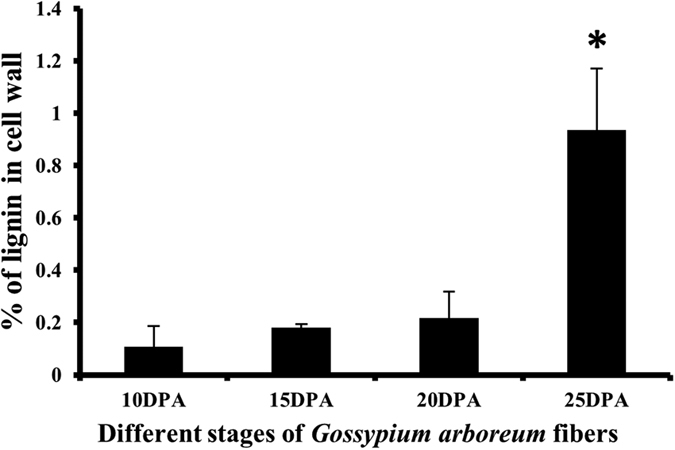
The single-celled cotton fibers, produced from seed coat epidermal cells are the largest natural source of textile fibers. The economic value of cotton fiber lies in its length and quality. The multifunctional laccase enzymes play important roles in cell elongation, lignification and pigmentation in plants and could play crucial role in cotton fiber quality. Genome-wide analysis of cultivated allotetraploid (G. hirsutum) and its progenitor diploid (G. arboreum and G. raimondii) cotton species identified 84, 44 and 46 laccase genes, respectively. Analysis of chromosomal location, phylogeny, conserved domain and physical properties showed highly conserved nature of laccases across three cotton species. Gene expression, enzymatic activity and biochemical analysis of developing cotton fibers was performed using G. arboreum species. Of the total 44, 40 laccases showed expression during different stages of fiber development. The higher enzymatic activity of laccases correlated with higher lignin content at 25 DPA (Days Post Anthesis). Further, analysis of cotton fiber phenolic compounds showed an overall decrease at 25 DPA indicating possible incorporation of these substrates into lignin polymer during secondary cell wall biosynthesis. Overall data indicate significant roles of laccases in cotton fiber development, and presents an excellent opportunity for manipulation of fiber development and quality.
Figures




References
-
- Gillham F. E. M. et al.. Cotton Production Prospects for the Next Decade. (The World Bank, 1996).
-
- Fan L. et al.. Molecular and Biochemical Evidence for Phenylpropanoid Synthesis and Presence of Wall-linked Phenolics in Cotton Fibers. Journal of Integrative Plant Biology 51, 626–637 (2009). - PubMed
-
- de Morais Teixeira E. et al.. Cellulose nanofibers from white and naturally colored cotton fibers. Cellulose 17, 595–606 (2010).
LinkOut - more resources
Full Text Sources
Other Literature Sources
Miscellaneous
