Editorial
. 2016 Sep 29;14(1):149.
doi: 10.1186/s12916-016-0696-1.

The disease of corruption: views on how to fight corruption to advance 21st century global health goals

Affiliations
Editorial

The disease of corruption: views on how to fight corruption to advance 21st century global health goals

Tim K Mackey et al. BMC Med. .

Abstract

Corruption has been described as a disease. When corruption infiltrates global health, it can be particularly devastating, threatening hard gained improvements in human and economic development, international security, and population health. Yet, the multifaceted and complex nature of global health corruption makes it extremely difficult to tackle, despite its enormous costs, which have been estimated in the billions of dollars. In this forum article, we asked anti-corruption experts to identify key priority areas that urgently need global attention in order to advance the fight against global health corruption. The views shared by this multidisciplinary group of contributors reveal several fundamental challenges and allow us to explore potential solutions to address the unique risks posed by health-related corruption. Collectively, these perspectives also provide a roadmap that can be used in support of global health anti-corruption efforts in the post-2015 development agenda.

Keywords: Anti-corruption; Corruption; Global health; Global health governance; Good governance; International development; Sustainable Development Goals.


Figures
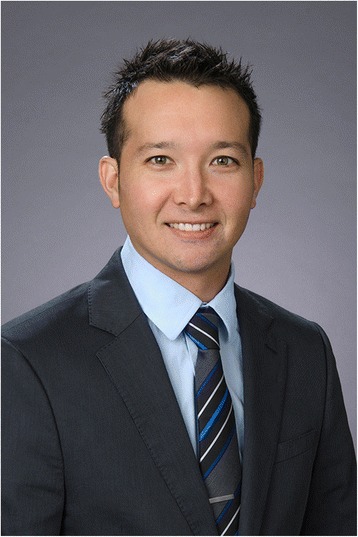
Fig. 1
Fig. 1
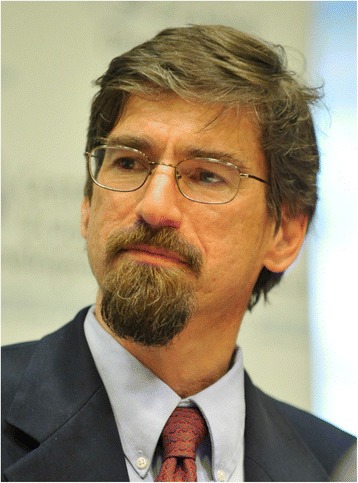
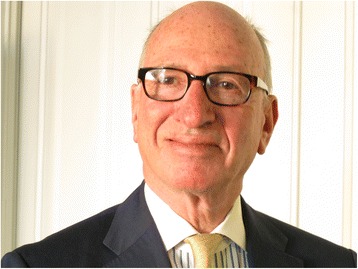
Tim K. Mackey is the Director of the Global Health Policy Institute, an Assistant Professor at UC San Diego – School of Medicine, and the Associate Director of the Joint Masters Degree Program in Health Policy and Law at UCSD-California Western School of Law. He has a multidisciplinary background and his research focuses on global health policy, law, governance, and diplomacy and has worked or consulted for organizations including the World Health Organization, U.S. Department of State, and the U.S. Department of Justice
Fig. 2
Fig. 2
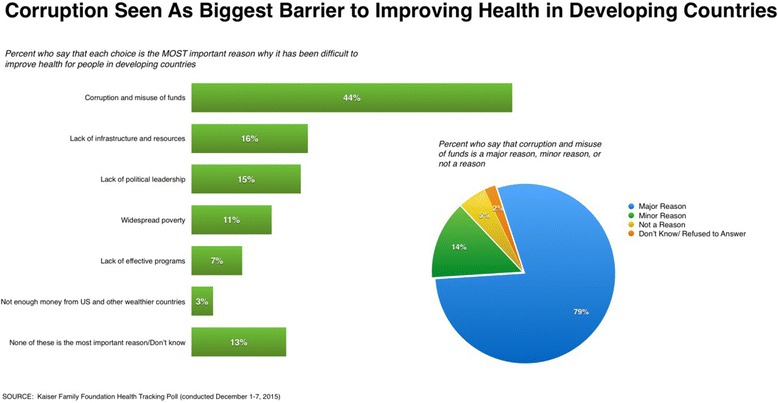
Public perception on the role of corruption in improving health in developing countries (Kaiser Family Foundation) [6]. Surveys conducted by the Kaiser Family Foundation examining Americans’ opinions on the US role in global health have consistently found that the American public views corruption as a major problem. In its 2015 survey, 44 % of respondents believed that ‘corruption and misuse of funds’ was the most important reason why health cannot be improved in developing countries. Seventy-nine percent of respondents also believed corruption was a major barrier, meaning that corruption is viewed by the American public as the biggest barrier (more than lack of infrastructure/resources, poverty, lack of political leadership and effective programs, and lack of funding) to investing in programs that support global health goals
Fig. 3
Fig. 3
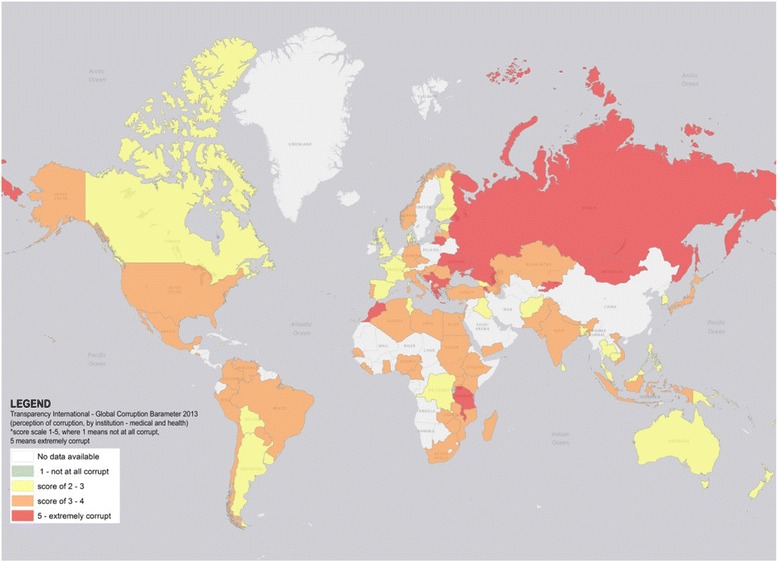
Heat map of Transparency International’s Global Corruption Barometer (GCB): perceptions of the extent of corruption in medical and health services institutions. Transparency International’s 2013 GCB uses surveys from more than 114,000 respondents in 107 different countries to assess people’s direct experiences and views on corruption in main institutions in their countries. This includes assessing perception of the extent of corruption in Medical and Health Services institutions measured on a scale of 1 to 5, where 1 indicates “not at all corrupt” and 5 indicates “extremely corrupt.” The above map was generated using publicly available data from GCB and was visualized in ArcGIS map. It depicts the varying levels of public perception on how corrupt medical and health institutions are within respective countries (global mean score of 3.3)
Fig. 4
Fig. 4
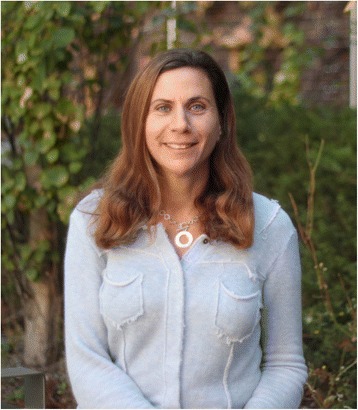
Bill Savedoff is a senior fellow at the Center for Global Development (CGD), where he works on issues of health policy, performance payments, and corruption. Before joining CGD, he worked at the Inter-American Development Bank and the World Health Organization on projects and research in Latin America, Africa and Asia. His publications include The Health Financing Transition, Governing Mandatory Health Insurance, and Diagnosis Corruption
Fig. 5
Fig. 5
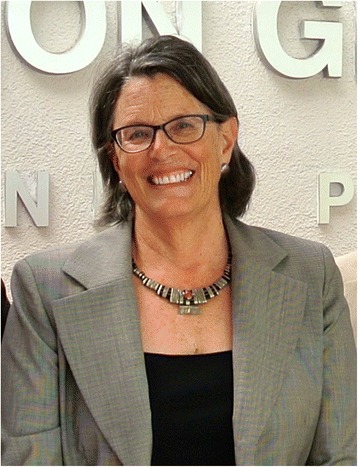
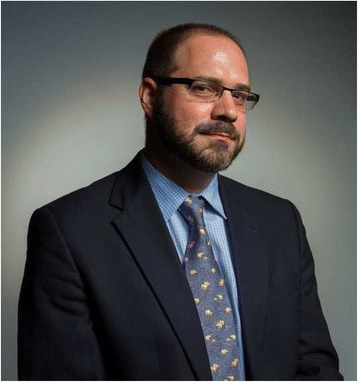
Maureen Lewis is the co-founder and CEO of Aceso Global, a non-profit organization that strengthens health systems in emerging markets and developing countries by improving hospital management and integrated care, quality, and performance. She is a non-resident Fellow at the Center for Global Development and a Visiting Professor at Georgetown University’s School of Foreign Service. Prior to that, Dr. Lewis spent 22 years at the World Bank in management and staff positions, most notably as Chief Economist Human Development. Dr. Lewis was a Senior Fellow at the Center for Global Development and was previously a Senior Research Associate at The Urban Institute working in Latin America
Fig. 6
Fig. 6
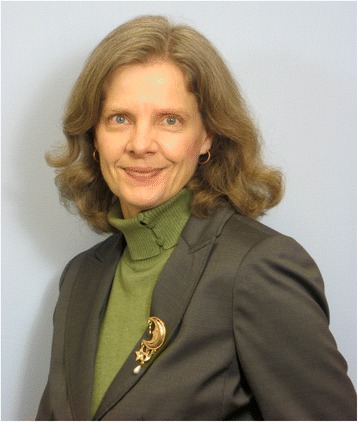
Frank Vogl is a co-founder of Transparency International and the Partnership for Transparency Fund and serves as an advisor to both organizations. He is an adjunct professor of government at Georgetown University. Frank is the author of Waging War on Corruption – Inside The Movement Fighting The Abuse of Power (new paperback edition, September 2016) updated, 2016) Rowman & Littlefield. He writes and lectures extensively on corruption – www.frankvogl.com
Fig. 7
Fig. 7
James Sale is the Program Manager for Transparency International’s Pharmaceuticals & Healthcare Program. He joined TI in 2014 to establish the Pharmaceuticals & Healthcare Program having previously worked in governance and public financial management at Crown Agents and vaccine surveillance with the World Health Organization
Fig. 8
Fig. 8
Jillian Clare Kohler is a Professor at the Leslie Dan Faculty of Pharmacy, the Dalla Lana School of Public Health and the Munk School of Global Affairs. She is also Director of the WHO Collaborating Centre for Governance, Transparency and Accountability in the Pharmaceutical Sector. Her research and teaching are focused on global pharmaceutical policies related to improving fair access of those in need to critical medicines. Prior to joining the University of Toronto, she worked exclusively on global pharmaceutical policy for a number of UN organizations, including UNICEF, the World Bank and the WHO. She continues to advise global institutions and NGOs on global pharmaceutical policy issues such as anti-corruption strategies, drug regulations, and reimbursement policies
Fig. 9
Fig. 9
Joshua Michaud is an Associate Director for Global Health Policy at the Kaiser Family Foundation, and an authority on global health policy issues such as financing, the role of US agencies in global health, global health diplomacy, and health security and emerging diseases. He is also a Professorial Lecturer at the Johns Hopkins University School of Advanced International Studies (SAIS) in Washington DC, where he teaches courses on global health policy and health and development
Fig. 10
Fig. 10
Taryn Vian is Associate Chair of Education and Associate Professor of Global Health at the Boston University School of Public Health. Her research and teaching focus on corruption and health, good governance, financial reforms, and management systems. She has analyzed corruption vulnerabilities in various countries for clients including USAID, Transparency International, the Council of Europe, and WHO. She has participated in Global Advisory Groups and expert meetings organized by the Bill and Melinda Gates Foundation, USAID, UNDESA, and WHO on public engagement in anti-corruption, transparency in the pharmaceutical sector, and supply management

References

    1. People and Development: address to the Board of Governors, Washington, DC, October 1, 1996 (English). http://documents.worldbank.org/curated/en/243871468141893629/People-and-.... Accessed 5 Aug 2016.
    1. Mackey TK, Liang BA. Combating healthcare corruption and fraud with improved global health governance. BMC Int Health Hum Rights. 2012;12:23. doi: 10.1186/1472-698X-12-23. - DOI - PMC - PubMed
    1. Transparency International . Global Corruption Report 2006: Corruption and Health. London and Ann Arbor: Pluto Press and Transparency International; 2006.
    1. UNDP. Fighting Corruption in the Health Sector: Methods, Tools and Good Practices. 2011. http://www.undp.org/content/undp/en/home/librarypage/democratic-governan.... Accessed 7 May 2012.
    1. Savedoff W, Glassman A, Madan J. Global Health, Aid and Corruption: Can We Escape the Scandal Cycle? CGD Policy Paper 086. Washington DC: Center for Global Development; 2016.

Publication types

LinkOut - more resources