


ANTIFUNGAL SUSCEPTIBILITY TESTING AND GENOTYPING CHARACTERIZATION OF Cryptococcus neoformans AND gattii ISOLATES FROM HIV-INFECTED PATIENTS OF RIBEIRÃO PRETO, SÃO PAULO, BRAZIL
- PMID: 27680174
- PMCID: PMC5048640
- DOI: 10.1590/S1678-9946201658069
ANTIFUNGAL SUSCEPTIBILITY TESTING AND GENOTYPING CHARACTERIZATION OF Cryptococcus neoformans AND gattii ISOLATES FROM HIV-INFECTED PATIENTS OF RIBEIRÃO PRETO, SÃO PAULO, BRAZIL
Abstract
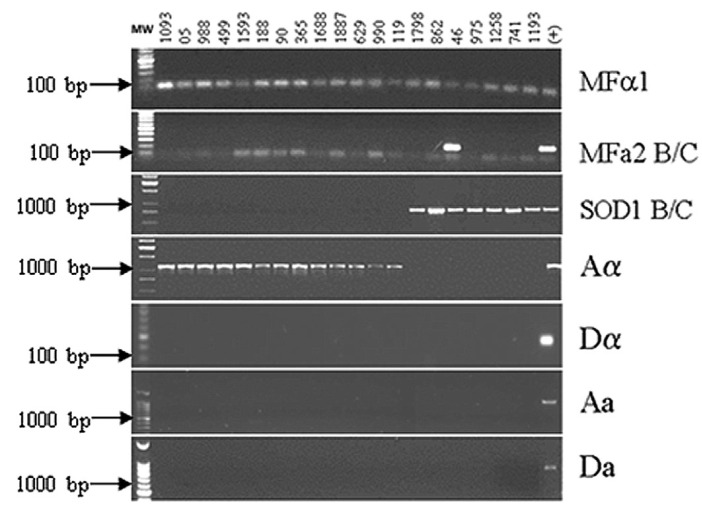
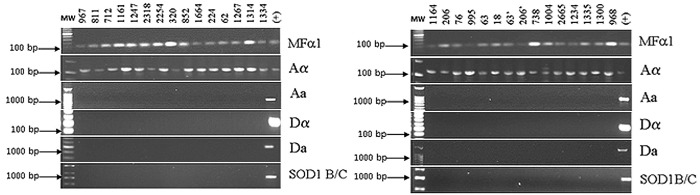
Cryptococcosis is a leading invasive fungal infection in immunocompromised patients. Considering the high prevalence and severity of these infections in immunocompromised patients attended at HC-FMRP-USP, the present research aimed to characterize the clinical isolates of Cryptococcus strains by biochemical and molecular methods and evaluate antifungal susceptibility of clinical isolates. Fifty isolates from 32 HIV-positive patients were obtained at HC-FMRP-USP. Most of the isolates (78.1%) were identified as C. neoformans, and 100% of C. neoformans and C. gattii strains were susceptible to amphotericin B, ketoconazole and fluconazole. All isolates were classified as serotype A (grubbii variety) by PCR and most of them were characterized in mating type MATa. PCR analysis of specific M13 microsatellite sequence revealed that VNI type was predominant among C. neoformans, while VGII was predominant among C. gattii. The strains did not show a significant resistance to the antifungals tested, and Canavanine-Glycine-Bromthymol Blue Agar (CGB) proved to be a reliable test presenting a good correlation with the molecular characterization. C. neoformans isolated from disseminated infections in the same patient showed molecular identity when different anatomical sites were compared; besides, the studied strains did not present a significant increase in resistance to antifungal agents. In addition, the homogeneity of the molecular types and detection of the mating types suggested a low possibility of crossing among the strains.
Figures
References
-
- Kwon-Chung KJ, Varma A. Do major species concepts support one, two or more species within Cryptococcus neoformans? FEMS Yeast Res. 2006;6:574–587. - PubMed
-
- Lin X, Heitman J. The biology of the Cryptococcus neoformans species complex. Annu Rev Microbiol. 2006;60:69–105. - PubMed
-
- Romeo O, Scordino F, Chillemi V, Criseo G. Cryptococcus neoformans/Cryptococcus gattii species complex in southern Italy: an overview on the environmental diffusion of serotypes, genotypes and mating-types. Mycopathologia. 2012;174:283–291. - PubMed
-
- Hagen F, Khayhan K, Theelen B, Kolecka A, Polacheck I, Sionov E, et al. Recognition of seven species in the Cryptococcus gattii/Cryptococcus neoformans species complex. Fungal Genet Biol. 2015;78:16–48. - PubMed
LinkOut - more resources
Full Text Sources
Other Literature Sources
Research Materials
Miscellaneous
