


Hemodynamics in Coronary Arterial Tree of Serial Stenoses
- PMID: 27685989
- PMCID: PMC5042402
- DOI: 10.1371/journal.pone.0163715
Hemodynamics in Coronary Arterial Tree of Serial Stenoses
Abstract
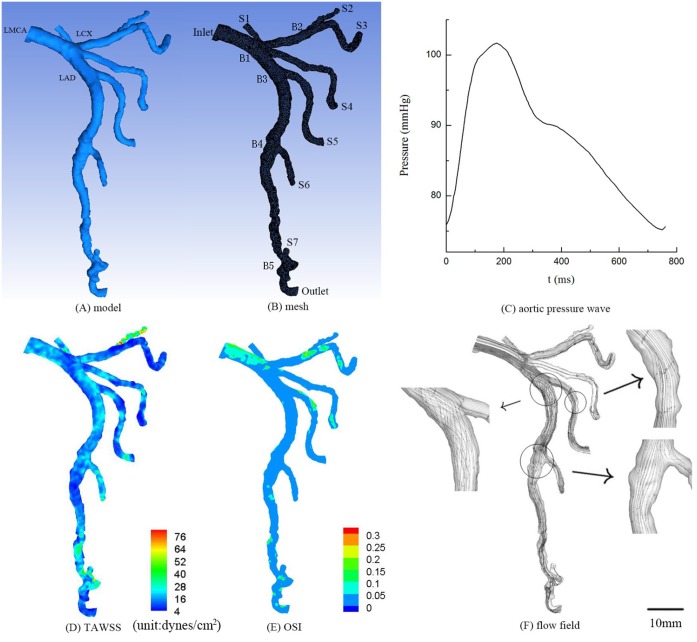
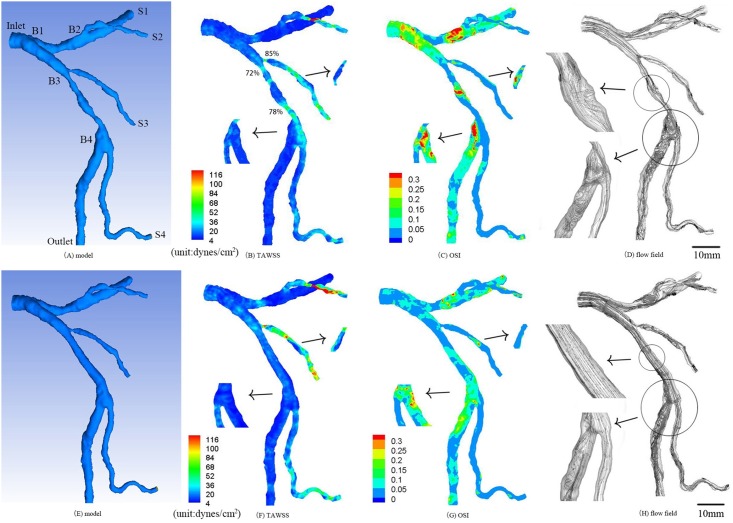
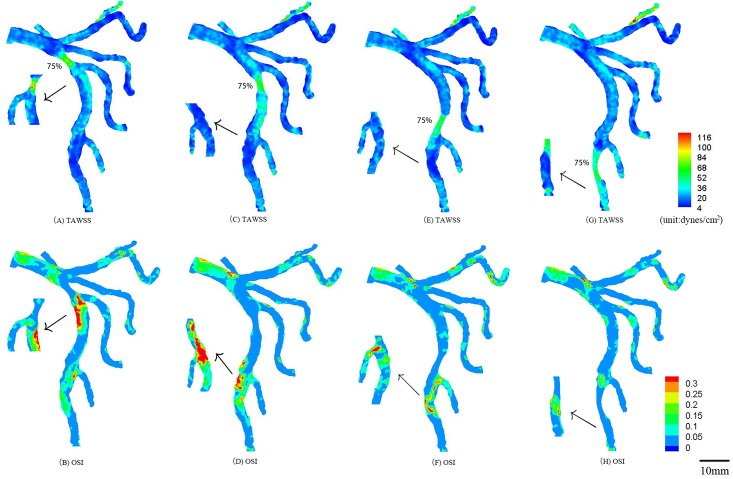
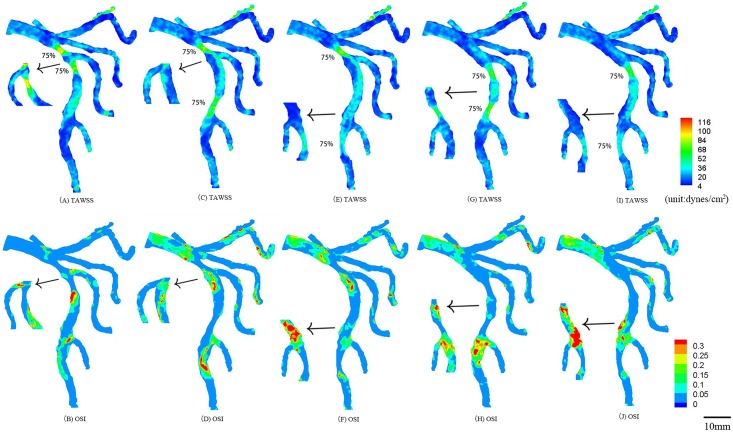
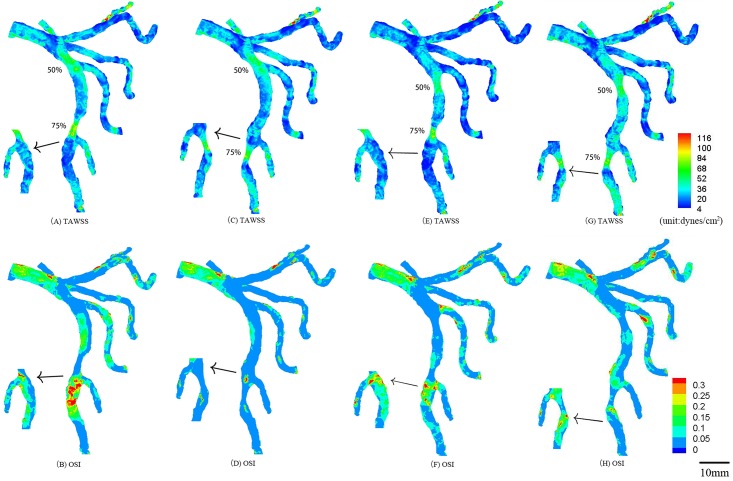
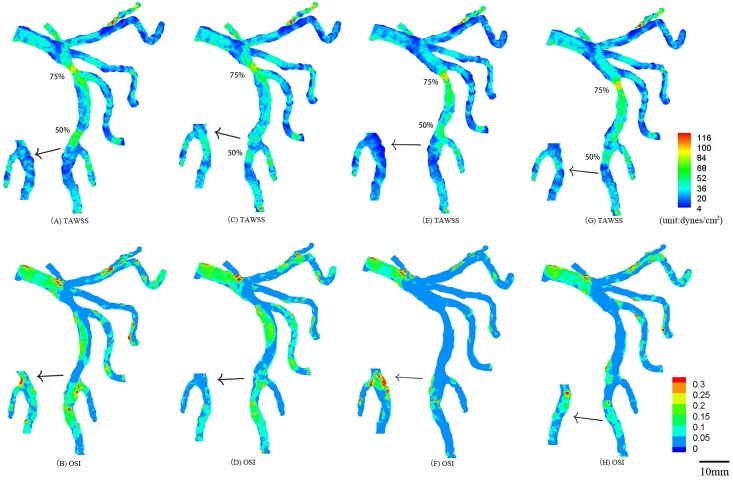
Serial segmental narrowing frequently occurs in humans, which alters coronary hemodynamics and further affects atherosclerotic progression and plaque formation. The objective of this study was to understand the distribution of hemodynamic parameters in the epicardial left main coronary arterial (LMCA) tree with serial stenoses reconstructed from patient computer tomography angiography (CTA) images. A finite volume method was used in conjunction with the inlet pressure wave and outlet flow resistance. The time-averaged wall shear stress (TAWSS) and oscillatory shear index (OSI) were determined from the flow field. A stenosis at a mother vessel mainly deteriorated the hemodynamics near the bifurcation while a stenosis at a daughter vessel affected the remote downstream bifurcation. In comparison with a single stenosis, serial stenoses increased the peak pressure gradient along the main trunk of the epicardial left anterior descending arterial tree by > 50%. An increased distance between serial stenoses further increased the peak pressure gradient. These findings have important implications on the diagnosis and treatment of serial coronary stenoses.
Conflict of interest statement
The California Medical Innovations Institute does not alter our adherence to PLOS ONE policies on sharing data and materials.
Figures
References
-
- Kim HL, Koo BK, Nam CW, Doh JH, Kim JH, Yang HM, et al. Clinical and physiological outcomes of fractional flow reserve-guided percutaneous coronary intervention in patients with serial stenoses within one coronary artery. JACC Cardiovasc Interv. 2012;5(10):1013–8. 10.1016/j.jcin.2012.06.017 . - DOI - PubMed
LinkOut - more resources
Full Text Sources
Other Literature Sources
