


Genome Analysis of Osteosarcoma Progression Samples Identifies FGFR1 Overexpression as a Potential Treatment Target and CHM as a Candidate Tumor Suppressor Gene
- PMID: 27685995
- PMCID: PMC5042545
- DOI: 10.1371/journal.pone.0163859
Genome Analysis of Osteosarcoma Progression Samples Identifies FGFR1 Overexpression as a Potential Treatment Target and CHM as a Candidate Tumor Suppressor Gene
Abstract
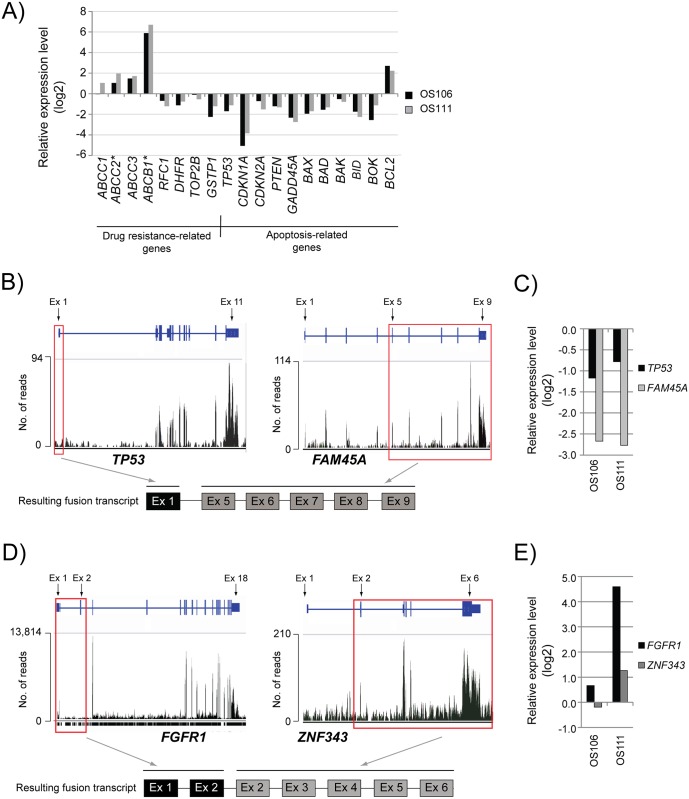
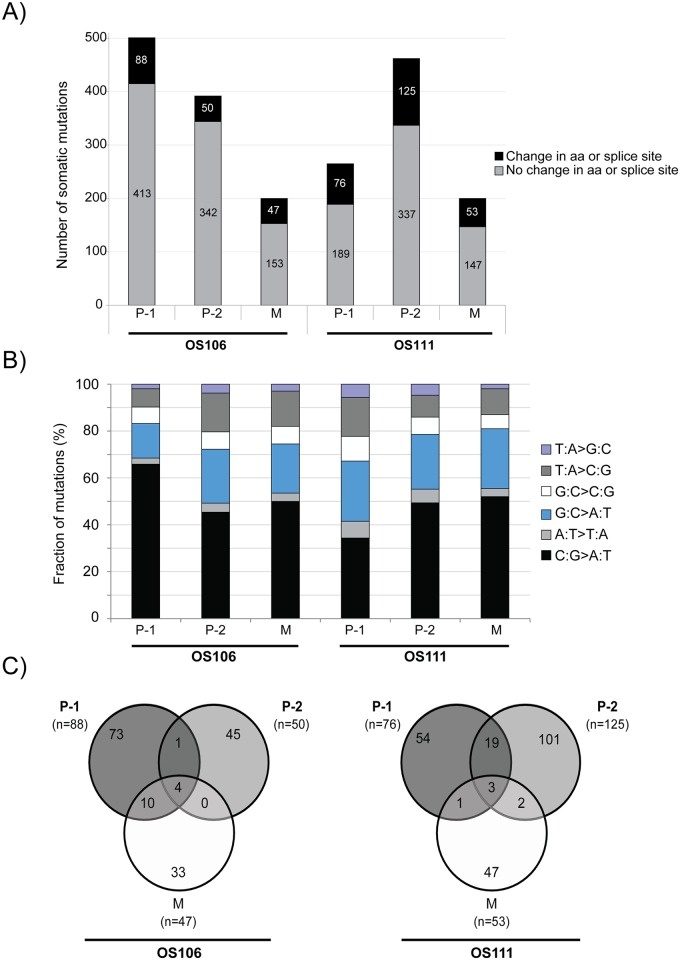
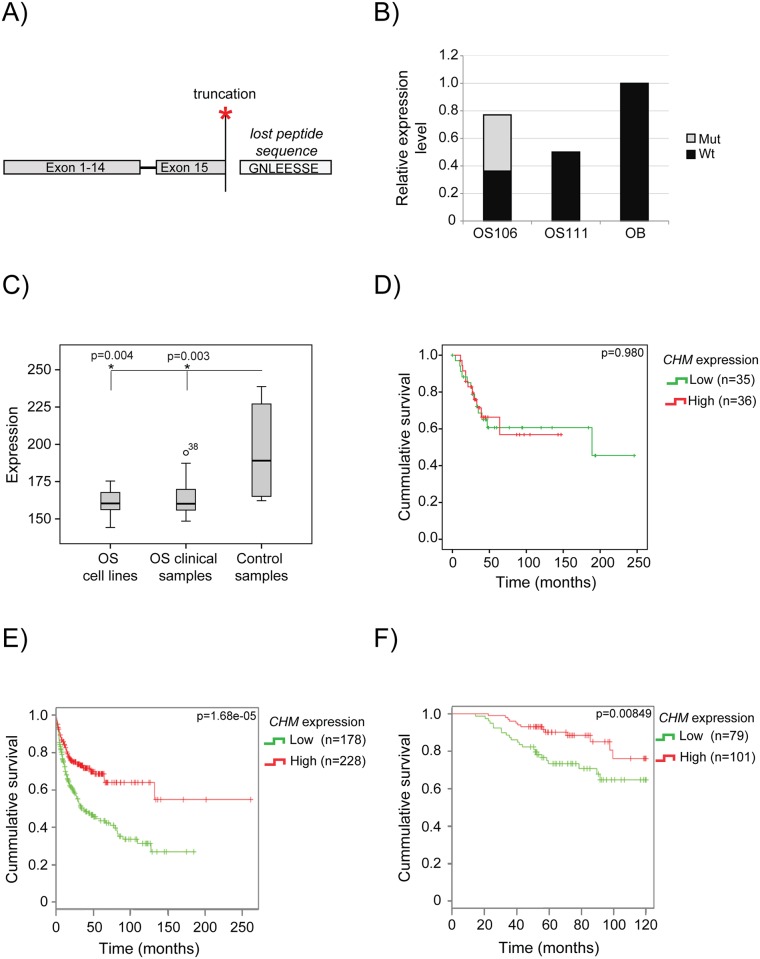
Osteosarcoma (OS) is the most common primary malignant tumor of bone, showing complex chromosomal rearrangements but with few known consistent changes. Deeper biological understanding is crucial to find new therapies to improve patient survival. We have sequenced the whole exome of two primary tumors (before and after chemotherapy), one metastatic tumor and a matched normal sample from two OS patients, to identify mutations involved in cancer biology. The metastatic samples were also RNA sequenced. By RNA sequencing we identified dysregulated expression levels of drug resistance- and apoptosis-related genes. Two fusion transcripts were identified in one patient (OS111); the first resulted in p53 inactivation by fusing the first exon of TP53 to the fifth exon of FAM45A. The second fusion joined the two first exons of FGFR1 to the second exon of ZNF343. Furthermore, FGFR1 was amplified and highly expressed, representing a potential treatment target in this patient. Whole exome sequencing revealed large intertumor heterogeneity, with surprisingly few shared mutations. Careful evaluation and validation of the data sets revealed a number of artefacts, but one recurrent mutation was validated, a nonsense mutation in CHM (patient OS106), which also was the mutation with the highest expression frequency (53%). The second patient (OS111) had wild-type CHM, but a downregulated expression level. In a panel of 71 clinical samples, we confirmed significant low expression of CHM compared to the controls (p = 0.003). Furthermore, by analyzing public datasets, we identified a significant association between low expression and poor survival in two other cancer types. Together, these results suggest CHM as a candidate tumor suppressor gene that warrants further investigation.
Conflict of interest statement
The authors have declared that no competing interests exist.
Figures
References
-
- Fletcher CDM, Bridge J.A., Hogendoorn P., Mertens F. WHO Classification of Tumours of Soft Tissue and Bone. Fourth Edition WHO, editor.: Lyon: IARC Press; 2013.
-
- Bielack SS, Kempf-Bielack B, Delling G, Exner GU, Flege S, Helmke K, et al. Prognostic factors in high-grade osteosarcoma of the extremities or trunk: an analysis of 1,702 patients treated on neoadjuvant cooperative osteosarcoma study group protocols. J Clin Oncol. 2002;20(3):776–90. Epub 2002/02/01. 10.1200/JCO.20.3.776 . - DOI - PubMed
LinkOut - more resources
Full Text Sources
Other Literature Sources
Molecular Biology Databases
Research Materials
Miscellaneous
