


Influenza vaccine as a coronary intervention for prevention of myocardial infarction
- PMID: 27686519
- PMCID: PMC5256393
- DOI: 10.1136/heartjnl-2016-309983
Influenza vaccine as a coronary intervention for prevention of myocardial infarction
Abstract
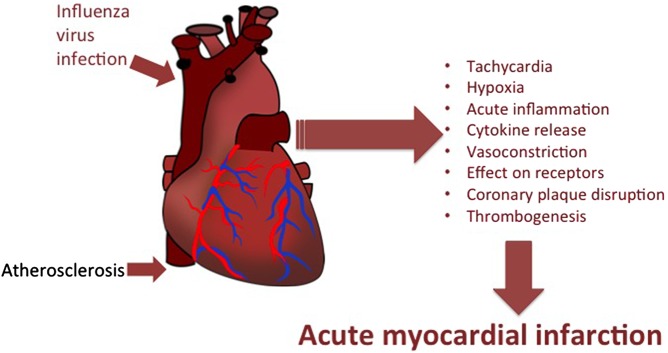
Cardiovascular disease (CVD) is the leading cause of morbidity and mortality globally. Influenza is one of the leading infectious causes of morbidity and mortality globally, and evidence is accumulating that it can precipitate acute myocardial infarction (AMI). This is thought to be due to a range of factors including inflammatory release of cytokines, disruption of atherosclerotic plaques and thrombogenesis, which may acutely occlude a coronary artery. There is a large body of observational and clinical trial evidence that shows that influenza vaccine protects against AMI. Estimates of the efficacy of influenza vaccine in preventing AMI range from 15% to 45%. This is a similar range of efficacy compared with the accepted routine coronary prevention measures such as smoking cessation (32-43%), statins (19-30%) and antihypertensive therapy (17-25%). Influenza vaccine should be considered as an integral part of CVD management and prevention. While it is recommended in many guidelines for patients with CVD, rates of vaccination in risk groups aged <65 years are very low, in the range of 30%. The incorporation of vaccination into routine CVD prevention in patient care requires a clinical practice paradigm change.
Published by the BMJ Publishing Group Limited. For permission to use (where not already granted under a licence) please go to http://www.bmj.com/company/products-services/rights-and-licensing/.
Conflict of interest statement
CRM has received in-kind support and funding for investigator-driven research from GlaxoSmithKline, Pfizer, Merck and bioCSL, and has sat on advisory boards for Merck, GlaxoSmithKline and Pfizer.
Figures
References
-
- World Health Organization (WHO). Cardiovascular diseases (CVDs). http://www.who.int/mediacentre/factsheets/fs317/en/ (accessed 4 Apr 2016).
-
- Kannel WB. Hypertension, blood lipids, and cigarette smoking as co-risk factors for coronary heart disease. Ann N Y Acad Sci 1978;304:128–39. - PubMed
-
- World Health Organization (WHO). Global status report on noncommunicable diseases 2010. Description of the global burden of NCDs, their risk factors and determinants. 2011. http://www.who.int/nmh/publications/ncd_report_chapter1.pdf?ua=1 (accessed Jan 2015).
Publication types
MeSH terms
Substances
LinkOut - more resources
Full Text Sources
Other Literature Sources
Medical
