Temozolomide chemotherapy versus radiotherapy in high-risk low-grade glioma (EORTC 22033-26033): a randomised, open-label, phase 3 intergroup study
- PMID: 27686946
- PMCID: PMC5124485
- DOI: 10.1016/S1470-2045(16)30313-8
Temozolomide chemotherapy versus radiotherapy in high-risk low-grade glioma (EORTC 22033-26033): a randomised, open-label, phase 3 intergroup study
Abstract
Background: Outcome of low-grade glioma (WHO grade II) is highly variable, reflecting molecular heterogeneity of the disease. We compared two different, single-modality treatment strategies of standard radiotherapy versus primary temozolomide chemotherapy in patients with low-grade glioma, and assessed progression-free survival outcomes and identified predictive molecular factors.
Methods: For this randomised, open-label, phase 3 intergroup study (EORTC 22033-26033), undertaken in 78 clinical centres in 19 countries, we included patients aged 18 years or older who had a low-grade (WHO grade II) glioma (astrocytoma, oligoastrocytoma, or oligodendroglioma) with at least one high-risk feature (aged >40 years, progressive disease, tumour size >5 cm, tumour crossing the midline, or neurological symptoms), and without known HIV infection, chronic hepatitis B or C virus infection, or any condition that could interfere with oral drug administration. Eligible patients were randomly assigned (1:1) to receive either conformal radiotherapy (up to 50·4 Gy; 28 doses of 1·8 Gy once daily, 5 days per week for up to 6·5 weeks) or dose-dense oral temozolomide (75 mg/m2 once daily for 21 days, repeated every 28 days [one cycle], for a maximum of 12 cycles). Random treatment allocation was done online by a minimisation technique with prospective stratification by institution, 1p deletion (absent vs present vs undetermined), contrast enhancement (yes vs no), age (<40 vs ≥40 years), and WHO performance status (0 vs ≥1). Patients, treating physicians, and researchers were aware of the assigned intervention. A planned analysis was done after 216 progression events occurred. Our primary clinical endpoint was progression-free survival, analysed by intention-to-treat; secondary outcomes were overall survival, adverse events, neurocognitive function (will be reported separately), health-related quality of life and neurological function (reported separately), and correlative analyses of progression-free survival by molecular markers (1p/19q co-deletion, MGMT promoter methylation status, and IDH1/IDH2 mutations). This trial is closed to accrual but continuing for follow-up, and is registered at the European Trials Registry, EudraCT 2004-002714-11, and at ClinicalTrials.gov, NCT00182819.
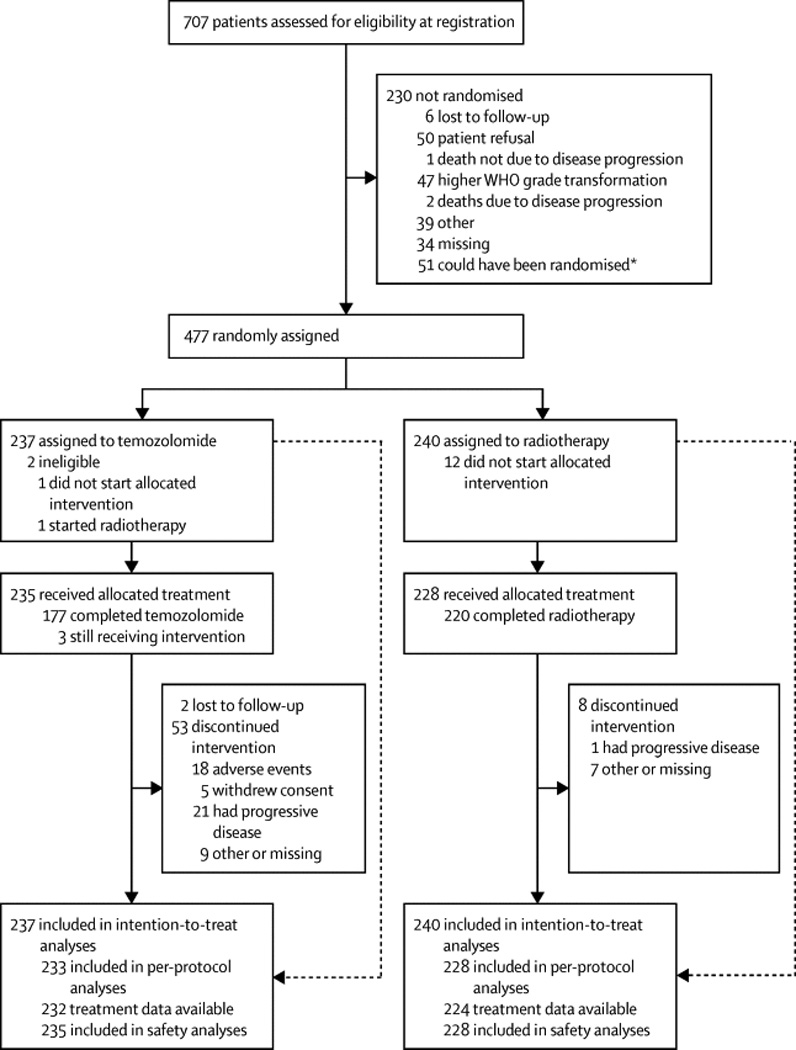
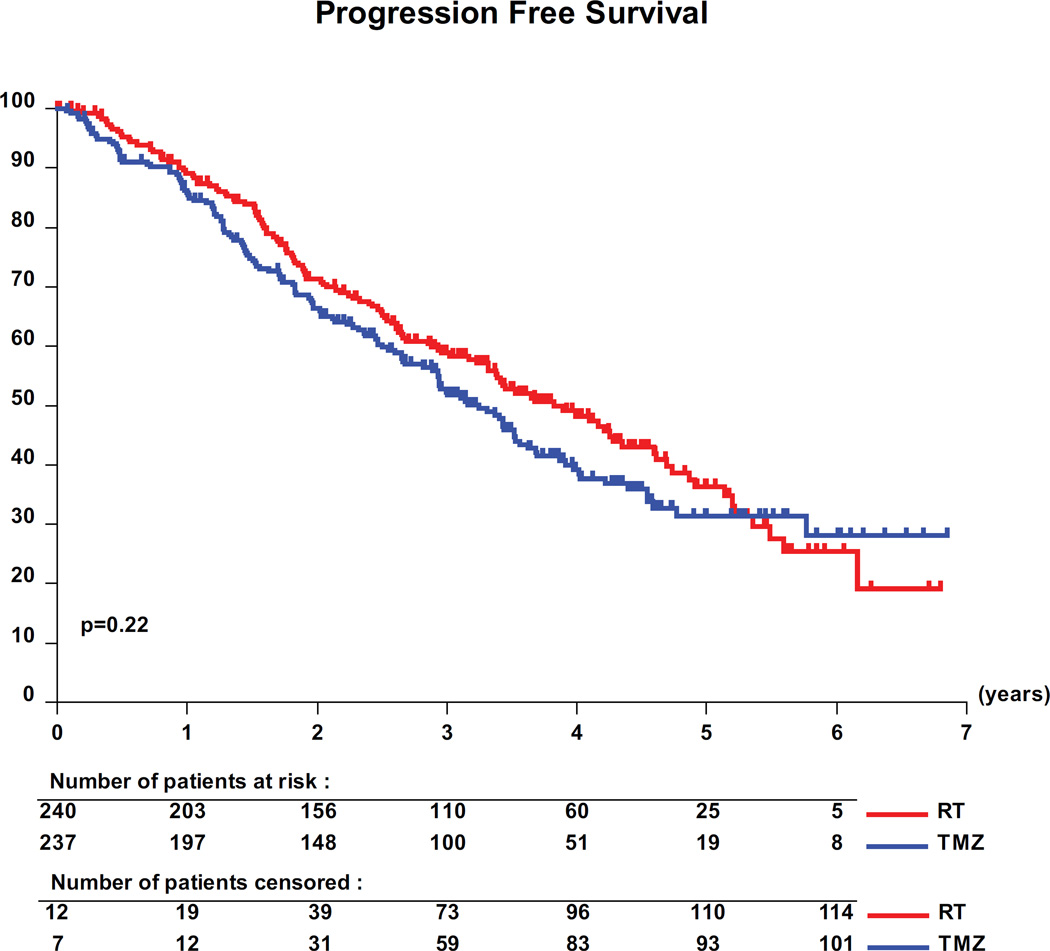
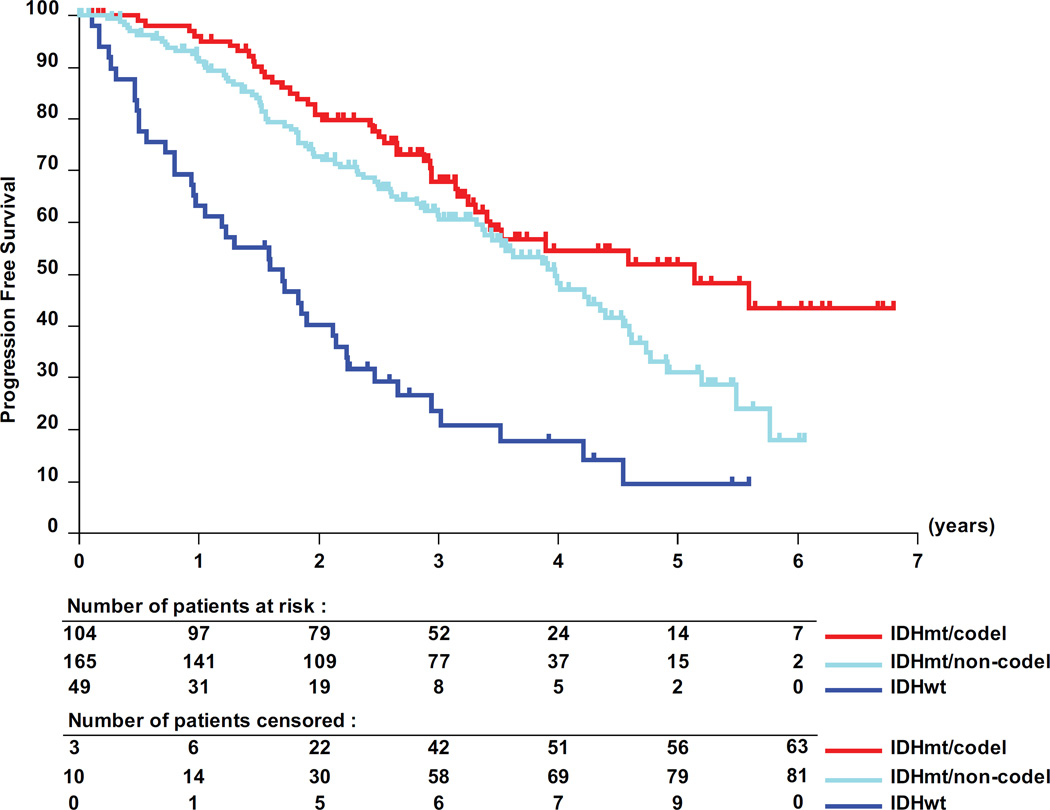
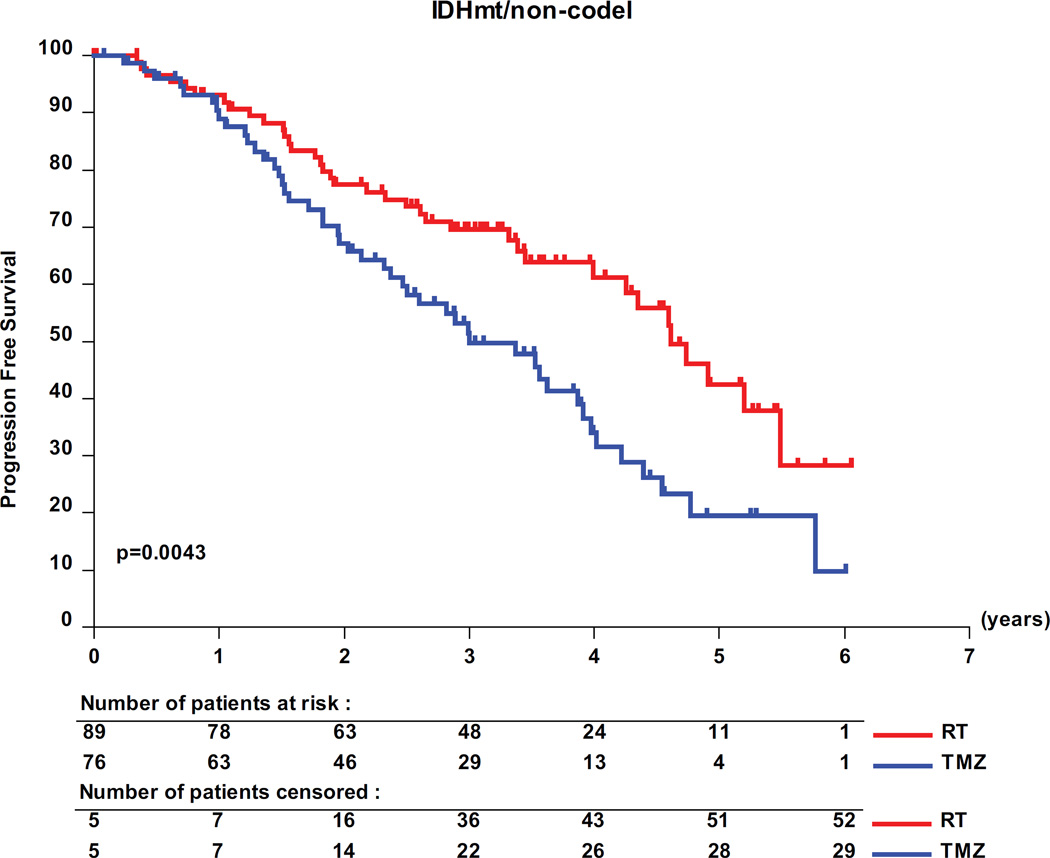
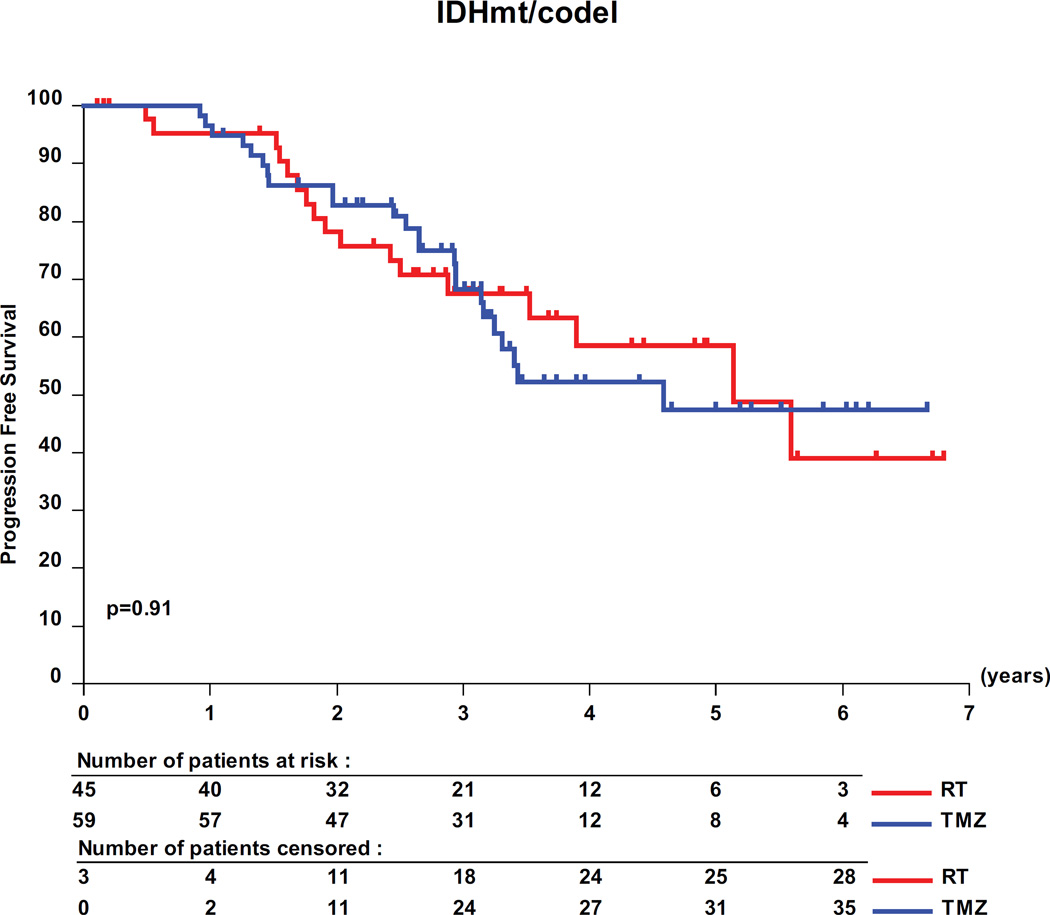
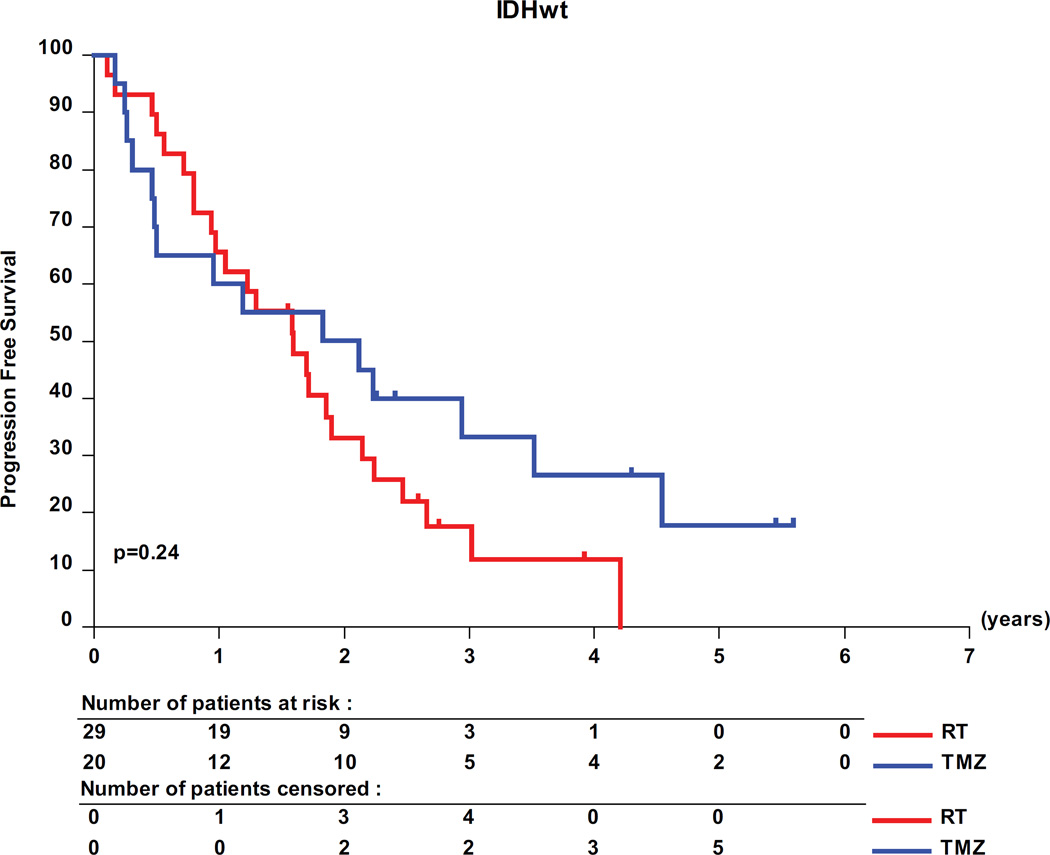
Findings: Between Sept 23, 2005, and March 26, 2010, 707 patients were registered for the study. Between Dec 6, 2005, and Dec 21, 2012, we randomly assigned 477 patients to receive either radiotherapy (n=240) or temozolomide chemotherapy (n=237). At a median follow-up of 48 months (IQR 31-56), median progression-free survival was 39 months (95% CI 35-44) in the temozolomide group and 46 months (40-56) in the radiotherapy group (unadjusted hazard ratio [HR] 1·16, 95% CI 0·9-1·5, p=0·22). Median overall survival has not been reached. Exploratory analyses in 318 molecularly-defined patients confirmed the significantly different prognosis for progression-free survival in the three recently defined molecular low-grade glioma subgroups (IDHmt, with or without 1p/19q co-deletion [IDHmt/codel], or IDH wild type [IDHwt]; p=0·013). Patients with IDHmt/non-codel tumours treated with radiotherapy had a longer progression-free survival than those treated with temozolomide (HR 1·86 [95% CI 1·21-2·87], log-rank p=0·0043), whereas there were no significant treatment-dependent differences in progression-free survival for patients with IDHmt/codel and IDHwt tumours. Grade 3-4 haematological adverse events occurred in 32 (14%) of 236 patients treated with temozolomide and in one (<1%) of 228 patients treated with radiotherapy, and grade 3-4 infections occurred in eight (3%) of 236 patients treated with temozolomide and in two (1%) of 228 patients treated with radiotherapy. Moderate to severe fatigue was recorded in eight (3%) patients in the radiotherapy group (grade 2) and 16 (7%) in the temozolomide group. 119 (25%) of all 477 patients had died at database lock. Four patients died due to treatment-related causes: two in the temozolomide group and two in the radiotherapy group.
Interpretation: Overall, there was no significant difference in progression-free survival in patients with low-grade glioma when treated with either radiotherapy alone or temozolomide chemotherapy alone. Further data maturation is needed for overall survival analyses and evaluation of the full predictive effects of different molecular subtypes for future individualised treatment choices.
Funding: Merck Sharpe & Dohme-Merck & Co, Canadian Cancer Society, Swiss Cancer League, UK National Institutes of Health, Australian National Health and Medical Research Council, US National Cancer Institute, European Organisation for Research and Treatment of Cancer Cancer Research Fund.
Copyright © 2016 Elsevier Ltd. All rights reserved.
Figures
Comment in
-
Does an optimum treatment for high-risk low-grade gliomas exist?Lancet Oncol. 2016 Nov;17(11):1467-1469. doi: 10.1016/S1470-2045(16)30434-X. Epub 2016 Sep 27. Lancet Oncol. 2016. PMID: 27686947 No abstract available.
-
Molecular profiling optimizes the treatment of low-grade glioma.Neuro Oncol. 2016 Dec;18(12):1593-1594. doi: 10.1093/neuonc/now262. Neuro Oncol. 2016. PMID: 27880641 Free PMC article. No abstract available.
References
-
- Soffietti R, Baumert BG, Bello L, et al. Guidelines on management of low-grade gliomas: report of an EFNS-EANO Task Force. Eur J Neurol. 2010;17(9):1124–1133. - PubMed
-
- Pignatti F, van den Bent M, Curran D, et al. Prognostic factors for survival in adult patients with cerebral low-grade glioma. J Clin Oncol. 2002;20(8):2076–2084. - PubMed
-
- Jenkins RB, Blair H, Ballman KV, et al. A t(1;19)(q10;p10) mediates the combined deletions of 1p and 19q and predicts a better prognosis of patients with oligodendroglioma. Cancer Res. 2006;66(20):9852–9861. - PubMed
-
- Suzuki H, Aoki K, Chiba K, et al. Mutational landscape and clonal architecture in grade II and III gliomas. Nat Genet. 2015;47(5):458–468. - PubMed
-
- Karim AB, Maat B, Hatlevoll R, et al. A randomized trial on dose-response in radiation therapy of low-grade cerebral glioma: European Organization for Research and Treatment of Cancer (EORTC) Study 22844. Int J Radiat Oncol Biol Phys. 1996;36(3):549–556. - PubMed
Publication types
MeSH terms
Substances
Associated data
Grants and funding
LinkOut - more resources
Full Text Sources
Other Literature Sources
Medical
Research Materials
Miscellaneous