


Levodopa medication improves incidental sequence learning in Parkinson's disease
- PMID: 27686948
- PMCID: PMC5155668
- DOI: 10.1016/j.neuropsychologia.2016.09.019
Levodopa medication improves incidental sequence learning in Parkinson's disease
Abstract
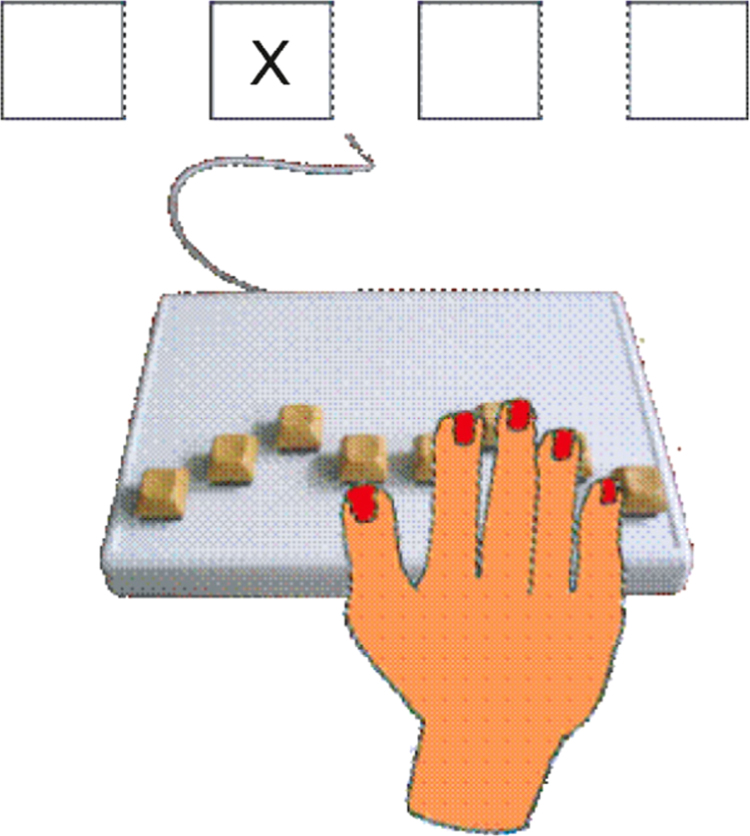
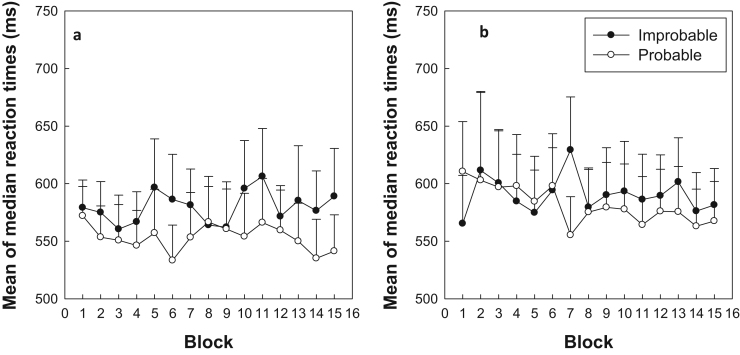
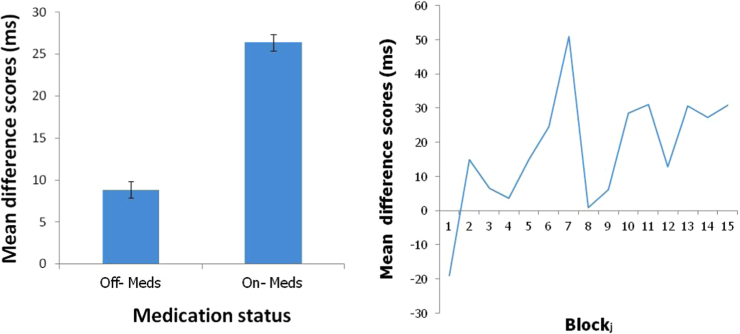
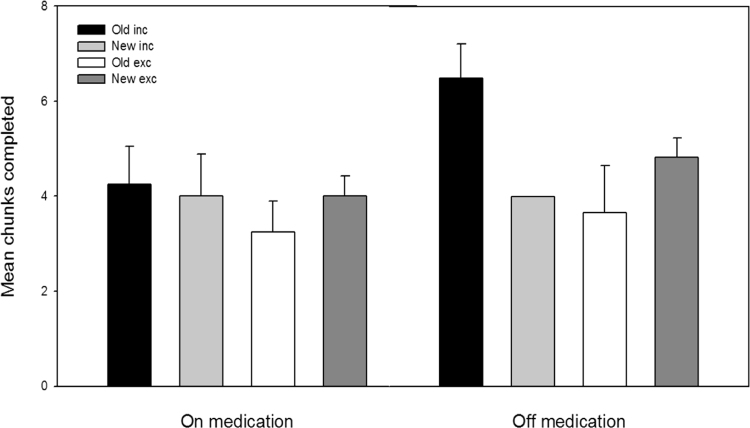
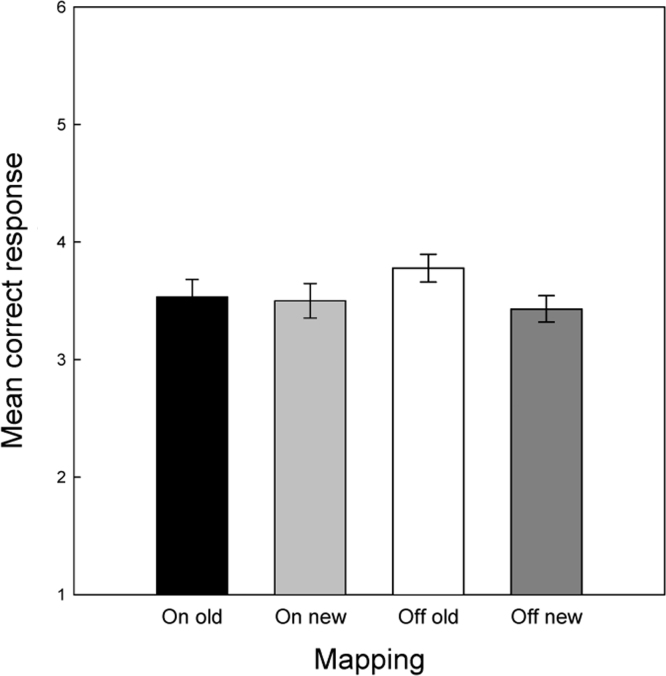
Empirical evidence suggests that levodopa medication used to treat the motor symptoms of Parkinson's disease (PD) may either improve, impair or not affect specific cognitive processes. This evidence led to the 'dopamine overdose' hypothesis that levodopa medication impairs performance on cognitive tasks if they recruit fronto-striatal circuits which are not yet dopamine-depleted in early PD and as a result the medication leads to an excess of dopamine. This hypothesis has been supported for various learning tasks including conditional associative learning, reversal learning, classification learning and intentional deterministic sequence learning, on all of which PD patients demonstrated significantly worse performance when tested on relative to off dopamine medication. Incidental sequence learning is impaired in PD, but how such learning is affected by dopaminergic therapy remains undetermined. The aim of the current study was to investigate the effect of dopaminergic medication on incidental sequence learning in PD. We used a probabilistic serial reaction time task (SRTT), a sequence learning paradigm considered to make the sequence less apparent and more likely to be learned incidentally rather than intentionally. We compared learning by the same group of PD patients (n=15) on two separate occasions following oral administration of levodopa medication (on state) and after overnight withdrawal of medication (off state). Our results demonstrate for the first time that levodopa medication enhances incidental learning of a probabilistic sequence on the serial reaction time task in PD. However, neither group significantly differed from performance of a control group without a neurological disease, which indicates the importance of within group comparisons for identifying deficits. Levodopa medication enhanced incidental learning by patients with PD on a probabilistic sequence learning paradigm even though the patients were not aware of the existence of the sequence or their acquired knowledge. The results suggest a role in acquiring incidental motor sequence learning for dorsal striatal areas strongly affected by dopamine depletion in early PD.
Keywords: Basal ganglia; Incidental sequence learning; Levodopa medication; Parkinson's disease; Serial reaction time; Striatum.
Copyright © 2016 The Authors. Published by Elsevier Ltd.. All rights reserved.
Figures
References
-
- Atallah H.E., Lopez-Paniagua D., Rudy J.W., O’Reilly R.C. Separate neural substrates for skill learning and performance in the ventral and dorsal striatum. Nat. Neurosci. 2007;10(1):126–131. - PubMed
-
- Berns G.S., Cohen J.D., Mintun a M. Brain regions responsive to novelty in the absence of awareness. Science NY. 1997;276(5316):1272–1275. 〈http://www.ncbi.nlm.nih.gov/pubmed/9157889〉 Retrieved from. - PubMed
-
- Brown R.G., Jahanshahi C.A.M., Limousin-dowsey P., Thomas D., Quinn N.P., Rothwell J.C. Pallidotomy and incidental sequence learning in Parkinson’ s disease. NeuroReport. 2003;14(1):21–24. - PubMed
MeSH terms
Substances
LinkOut - more resources
Full Text Sources
Other Literature Sources
Medical
