


Stress management, leukocyte transcriptional changes and breast cancer recurrence in a randomized trial: An exploratory analysis
- PMID: 27689900
- PMCID: PMC5159236
- DOI: 10.1016/j.psyneuen.2016.09.012
Stress management, leukocyte transcriptional changes and breast cancer recurrence in a randomized trial: An exploratory analysis
Abstract
Purpose: Cognitive behavioral stress management (CBSM) is an empirically-validated group-based psychosocial intervention. CBSM is related to decreased self-reported indicators of psychological adversity during breast cancer treatment and greater disease-free survival (DFS) vs. a control condition. This study examined relationships between CBSM, DFS, and a potential biobehavioral pathway linking these variables in breast cancer patients through a gene expression composite representing the leukocyte conserved transcriptional response to adversity (CTRA).
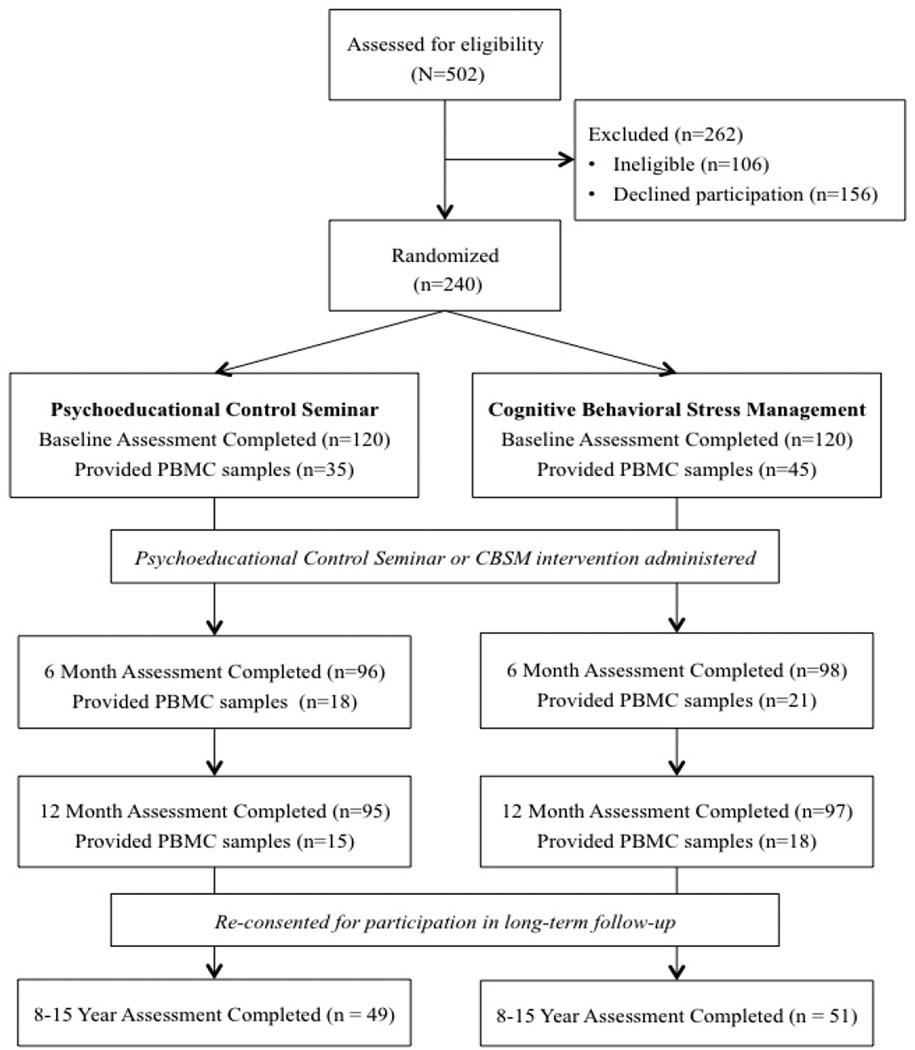
Design: Women with stage 0-IIIb breast cancer completed questionnaires and provided blood samples post-surgery. Participants were randomized to 10-week group-based CBSM or a psychoeducation control group and followed at 6 months, 12 months, and median 11 years. In total, 51 participants provided blood data for longitudinal analyses (CBSM n=28; Control n=23). Mixed model analyses examined CBSM effects on 6-12 month changes in CTRA expression (53 indicator genes representing pro-inflammatory, anti-viral and antibody production signaling). Cox regression models assessed the relationship between 6 and 12 month changes in CTRA expression and 11-year DFS.
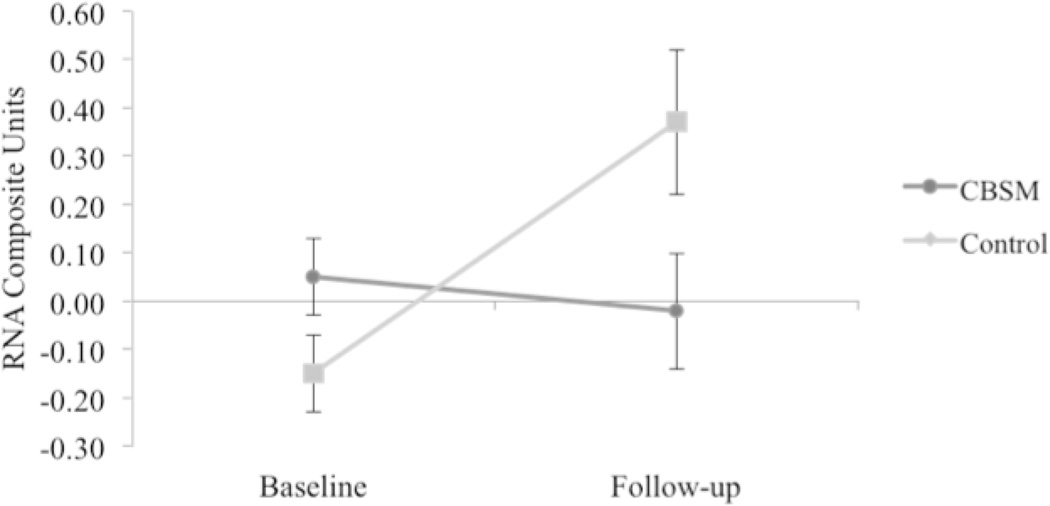
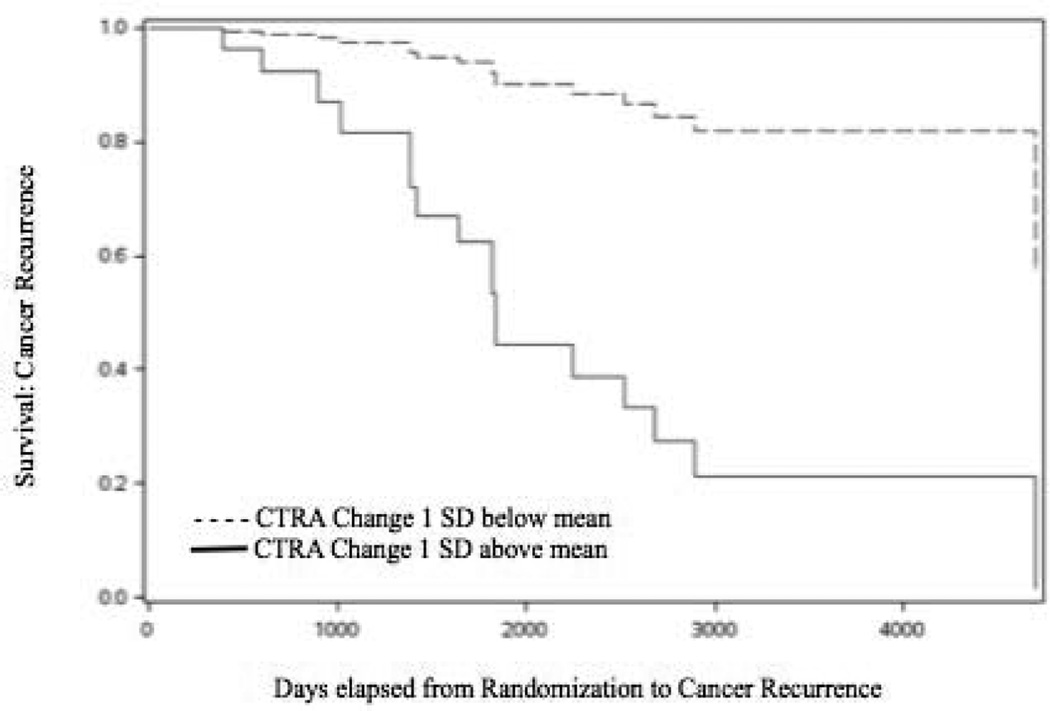
Results: Patients randomized to CBSM showed attenuated 6-12 month change in CTRA gene expression, whereas patients randomized to control showed increased CTRA expression (p=0.014). Average DFS was 5.92 years (SD=3.90). Greater 6-12 month CTRA increases predicted shorter 11-year DFS controlling for covariates (p=0.007).
Conclusions: CBSM attenuated CTRA gene expression during the initial year of breast cancer treatment. In turn, greater increases in CTRA gene expression predicted shorter long-term DFS. These findings identify a biobehavioral oncology pathway to examine in future work.
Trial registration: ClinicalTrials.gov NCT01422551.
Keywords: Breast cancer recurrence; Cognitive behavioral stress management; Conserved transcriptional response to adversity; Disease-free survival; Leukocyte gene expression.
Copyright © 2016 Elsevier Ltd. All rights reserved.
Conflict of interest statement
Dr. Antoni reports receiving publication royalties from a book he co-authored on cognitive-behavioral stress management.
Figures
References
-
- Antoni MH. Stress Management Intervention for Women with Breast Cancer. Washington, DC: 2003.
Publication types
MeSH terms
Associated data
Grants and funding
LinkOut - more resources
Full Text Sources
Other Literature Sources
Medical
