


Practices, predictors and consequences of expressed breast-milk feeding in healthy full-term infants
- PMID: 27692019
- PMCID: PMC10261400
- DOI: 10.1017/S136898001600241X
Practices, predictors and consequences of expressed breast-milk feeding in healthy full-term infants
Abstract
Objective: To investigate the prevalence and predictors of expressed breast-milk feeding in healthy full-term infants and its association with total duration of breast-milk feeding.
Design: Prospective cohort study.
Setting: In-patient postnatal units of four public hospitals in Hong Kong.
Subjects: A total of 2450 mother-infant pairs were recruited in 2006-2007 and 2011-2012 and followed up prospectively for 12 months or until breast-milk feeding had stopped.
Results: Across the first 6 months postpartum, the rate of exclusive expressed breast-milk feeding ranged from 5·1 to 8·0 % in 2006-2007 and from 18·0 to 19·8 % in 2011-2012. Factors associated with higher rate of exclusive expressed breast-milk feeding included supplementation with infant formula, lack of previous breast-milk feeding experience, having a planned caesarean section delivery and returning to work postpartum. Exclusive expressed breast-milk feeding was associated with an increased risk of early breast-milk feeding cessation when compared with direct feeding at the breast. The hazard ratio (95 % CI) ranged from 1·25 (1·04, 1·51) to 1·91 (1·34, 2·73) across the first 6 months.
Conclusions: Mothers of healthy term infants should be encouraged and supported to feed directly at the breast. Exclusive expressed breast-milk feeding should be recommended only when medically necessary and not as a substitute for feeding directly at the breast. Further research is required to explore mothers' reasons for exclusive expressed breast-milk feeding and to identify the health outcomes associated with this practice.
Keywords: Breast milk; Breast-feeding; Chinese; Expression; Pumping.
Figures
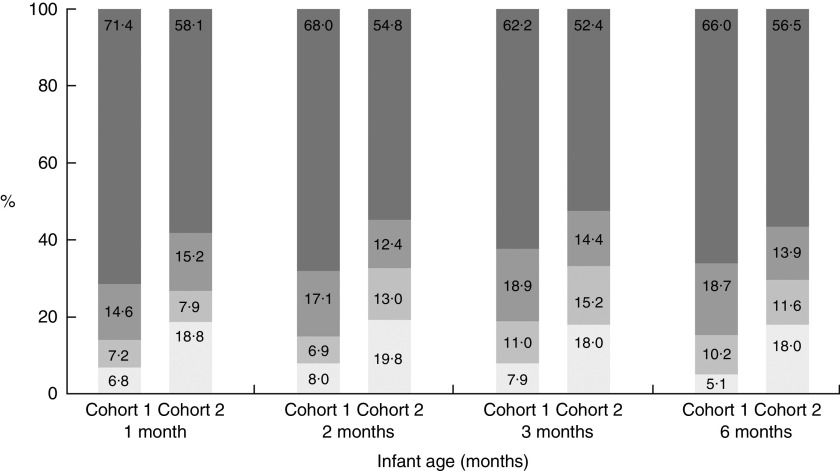
 , 100 %;
  , >50–99 %;
  , >0–50 %;
  , 0 %) over the first 6 months of life, by study cohort (cohort 1, recruited 2006–2007; cohort 2, recruited 2011–2012), in mother–infant pairs from in-patient postnatal units of four public hospitals in Hong Kong. Sample sizes were as follows: 1 month, n 1584; 2 months, n 1249; 3 months, n 1027; 6 months, n 710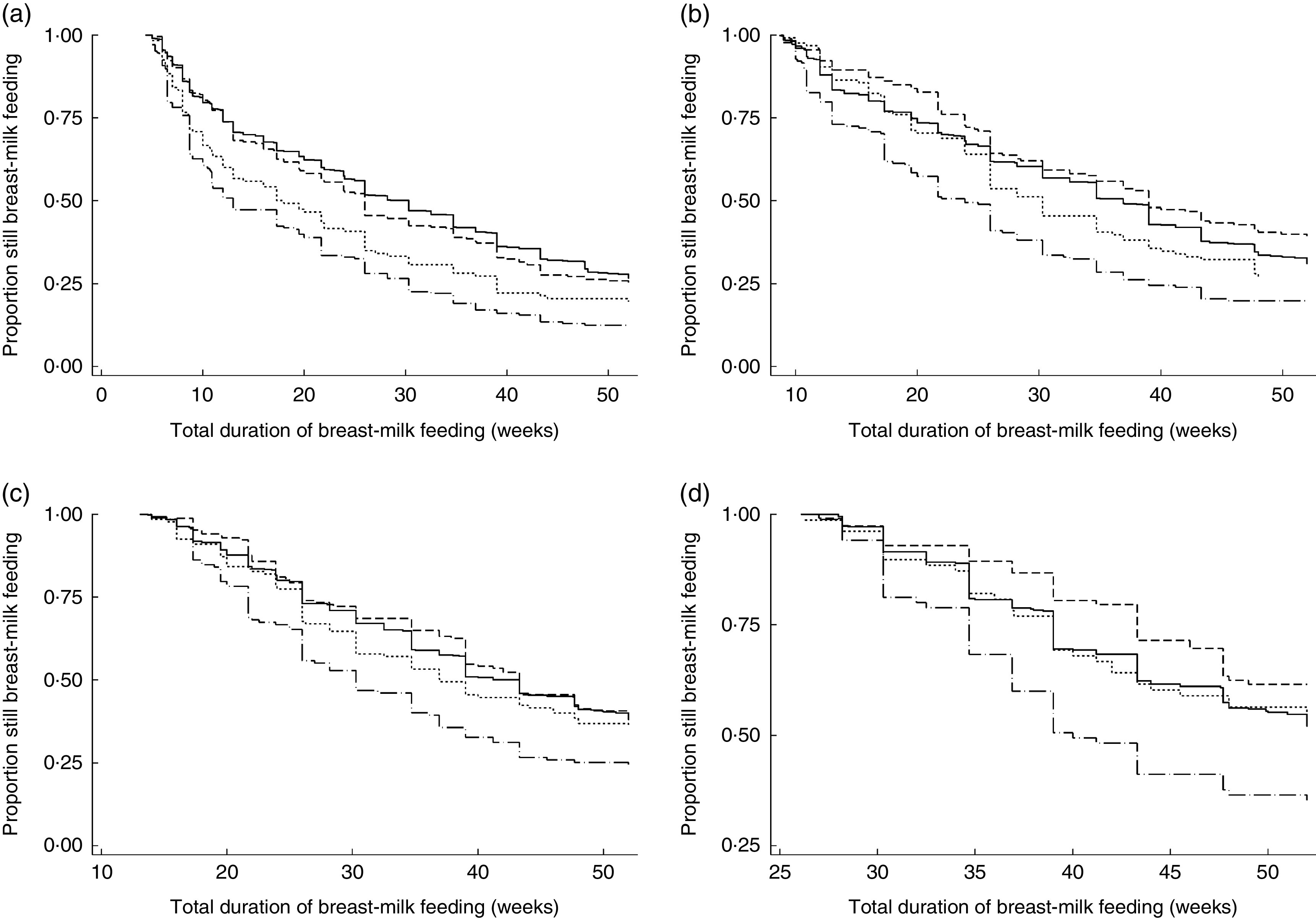
References
-
- Horta BL, Bahl R, Martinés JC et al. (2007) Evidence on the Long-Term Effects of Breastfeeding: Systematic Reviews and Meta-Analysis. Geneva: WHO.
-
- Thulier D & Mercer J (2009) Variables associated with breastfeeding duration. J Obstet Gynecol Neonatal Nurs 38, 259–268. - PubMed
-
- Dennis CL (2002) Breastfeeding initiation and duration: a 1990–2000 literature review. J Obstet Gynecol Neonatal Nurs 31, 12–32. - PubMed
Publication types
MeSH terms
LinkOut - more resources
Full Text Sources
Other Literature Sources
Medical
