


Blood cell respirometry is associated with skeletal and cardiac muscle bioenergetics: Implications for a minimally invasive biomarker of mitochondrial health
- PMID: 27693859
- PMCID: PMC5045569
- DOI: 10.1016/j.redox.2016.09.009
Blood cell respirometry is associated with skeletal and cardiac muscle bioenergetics: Implications for a minimally invasive biomarker of mitochondrial health
Abstract
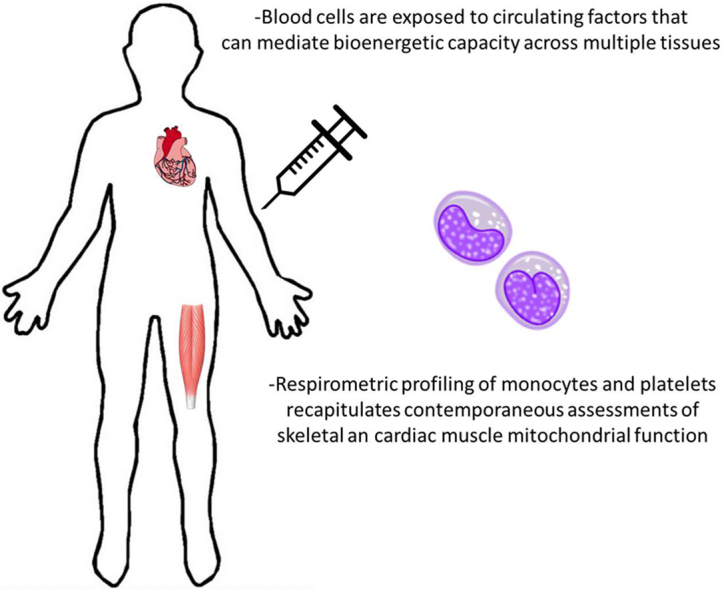
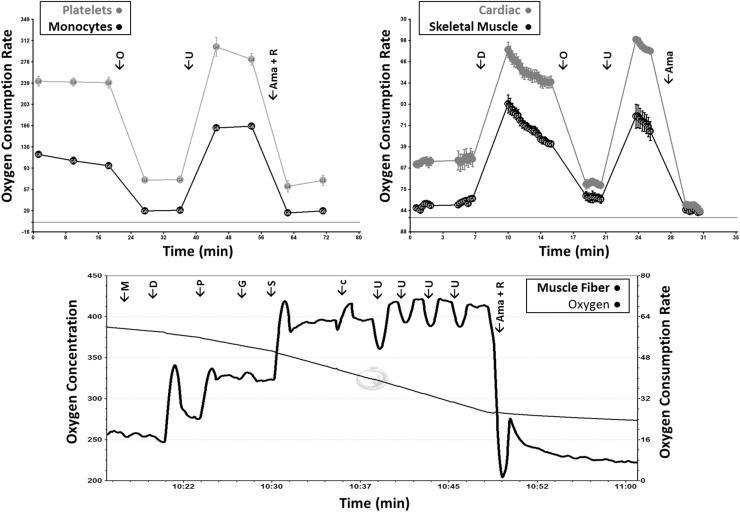
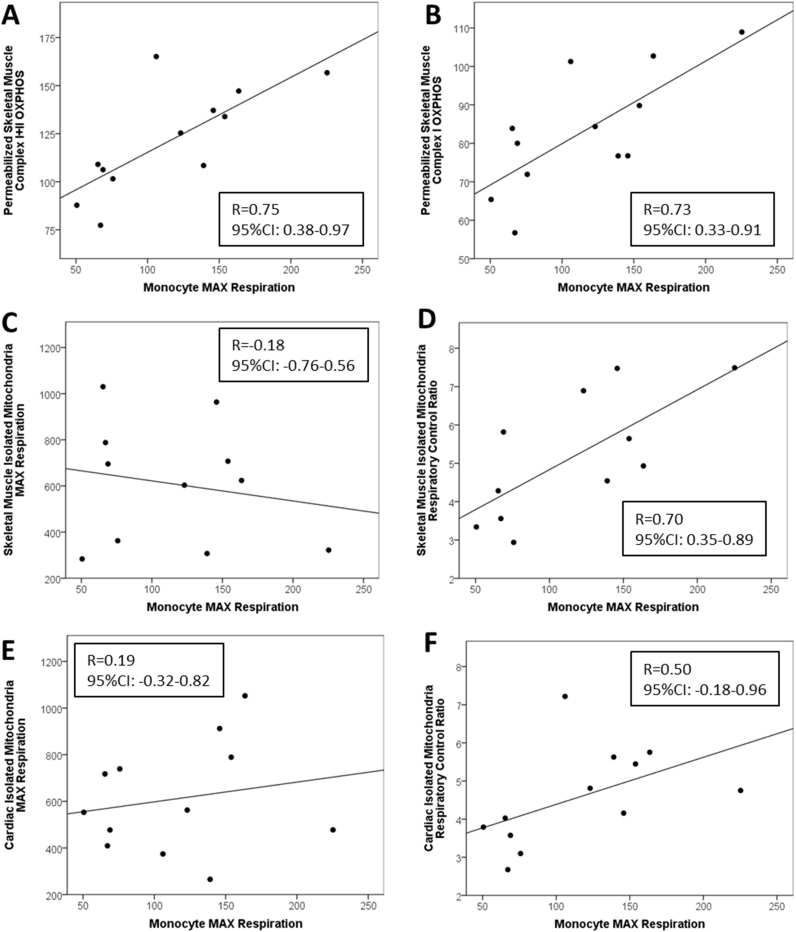
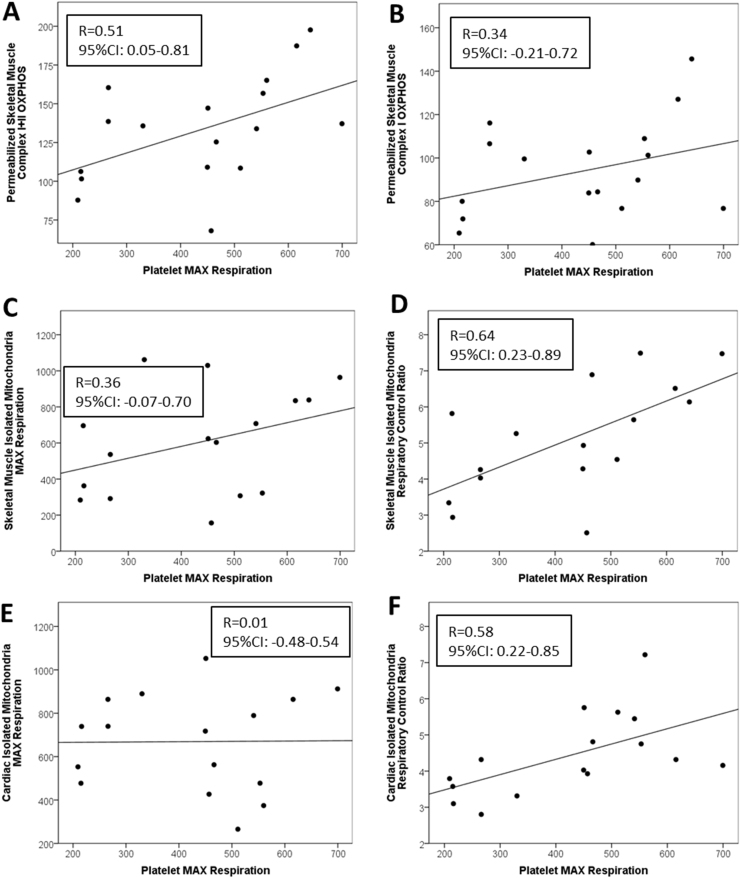
Blood based bioenergetic profiling strategies are emerging as potential reporters of systemic mitochondrial function; however, the extent to which these measures reflect the bioenergetic capacity of other tissues is not known. The premise of this work is that highly metabolically active tissues, such as skeletal and cardiac muscle, are susceptible to differences in systemic bioenergetic capacity. Therefore, we tested whether the respiratory capacity of blood cells, monocytes and platelets, are related to contemporaneous respirometric assessments of skeletal and cardiac muscle mitochondria. 18 female vervet/African green monkeys (Chlorocebus aethiops sabaeus) of varying age and metabolic status were examined for this study. Monocyte and platelet maximal capacity correlated with maximal oxidative phosphorylation capacity of permeabilized skeletal muscle (R=0.75, 95% confidence interval [CI]: 0.38-0.97; R=0.51, 95%CI: 0.05-0.81; respectively), isolated skeletal muscle mitochondrial respiratory control ratio (RCR; R=0.70, 95%CI: 0.35-0.89; R=0.64, 95%CI: 0.23-0.98; respectively), and isolated cardiac muscle mitochondrial RCR (R=0.55, 95%CI: 0.22-0.86; R=0.58, 95%CI: 0.22-0.85; respectively). These results suggest that blood based bioenergetic profiling may be used to report on the bioenergetic capacity of muscle tissues. Blood cell respirometry represents an attractive alternative to tissue based assessments of mitochondrial function in human studies based on ease of access and the minimal participant burden required by these measures.
Keywords: Bioenergetics; Blood cells; Cellular respiration; Mitochondria; Muscle.
Copyright © 2016 The Authors. Published by Elsevier B.V. All rights reserved.
Figures
References
-
- Japiassu A.M., Santiago A.P., d’Avila J.C., Garcia-Souza L.F., Galina A., Castro Faria-Neto H.C., Bozza F.A., Oliveira M.F. Bioenergetic failure of human peripheral blood monocytes in patients with septic shock is mediated by reduced F1Fo adenosine-5′-triphosphate synthase activity. Crit. Care Med. 2011;39(5):1056–1063. - PubMed
-
- Zharikov S., Shiva S. Platelet mitochondrial function: from regulation of thrombosis to biomarker of disease. Biochem. Soc. Trans. 2013;41(1):118–123. - PubMed
-
- Caldwell S.H., Swerdlow R.H., Khan E.M., Iezzoni J.C., Hespenheide E.E., Parks J.K., Parker W.D., Jr. Mitochondrial abnormalities in non-alcoholic steatohepatitis. J. Hepatol. 1999;31(3):430–434. - PubMed
-
- Schapira A.H., Gu M., Taanman J.W., Tabrizi S.J., Seaton T., Cleeter M., Cooper J.M. Mitochondria in the etiology and pathogenesis of Parkinson's disease. Ann. Neurol. 1998;44(3 Suppl 1):S89–S98. - PubMed
-
- Miro O., Lopez S., Martinez E., Pedrol E., Milinkovic A., Deig E., Garrabou G., Casademont J., Gatell J.M., Cardellach F. Mitochondrial effects of HIV infection on the peripheral blood mononuclear cells of HIV-infected patients who were never treated with antiretrovirals. Clin. Infect. Dis. 2004;39(5):710–716. - PubMed
MeSH terms
Substances
Grants and funding
LinkOut - more resources
Full Text Sources
Other Literature Sources
Medical
