


U-Form vs. M-Form: How to Understand Decision Autonomy Under Healthcare Decentralization? Comment on "Decentralisation of Health Services in Fiji: A Decision Space Analysis"
- PMID: 27694684
- PMCID: PMC5010660
- DOI: 10.15171/ijhpm.2016.73
U-Form vs. M-Form: How to Understand Decision Autonomy Under Healthcare Decentralization? Comment on "Decentralisation of Health Services in Fiji: A Decision Space Analysis"
Abstract
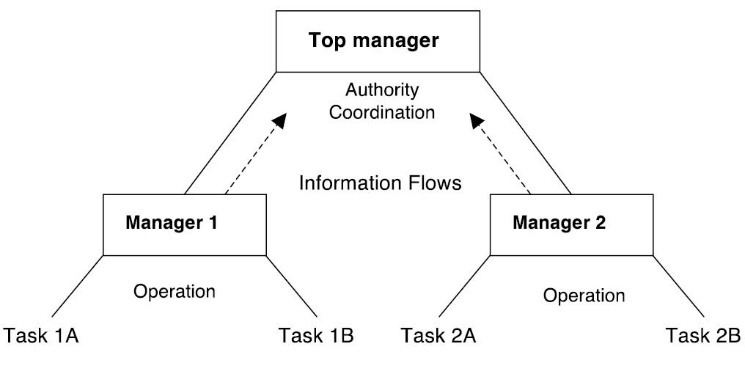
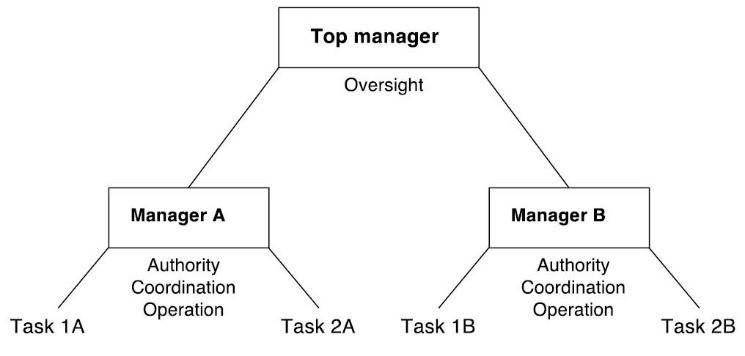
For more than three decades healthcare decentralization has been promoted in developing countries as a way of improving the financing and delivery of public healthcare. Decision autonomy under healthcare decentralization would determine the role and scope of responsibility of local authorities. Jalal Mohammed, Nicola North, and Toni Ashton analyze decision autonomy within decentralized services in Fiji. They conclude that the narrow decision space allowed to local entities might have limited the benefits of decentralization on users and providers. To discuss the costs and benefits of healthcare decentralization this paper uses the U-form and M-form typology to further illustrate the role of decision autonomy under healthcare decentralization. This paper argues that when evaluating healthcare decentralization, it is important to determine whether the benefits from decentralization are greater than its costs. The U-form and M-form framework is proposed as a useful typology to evaluate different types of institutional arrangements under healthcare decentralization. Under this model, the more decentralized organizational form (M-form) is superior if the benefits from flexibility exceed the costs of duplication and the more centralized organizational form (U-form) is superior if the savings from economies of scale outweigh the costly decision-making process from the center to the regions. Budgetary and financial autonomy and effective mechanisms to maintain local governments accountable for their spending behavior are key decision autonomy variables that could sway the cost-benefit analysis of healthcare decentralization.
Keywords: Decision Autonomy; Health Decentralization; Health Reform; Organizational Form.
© 2016 by Kerman University of Medical Sciences.
Comment on
-
Decentralisation of Health Services in Fiji: A Decision Space Analysis.Int J Health Policy Manag. 2015 Nov 15;5(3):173-81. doi: 10.15171/ijhpm.2015.199. Int J Health Policy Manag. 2015. PMID: 26927588 Free PMC article.
References
-
- Qian YY, Roland G, Xu CG. Coordination and experimentation in M-form and U-form organizations. J Polit Econ. 2006;114(2):366–402. doi: 10.1086/501170. - DOI
-
- Smith BC. The decentralization of health care in developing countries: organizational options. Public Adm Deve. 1997;17(4):399–412.
-
- Prudhomme R. The dangers of decentralization. World Bank Res Obs. 1995;10(2):201–220. doi: 10.1093/wbro/10.2.201. - DOI
Publication types
MeSH terms
LinkOut - more resources
Full Text Sources
Other Literature Sources
Medical