Temporomandibular chronic dislocation: The long-standing condition
- PMID: 27694782
- PMCID: PMC5116121
- DOI: 10.4317/medoral.21221
Temporomandibular chronic dislocation: The long-standing condition
Abstract
Background: The temporomandibular joint (TMJ) dislocation can be categorised into three groups: acute, habitual or recurrent and long-standing. The long-standing or protracted lower jaw dislocation refers to a condition that persists for more than one month without reduction. There are a great variety of methods for its treatment, from the manual or non-surgical, to surgical ones like the indirect approach (conservative surgical approach) and direct approach (open joint). Additional procedures in unsuccessful cases may include extra-articular orthognathic techniques to correct a malocclusion until joint replacement.
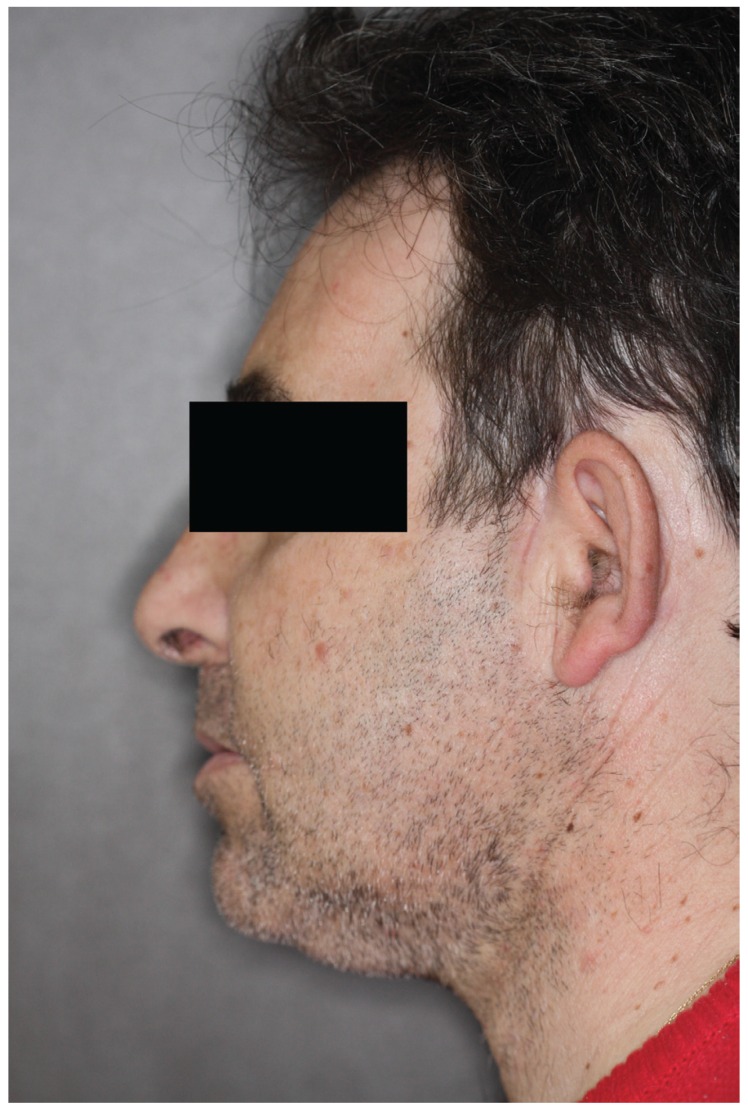
Material and methods: We report four new cases with a minimum of 6 weeks dislocation who were seen since 1995 to 2015 in the Maxillofacial Department of the Clínico Hospital (Valencia, Spain), in which the mean age was 57.5 years. Most of them were bilateral and the gender was predominantly female. Additionally, we have reviewed the related literature.
Results: All of the cases were successfully treated and half of them required open surgery.
Conclusions: The report confirms the difficulty of the treatment and reaffirms the necessity to bear in mind the wide variety of methods available for the treatment of this pathology. We stress the difficulties associated with managing the treatment and of suggesting new guidelines. The best option still remains not to delay the diagnostic and to select the appropriate initial treatment.
Conflict of interest statement
The authors have declared that no conflict of interest exist.
Figures


References
-
- Caminiti MF, Weinberg S. Chronic mandibular dislocation: the role of non-surgical and surgical treatment. J Can Dent Assoc. 1998;64:484–91. - PubMed
-
- Huang IY, Chen CM, Kao YH, Chen CM, Wu CW. Management of long-standing mandibular dislocation. Int J Oral Maxillofac Surg. 2011;40:810–4. - PubMed
-
- Wijmenga JP, Boering G, Blankestijn J. Protracted dislocation of the temporomandibular joint. Int J Oral Maxillofac Surg. 1986;15:380–8. - PubMed
-
- Ugboko VI, Oginni FO, Ajike SO, Olasoji HO, Adebayo ET. A survey of temporomandibular joint dislocation: aetiology, demographics, risk factors and management in 96 Nigerian cases. Int J Oral Maxillofac Surg. 2005;34:499–502. - PubMed
MeSH terms
LinkOut - more resources
Full Text Sources
Other Literature Sources
Medical