. 2016 Oct 3:6:34476.
doi: 10.1038/srep34476.

Efficient long-term cryopreservation of pluripotent stem cells at -80 °C

Affiliations

Efficient long-term cryopreservation of pluripotent stem cells at -80 °C

Ye Yuan et al. Sci Rep. .

Abstract

Current long term cryopreservation of cell stocks routinely requires the use of liquid nitrogen (LN2), because commonly used cryopreservation media containing cell membrane permeating cryoprotectants are thermally unstable when frozen at higher storage temperatures, e.g. -80 °C. This instability leads to ice recrystallization, causing progressive loss of cell viability over time under the storage conditions provided by most laboratory deep freezers. The dependency on LN2 for cell storage significantly increases operational expense and raises issues related to impaired working efficiency and safety. Here we demonstrate that addition of Ficoll 70 to cryoprotectant solutions significantly improves system thermal stability at the working temperature (~-80 °C) of laboratory deep freezers. Moreover, a medium comprised of Ficoll 70 and dimethyl sulfoxide (DMSO) in presence or absence of fetal bovine serum (FBS) can provide reliable cryopreservation of various kinds of human and porcine pluripotent stem cells at -80 °C for periods that extend up to at least one year, with the post-thaw viability, plating efficiency, and full retention of pluripotent phenotype comparable to that achieved with LN2 storage. These results illustrate the practicability of a promising long-term cryopreservation method that completely eliminates the need for LN2.


Conflict of interest statement

The intellectual property related to this technology belongs to the University of Missouri, and a USA provisional utility patent application (USA 62/336, 142) has been filed. X.H. as the president of CryoCrate LLC, has obtained an exclusive license from University of Missouri. None of the other authors have any competing financial interests.

Figures
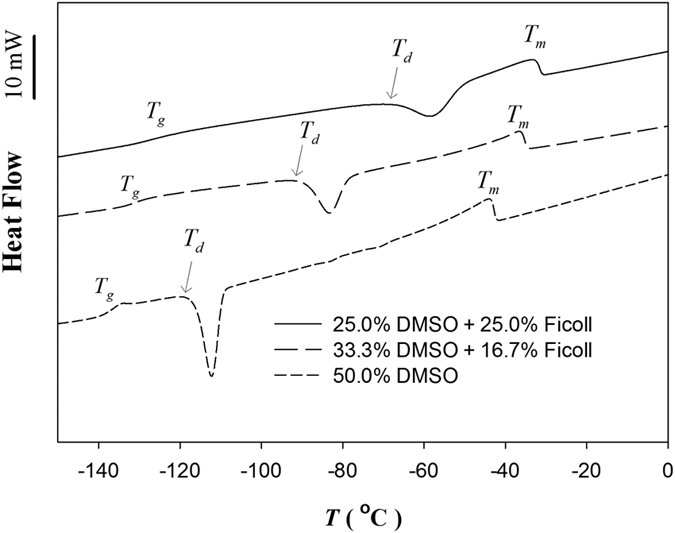
Figure 1
Figure 1. Examples of differential scanning calorimetric thermograms during the warming process of water-Ficoll 70-DMSO model solutions with different weight ratios of Ficoll 70 and DMSO and the same total solute ratio as 50% (w/w).
The characteristic temperature transitions of these model solutions are marked: vitrification temperature (Tg), devitrification temperature (Td) and melting point (Tm). A scale bar (10 mW) is provided to evaluate the magnitude of heat flow during each phase transition stage.
Figure 2
Figure 2
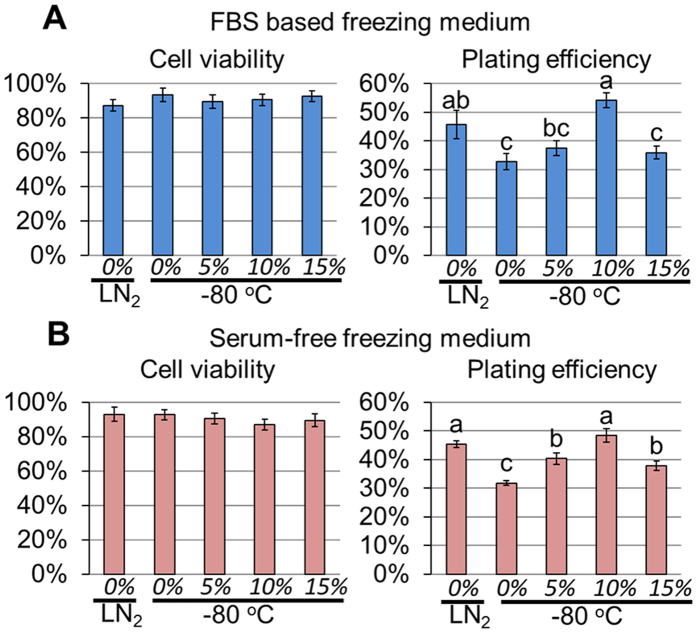
Assessment of cell recovery of naïve type O2K porcine iPSC cryopreserved with different concentrations of Ficoll 70 in FBS based (A) or serum-free DMEM/F12 based (B) medium to determine the optimal Ficoll composition. Data are for 2 weeks of storage. Within each figure, bar values are means ± SEM (n = 3), with different letters (a–c) indicating significantly different (P < 0.05) values. The prior-freezing samples of cell suspensions contained 10% (v/v) DMSO, various concentrations of Ficoll 70 (5%, 10% or 15%, w/v) for −80 °C storage. The samples containing 10% DMSO but without Ficoll were stored in either LN2 or in a −80 °C deep freezer and used for the two control groups.
Figure 3
Figure 3
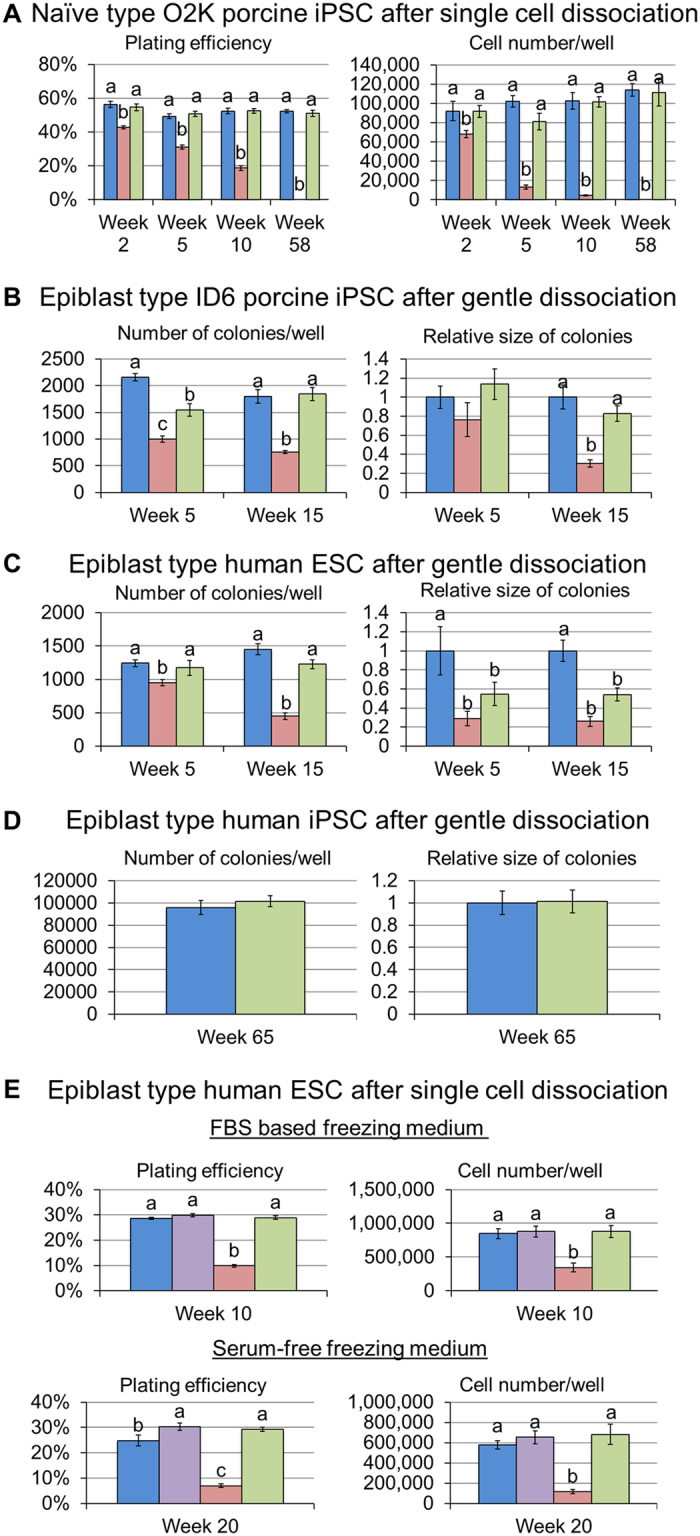
Post-thaw recovery of colonies from the naïve type O2K porcine iPSC (A), epiblast type ID6 porcine iPSC (B), epiblast type human H1 ESC (C,E) and epiblast type human iPSC (D) over extended storage periods. For naïve type cells (A), colonies were dispersed into single cells by Accutase. For epiblast type cells (BD), cells were dispersed into small cell aggregates by Gentle Cell Dissociation Reagent. Human H1 ESC were also dispersed into single cells by TrypLE with the aid of ROCKi (E). Cells were cryopreserved under the following conditions: 10% v/v DMSO in the sample and stored in LN2 (blue); 10% v/v DMSO and10% w/v Ficoll 70 and stored in LN2 (purple); 10% v/v DMSO and stored in a −80 °C freezer (red); 10% v/v DMSO and 10% w/v Ficoll 70 and stored in a −80 °C freezer (green). Only FBS based freezing medium were used in (AD). Both FBS based and serum-free freezing medium were tested in (E) Bar values are means ± SEM (n = 3), with different letters (a,b) indicating significantly different (P < 0.05) values within the results on the same checking point.
Figure 4
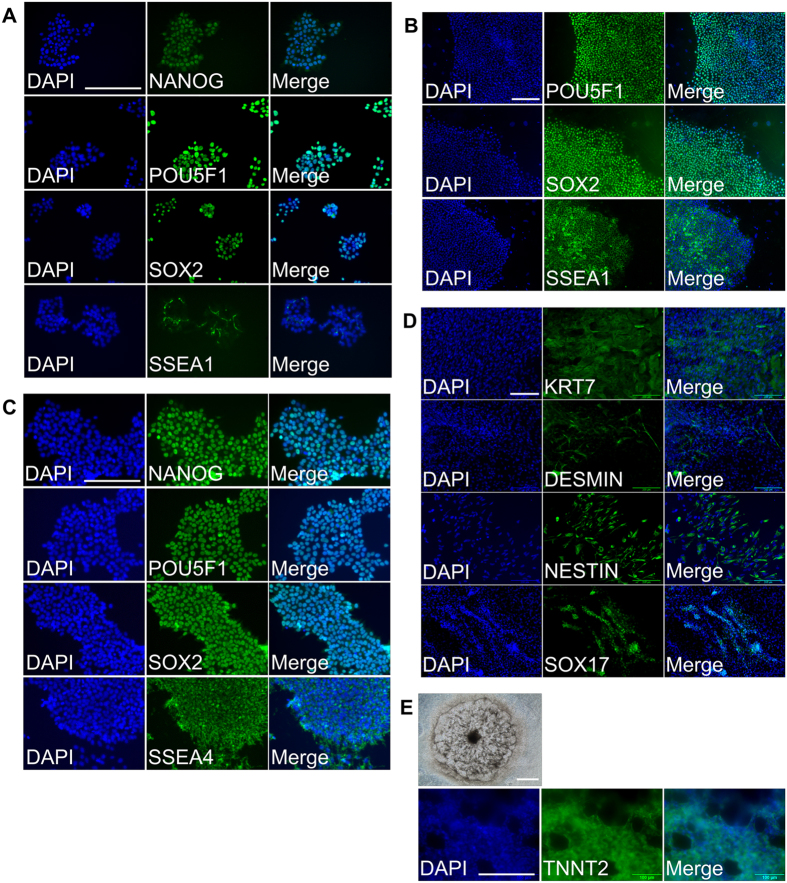
Figure 4. Pluripotent phenotypes of stem cells after recovery from cryopreservation in Ficoll 70 containing medium at −80 °C.
(AC), expression of pluripotent markers in O2K porcine iPSC (A), ID6 porcine iPSC (B), and H1 hESC (C) after recovery from cryopreservation in Ficoll 70- containing medium stored at −80 °C. (D) Lineage markers expressed in embryoid bodies differentiated from cryopreserved H1 hESC: KRT7 (trophectoderm), DESMIN (mesoderm), NESTIN (ectoderm), and SOX17 (endoderm). (E) Cardiomyocytes differentiated from cryopreserved H1 hESC: top panel, colony of beating cardiomyocytes; lower panels, expression of cardiac marker TNNT2. Scale bar = 200 μm.
Figure 5
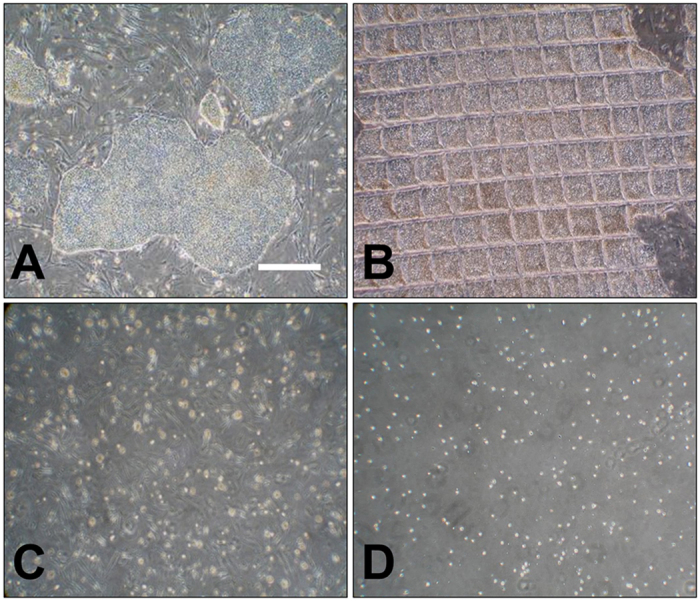
Figure 5. Dissociation of epiblast type stem cells by different methods.
(A), morphology of epiblast type ID6 porcine iPSC during culture; (B), colonies manually cut by the cell passaging tool to yield uniform sized clumps; (C), colonies dispersed with Gentle Cell Dissociation Reagent for 6 min typically provided clumps of 6–8 cells; (D), colonies dispersed with TrypLE largely yielded single cells. Scale bar = 500 μm.
Figure 6
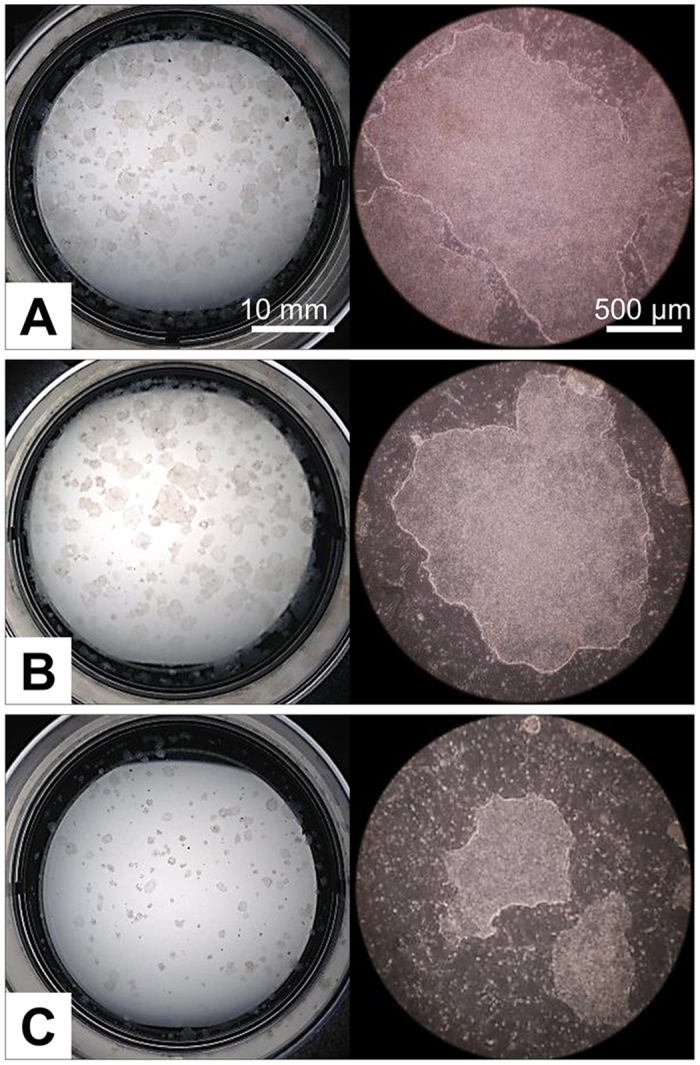
Figure 6. ID6 porcine iPSC colonies formed following 2 weeks of cryopreservation.
Colonies were broken into uniform-size clumps (see Fig. 5B) by mechanical dissociation after dispase treatment and then cryopreserved. (A), LN2 without Ficoll 70; (B), −80 °C without Ficoll 70; (C), −80 °C with Ficoll 70. Images were taken at d 4 after thawing.
Figure 7
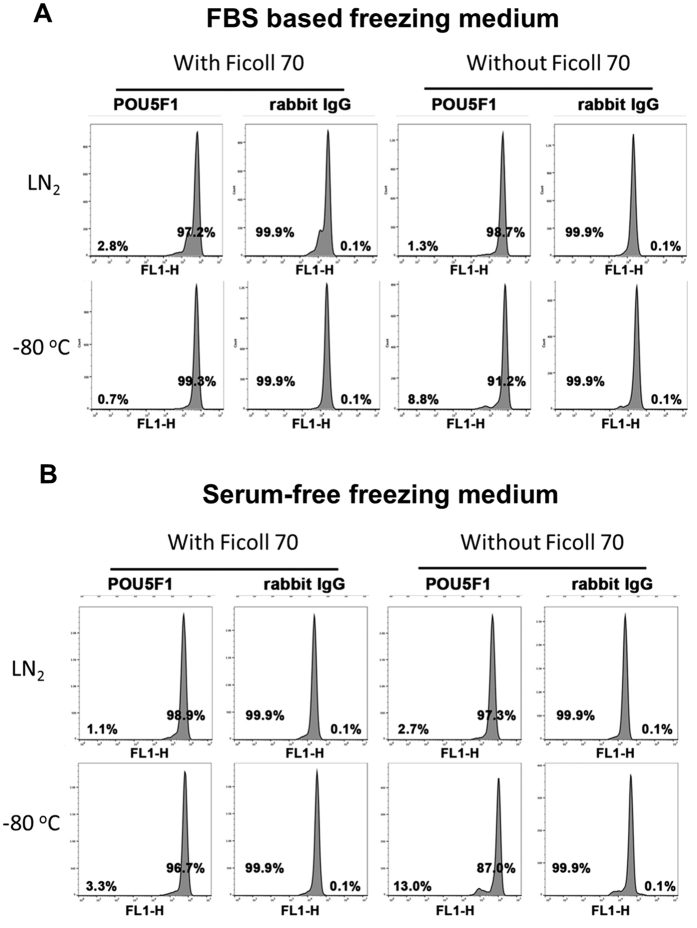
Figure 7. Flow cytometry histograms for POU5F1 expression in H1 hESC recovered from four different cryopreservation protocols (at −80 °C with and without Ficoll 70, and in a LN2 with and without Ficoll 70) after single cell dissociation by TrypLE with the aid of ROCKi.
In the left panels (A), the cryopreservation medium was based on FBS; In the right panels (B), a second experiment utilized the same design but the FBS in the cryopreservation medium was replaced with the same volume of DMEM/F12. Values are means ± SEM (n = 3). At least 10,000 cells were analyzed for each sample. For the negative control, cells were exposed to rabbit IgG and a second antibody without prior exposure to primary antibody.

References

    1. Jones J. M. & Thomson J. A. Human embryonic stem cell technology. Seminars in reproductive medicine 18, 219–223 (2000). - PubMed
    1. Odorico J. S., Kaufman D. S. & Thomson J. A. Multilineage differentiation from human embryonic stem cell lines. Stem cells 19, 193–204 (2001). - PubMed
    1. Coopman K. Large-scale compatible methods for the preservation of human embryonic stem cells: current perspectives. Biotechnology progress 27, 1511–1521 (2011). - PubMed
    1. Thirumala S., Goebel W. S. & Woods E. J. Manufacturing and banking of mesenchymal stem cells. Expert opinion on biological therapy 13, 673–691 (2013). - PubMed
    1. Hanna J. H., Saha K. & Jaenisch R. Pluripotency and cellular reprogramming: facts, hypotheses, unresolved issues. Cell 143, 508–525 (2010). - PMC - PubMed

Publication types