


Transfusion-related immunomodulation: review of the literature and implications for pediatric critical illness
- PMID: 27696473
- PMCID: PMC8341144
- DOI: 10.1111/trf.13855
Transfusion-related immunomodulation: review of the literature and implications for pediatric critical illness
Abstract
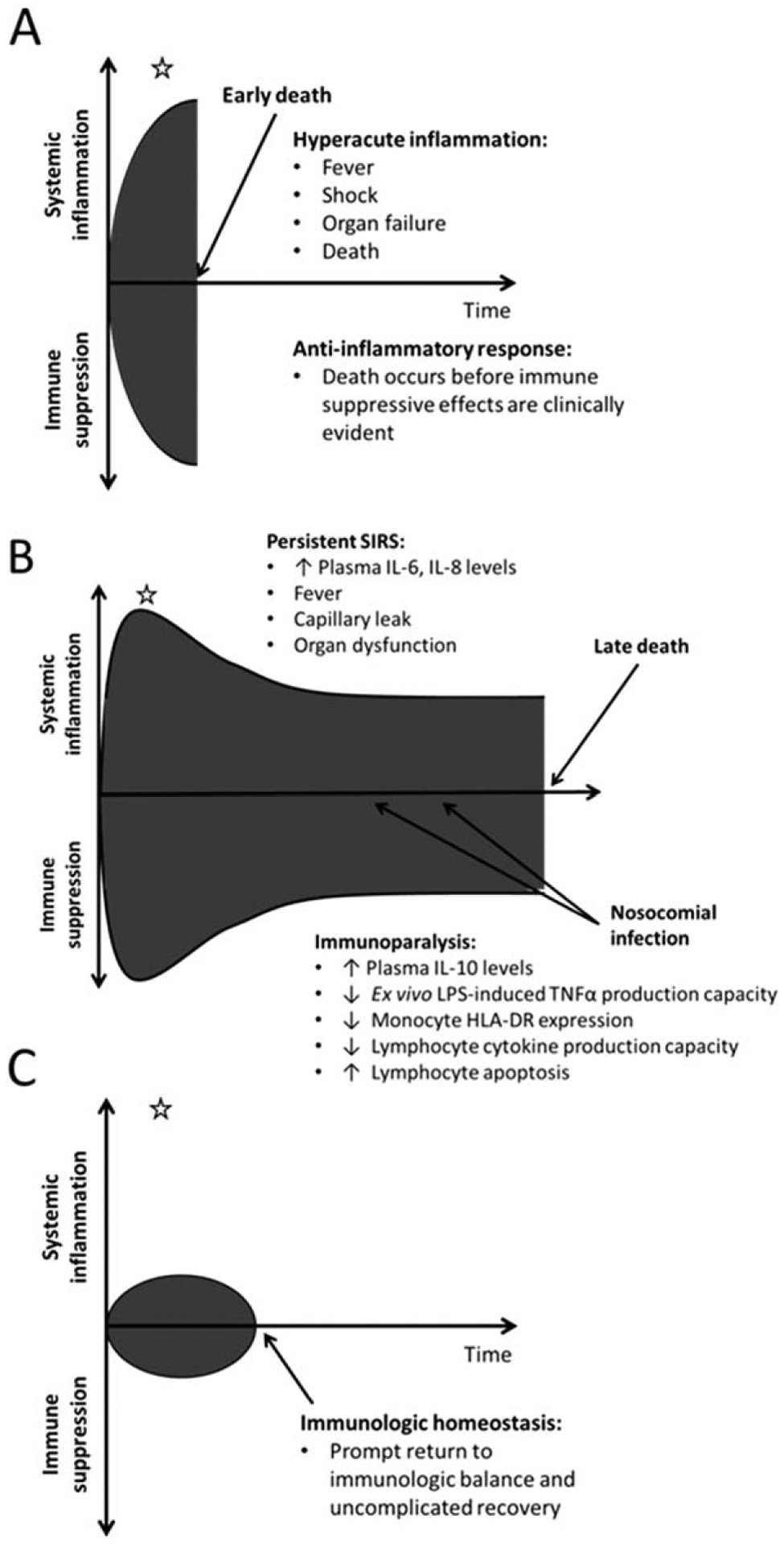
Transfusion-related immunomodulation (TRIM) in the intensive care unit (ICU) is difficult to define and likely represents a complicated set of physiologic responses to transfusion, including both proinflammatory and immunosuppressive effects. Similarly, the immunologic response to critical illness in both adults and children is highly complex and is characterized by both acute inflammation and acquired immune suppression. How transfusion may contribute to or perpetuate these phenotypes in the ICU is poorly understood, despite the fact that transfusion is common in critically ill patients. Both hyperinflammation and severe immune suppression are associated with poor outcomes from critical illness, underscoring the need to understand potential immunologic consequences of blood product transfusion. In this review we outline the dynamic immunologic response to critical illness, provide clinical evidence in support of immunomodulatory effects of blood product transfusion, review preclinical and translational studies to date of TRIM, and provide insight into future research directions.
© 2016 AABB.
Conflict of interest statement
CONFLICT OF INTEREST
PCS is a consultant for Octapharma, Cerus, and Entegrion. The other authors have disclosed no conflicts of interest.
Figures
References
-
- Keown PA, Descamps B. Improved renal allograft survival after blood transfusion: a nonspecific, erythrocyte-mediated immunoregulatory process? Lancet 1979;1:20–2. - PubMed
-
- Shaz BH, Stowell SR, Hillyer CD. Transfusion-related acute lung injury: from bedside to bench and back. Blood 2011; 117:1463–71. - PubMed
-
- Doughty L, Carcillo JA, Kaplan S, et al. The compensatory anti-inflammatory cytokine interleukin 10 response in pediatric sepsis-induced multiple organ failure. Chest 1998; 113:1625–31. - PubMed
Publication types
MeSH terms
Grants and funding
LinkOut - more resources
Full Text Sources
Other Literature Sources
