


Parameters of Context-Induced Ethanol (EtOH)-Seeking in Alcohol-Preferring (P) Rats: Temporal Analysis, Effects of Repeated Deprivation, and EtOH Priming Injections
- PMID: 27696522
- PMCID: PMC5055075
- DOI: 10.1111/acer.13205
Parameters of Context-Induced Ethanol (EtOH)-Seeking in Alcohol-Preferring (P) Rats: Temporal Analysis, Effects of Repeated Deprivation, and EtOH Priming Injections
Abstract
Background: Drug-paired environments can act as stimuli that elicit drug craving. In humans, drug craving is influenced by the amount of time abstinent, number of past periods of abstinence, and inadvertent exposure to the previously abused drug. The current experiments were designed to determine the effects of (i) the duration of abstinence on expression of ethanol (EtOH)-seeking; (ii) EtOH priming following a short and long abstinence period; and (iii) repeated deprivation cycles on relapse drinking and EtOH-seeking.
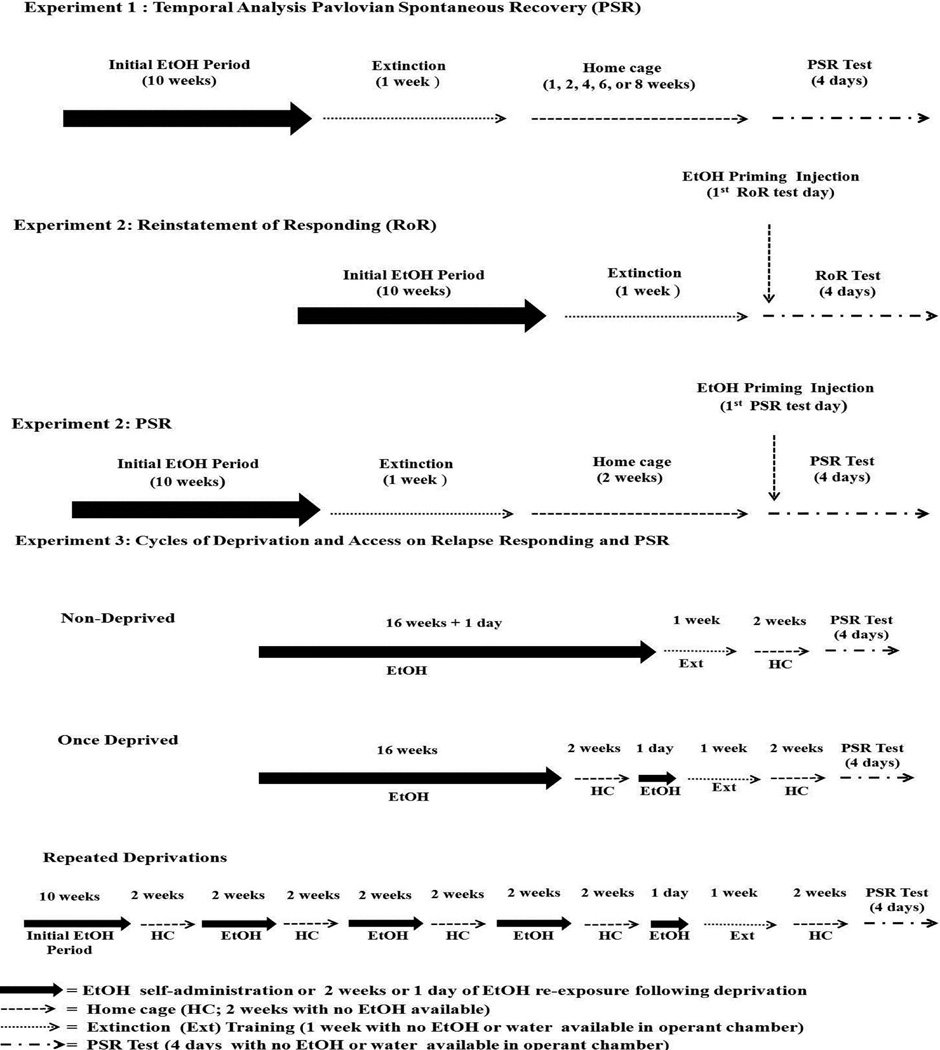
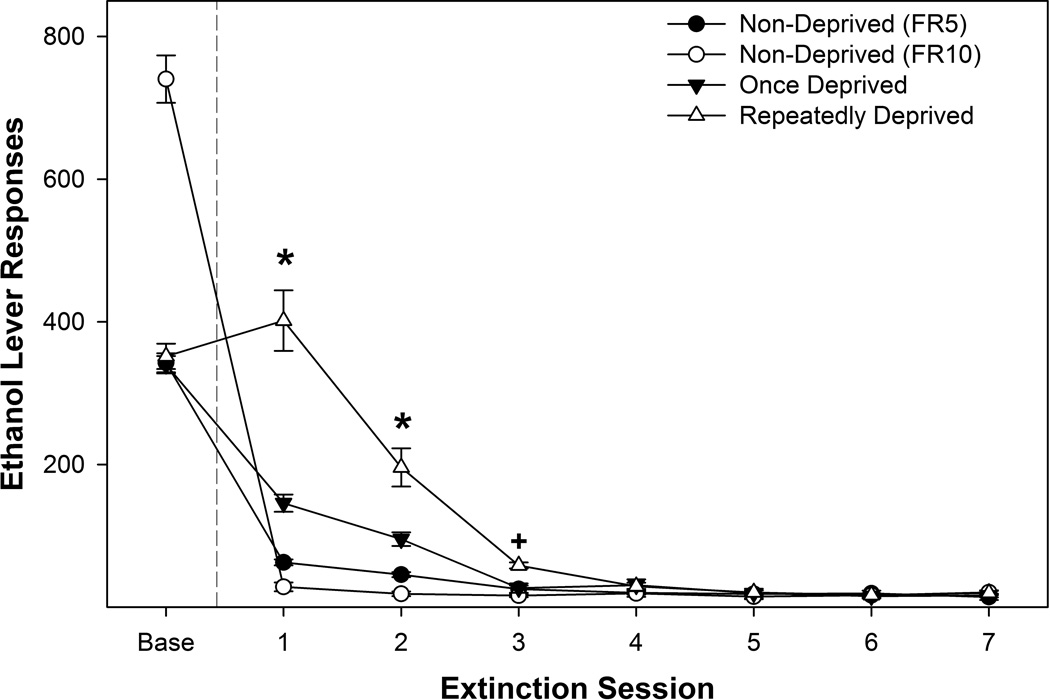
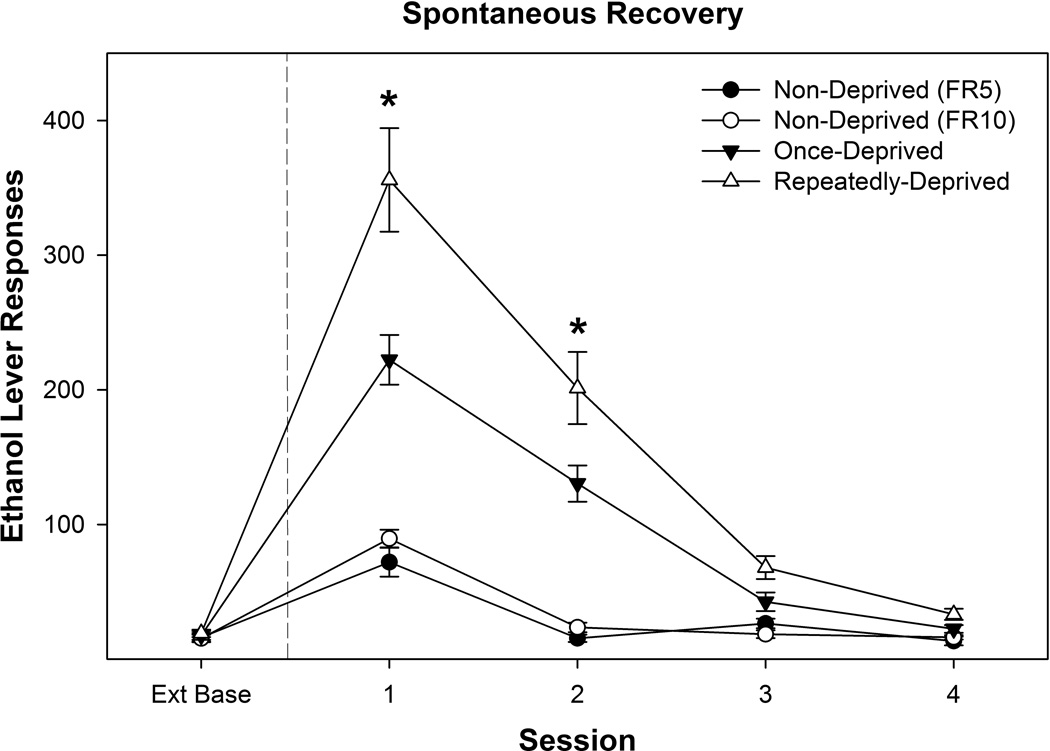
Methods: Rats were allowed to self-administer 15% EtOH, processed through extinction training, maintained in a home cage for a designated EtOH-free period, and then reintroduced to the operant context in the absence of EtOH. The experiments examined the effects of: (i) various home-cage duration periods (1 to 8 weeks), (ii) priming injections of EtOH in the Pavlovian spontaneous recovery (PSR; 14 days after extinction) and reinstatement of responding (RoR; 1 day after extinction) models, and (iii) exposure to repeated cycles of EtOH access-deprivation on relapse drinking and EtOH-seeking behavior.
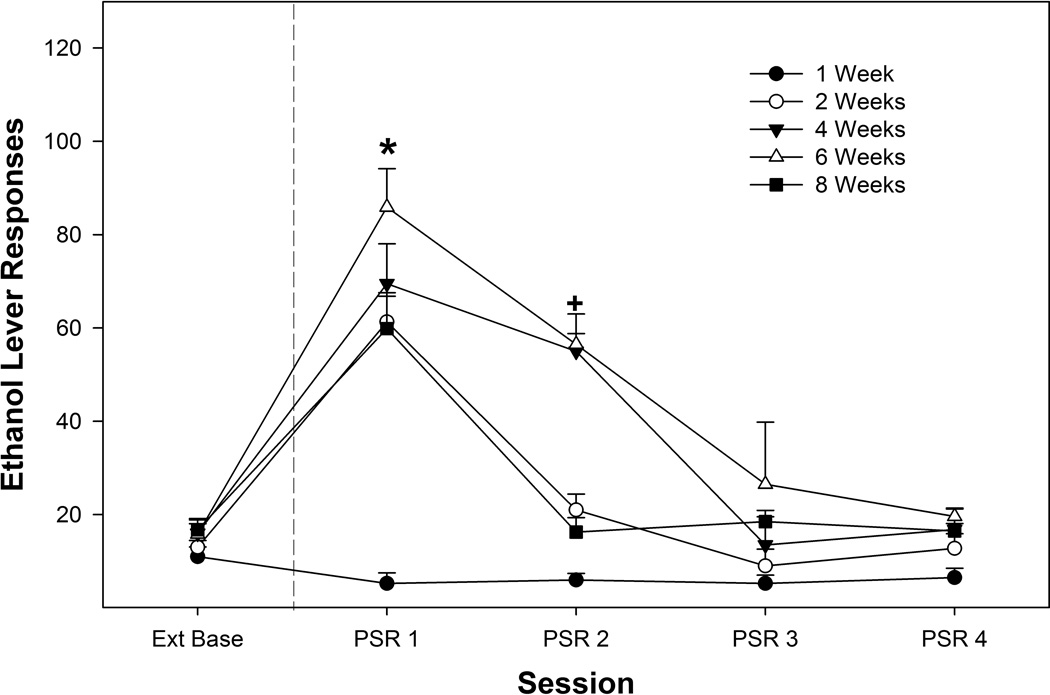
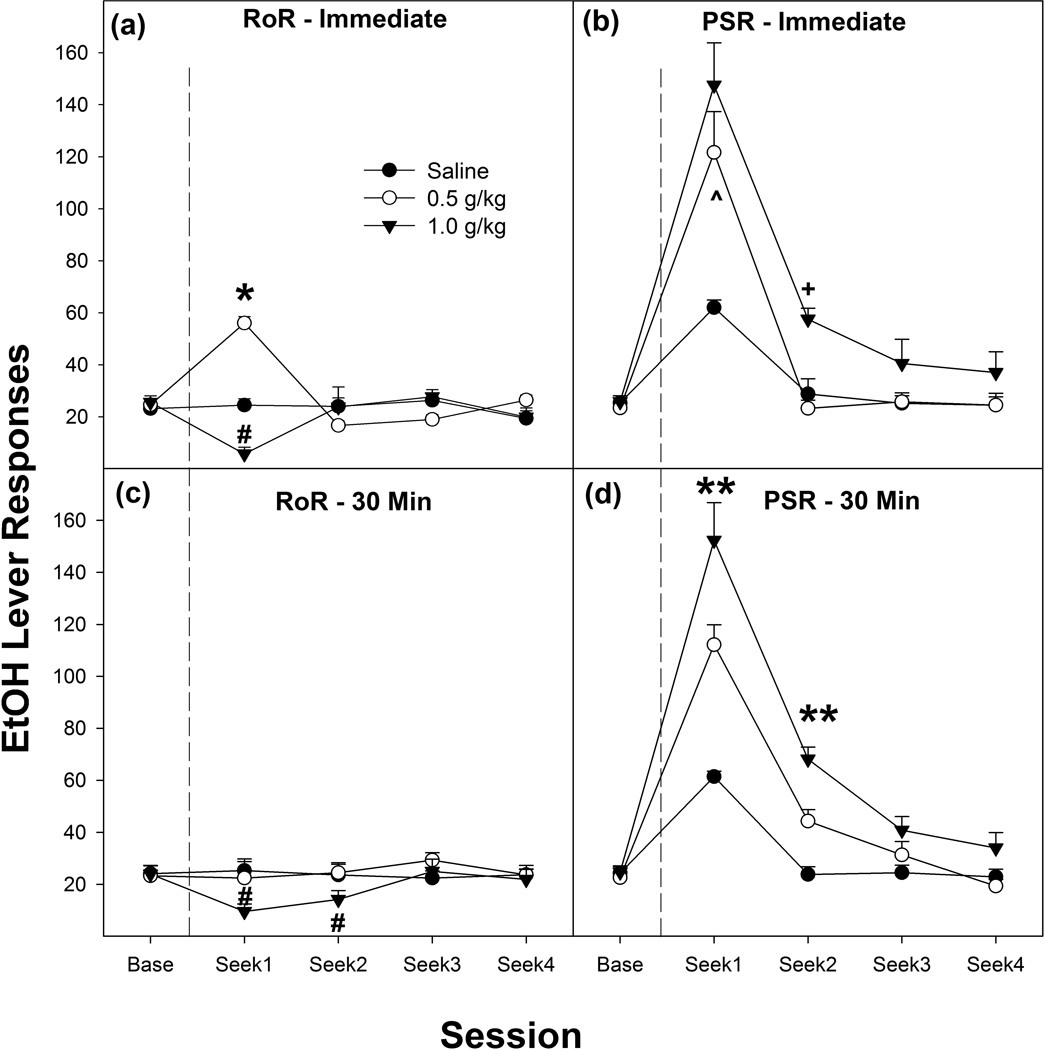
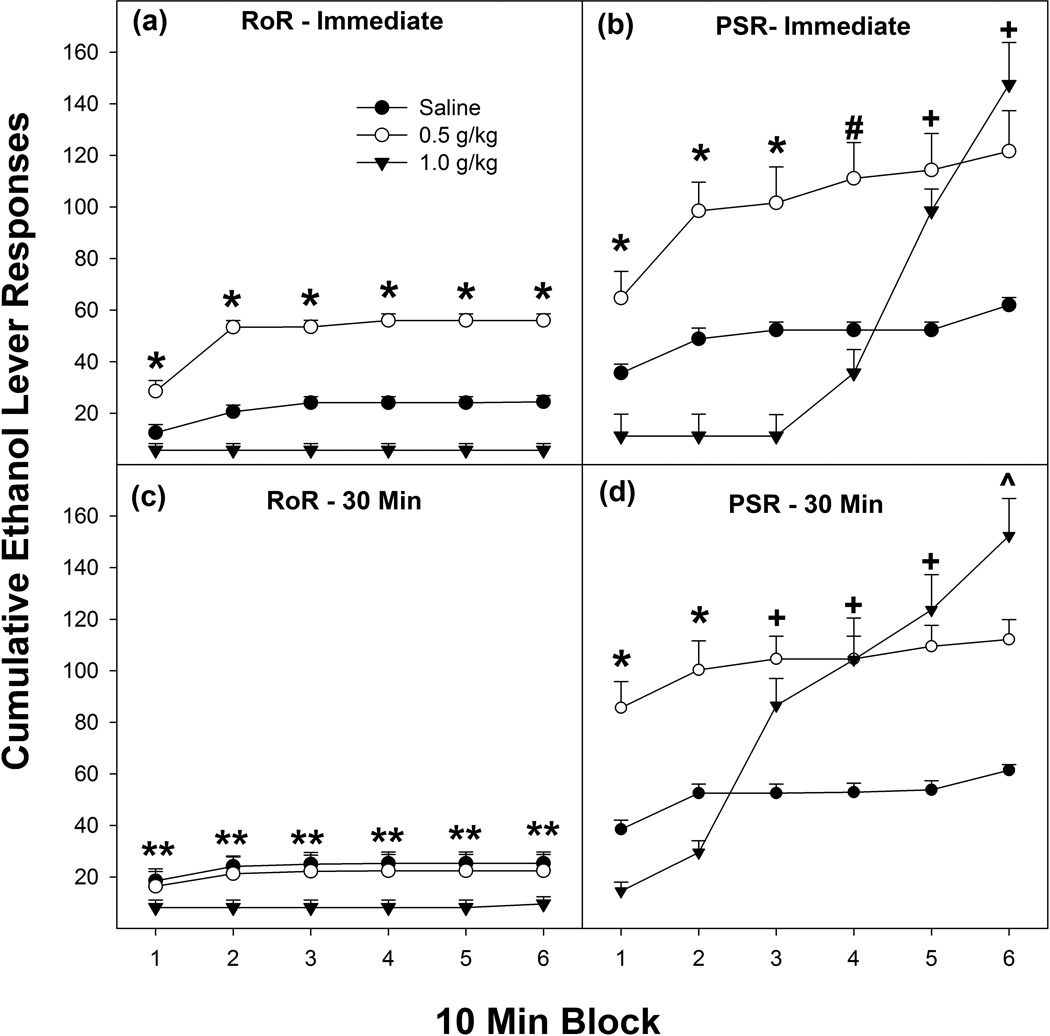
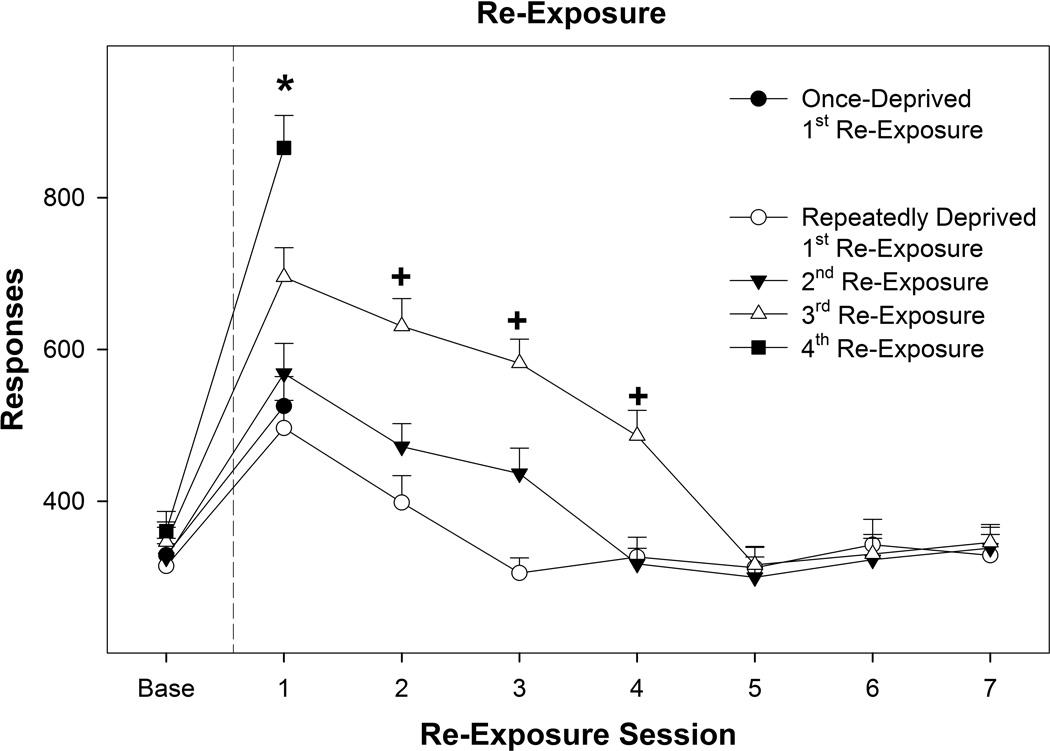
Results: Highest expression of EtOH-seeking was observed following 6 weeks of home-cage maintenance. Priming injections of EtOH were more efficacious at stimulating/enhancing EtOH-seeking in the PSR than RoR model. Exposure to repeated cycles of EtOH deprivation and access enhanced and prolonged relapse drinking and the expression of EtOH-seeking (318 ± 22 responses), which was not observed in rats given equivalent consistent exposure to EtOH (66 ± 11 responses).
Conclusions: Overall, the data indicated that the PSR model has ecological validity; factors that enhance EtOH craving in humans enhance the expression of EtOH-seeking in the PSR test. The data also detail factors that need to be examined to determine the biological basis of EtOH-seeking (e.g., neuroadaptations that occur during the incubation period and following repeated cycles of EtOH drinking and abstinence).
Keywords: Alcohol Relapse; Alcohol-Preferring (P) Rats; Alcohol-Seeking Behavior; Repeated Alcohol Deprivations.
Copyright © 2016 by the Research Society on Alcoholism.
Conflict of interest statement
None of the authors has a conflict of interest associated with this research.
Figures
References
-
- Bienkowski P, Rogowski A, Korkosz A, Mierzejewski P, Radwanska K, Kaczmarek L, Bogucka-Bonikowska A, Kostowski W. Time-dependent changes in alcohol-seeking behaviour during abstinence. Eur Neuropsychopharmacol. 2004;14:355–360. - PubMed
-
- Bouton ME. Context, ambiguity, and unlearning: sources of relapse after behavioral extinction. Biol Psychiatry. 2002;52:976–986. - PubMed
-
- Bouton ME. Context and behavioral processes in extinction. Learn Mem. 2004;11:485–494. - PubMed
-
- Brooks DC. Recent and remote extinction cues reduce spontaneous recovery. Q J Exp Psychol B. 2000;53:25–58. - PubMed
Publication types
MeSH terms
Grants and funding
LinkOut - more resources
Full Text Sources
Other Literature Sources
Medical
Miscellaneous
