


Study protocol for Chronic Obstructive Pulmonary Disease-Sitting and ExacerbAtions Trial (COPD-SEAT): a randomised controlled feasibility trial of a home-based self-monitoring sedentary behaviour intervention
- PMID: 27697880
- PMCID: PMC5073551
- DOI: 10.1136/bmjopen-2016-013014
Study protocol for Chronic Obstructive Pulmonary Disease-Sitting and ExacerbAtions Trial (COPD-SEAT): a randomised controlled feasibility trial of a home-based self-monitoring sedentary behaviour intervention
Erratum in
-
Correction.BMJ Open. 2016 Nov 14;6(11):e013014corr1. doi: 10.1136/bmjopen-2016-013014corr1. BMJ Open. 2016. PMID: 28186954 Free PMC article. No abstract available.
Abstract
Introduction: An acute exacerbation of chronic obstructive pulmonary disease (COPD) marks a critical life event, which can lower patient quality of life and ability to perform daily activities. Patients with COPD tend to lead inactive and highly sedentary lifestyles, which may contribute to reductions in functional capacity. Targeting sedentary behaviour (SB) may be more attainable than exercise (at a moderate-to-vigorous intensity) for behaviour change in patients following an exacerbation. This study aims to evaluate the feasibility and acceptability of a 2-week at-home intervention providing education and self-monitoring to reduce prolonged periods of SB in patients with COPD discharged following an acute exacerbation.
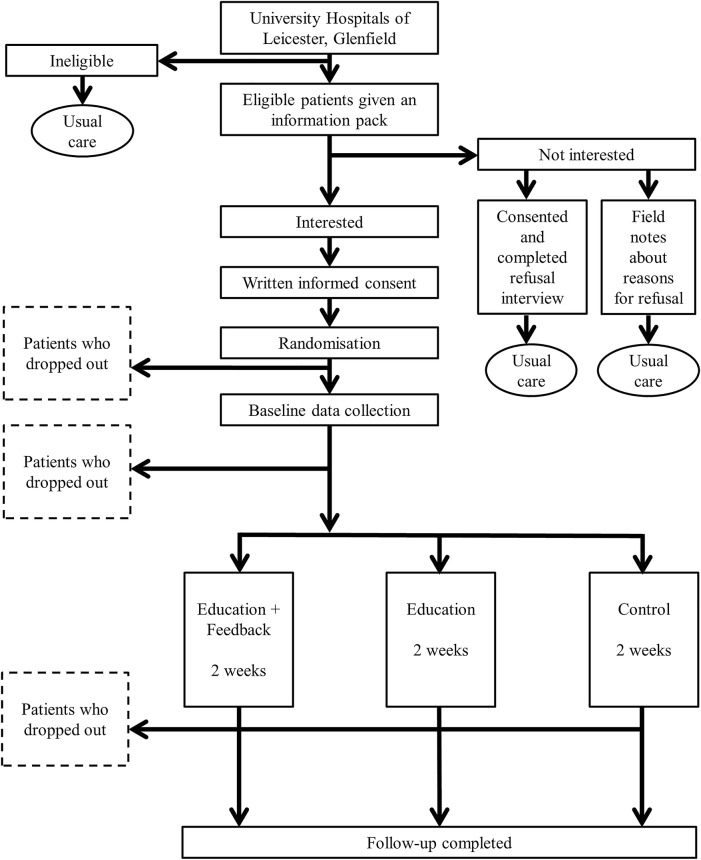
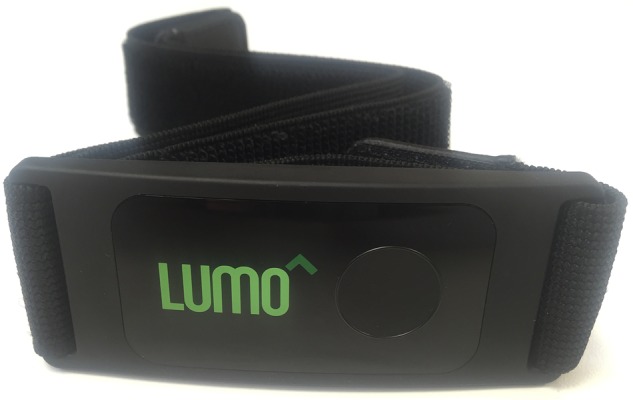
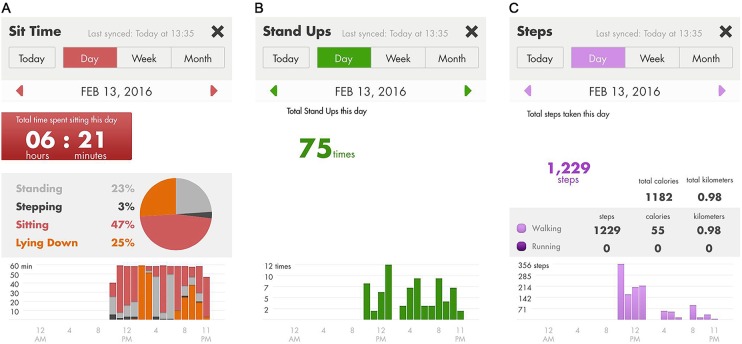
Methods and analysis: Patients will be randomised into 1 of 3 conditions: usual care (control), education or education+feedback. The education group will receive information and suggestions about reducing long periods of sitting. The education+feedback group will receive real-time feedback on their sitting time, stand-ups and step count at home through an inclinometer linked to a smart device app. The inclinometer will also provide vibration prompts to encourage movement when the wearer has been sedentary for too long. Data will be collected during hospital admission and 2 weeks after discharge. Qualitative interviews will be conducted with patients in the intervention groups to explore patient experiences. Interviews with healthcare staff will also be conducted. All data will be collected January to August 2016. The primary outcomes are feasibility and acceptability, which will be assessed by qualitative interviews, uptake and drop-out rates, reasons for refusing the intervention, compliance, app usage and response to vibration prompts.
Ethics and dissemination: The research ethics committee East Midlands Leicester-Central has provided ethical approval for the conduct of this study. The results of the study will be disseminated through appropriate conference proceedings and peer-reviewed journals.
Trial registration number: ISRCTN13790881; Pre-results.
Keywords: physical activity; sedentary behaviour; self-monitoring.
Published by the BMJ Publishing Group Limited. For permission to use (where not already granted under a licence) please go to http://www.bmj.com/company/products-services/rights-and-licensing/.
Conflict of interest statement
Conflicts of Interest: None declared.
Figures
References
-
- Hill K, Gardiner PA, Cavalheri V et al. Physical activity and sedentary behaviour: applying lessons to chronic obstructive pulmonary disease. Intern Med 2015;45:474–82. - PubMed
Publication types
MeSH terms
LinkOut - more resources
Full Text Sources
Other Literature Sources
Medical
