


Neutrophil Integrins and Matrix Ligands and NET Release
- PMID: 27698655
- PMCID: PMC5027203
- DOI: 10.3389/fimmu.2016.00363
Neutrophil Integrins and Matrix Ligands and NET Release
Abstract
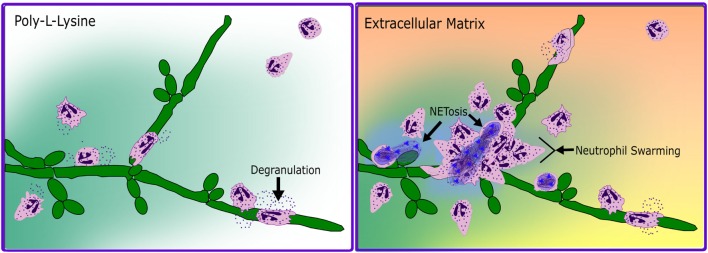
Neutrophils are motile and responsive to tissue injury and infection. As neutrophils emigrate from the bloodstream and migrate toward a site of affliction, they encounter the tissue extracellular matrix (ECM) and thereby engage integrins. Our laboratory studies the neutrophilic response to the fungal pathogen Candida albicans either in the filamentous state of the microbe or to the purified pathogen-associated molecular pattern, β-glucan. We have gained an appreciation for the role of integrins in regulating the neutrophil anti-Candida response and how the presence or absence of ECM can drive experimental outcome. The β2 integrin CR3 (complement receptor 3; αMβ2; Mac-1; CD11b/CD18) plays an important role in fungal recognition by its ability to bind β-glucan at a unique lectin-like domain. The presence of ECM differentially regulates essential neutrophil anti-fungal functions, including chemotaxis, respiratory burst, homotypic aggregation, and the release of neutrophil extracellular traps (NETs). We have shown that NET release to C. albicans hyphae or immobilized β-glucan occurs rapidly and without the requirement for respiratory burst on ECM. This is in contrast to the more frequently reported mechanisms of NETosis to other pathogens without the context of ECM, which occur after a prolonged lag period and require respiratory burst. As expected for an ECM-dependent phenotype, NETosis and other neutrophil functions are dependent on specific integrins. The focus of this review is the role of ECM ligation by neutrophil integrins as it pertains to host defense functions with an emphasis on lessons we have learned studying the anti-Candida response of human neutrophils.
Keywords: Candida; NETs; extracellular matrix; integrins; neutrophils.
Figures
References
Publication types
Grants and funding
LinkOut - more resources
Full Text Sources
Other Literature Sources
Research Materials
