


Neutrophil Extracellular Traps Go Viral
- PMID: 27698656
- PMCID: PMC5027205
- DOI: 10.3389/fimmu.2016.00366
Neutrophil Extracellular Traps Go Viral
Abstract
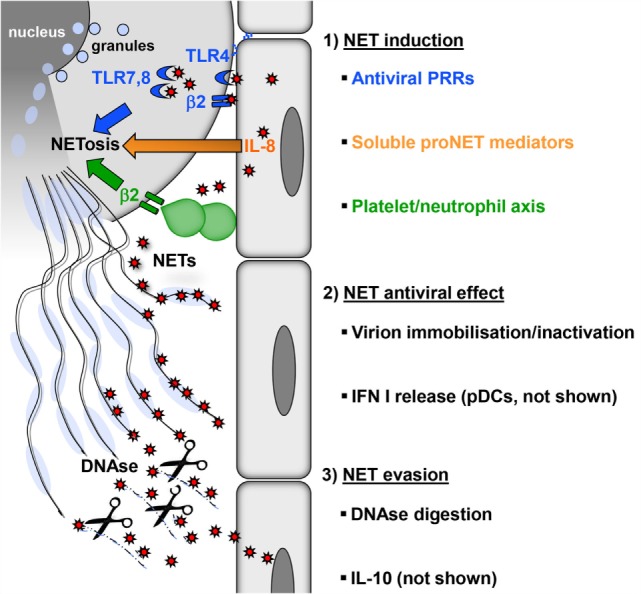
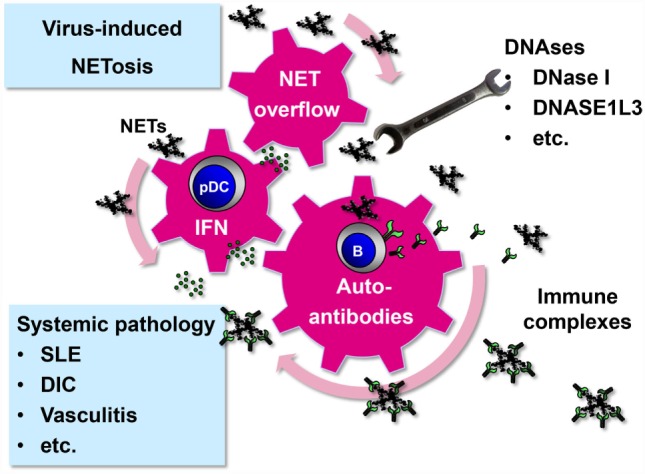
Neutrophils are the most numerous immune cells. Their importance as the first line of defense against bacterial and fungal pathogens is well described. In contrast, the role of neutrophils in controlling viral infections is less clear. Bacterial and fungal pathogens can stimulate neutrophils extracellular traps (NETs) in a process called NETosis. Although NETosis has previously been described as a special form of programmed cell death, there are forms of NET production that do not end with the demise of neutrophils. As an end result of NETosis, genomic DNA complexed with microbicidal proteins is expelled from neutrophils. These structures can kill pathogens or at least prevent their local spread within host tissue. On the other hand, disproportionate NET formation can cause local or systemic damage. Only recently, it was recognized that viruses can also induce NETosis. In this review, we discuss the mechanisms by which NETs are produced in the context of viral infection and how this may contribute to both antiviral immunity and immunopathology. Finally, we shed light on viral immune evasion mechanisms targeting NETs.
Keywords: immunopathogenesis; neutrophil extracellular traps; neutrophils; viral immune evasion; viruses.
Figures
References
-
- Takei H, Araki A, Watanabe H, Ichinose A, Sendo F. Rapid killing of human neutrophils by the potent activator phorbol 12-myristate 13-acetate (PMA) accompanied by changes different from typical apoptosis or necrosis. J Leukoc Biol (1996) 59:229–40. - PubMed
Publication types
LinkOut - more resources
Full Text Sources
Other Literature Sources
Research Materials
