


Management of older adults with dementia who present to emergency services with neuropsychiatric symptoms
- PMID: 27699845
- PMCID: PMC5378688
- DOI: 10.1002/gps.4599
Management of older adults with dementia who present to emergency services with neuropsychiatric symptoms
Abstract
Objective: Our aim is to evaluate if and how neuropsychiatric symptoms (NPS) of dementia influence the management and disposition of older adults who present to emergency care settings.
Methods: This is a retrospective cohort study that involved the medical and psychiatric emergency departments of a tertiary academic medical center. Participants included patients ≥65 years of age with dementia who presented between 1 February 2012 and 16 July 2014 (n = 347). Subjects with documented NPS (n = 78) were compared with a group of subjects without documented NPS (n = 78) randomly selected from the overall group with dementia. The groups with and without NPS were compared on demographic, clinical, management, and disposition characteristics.
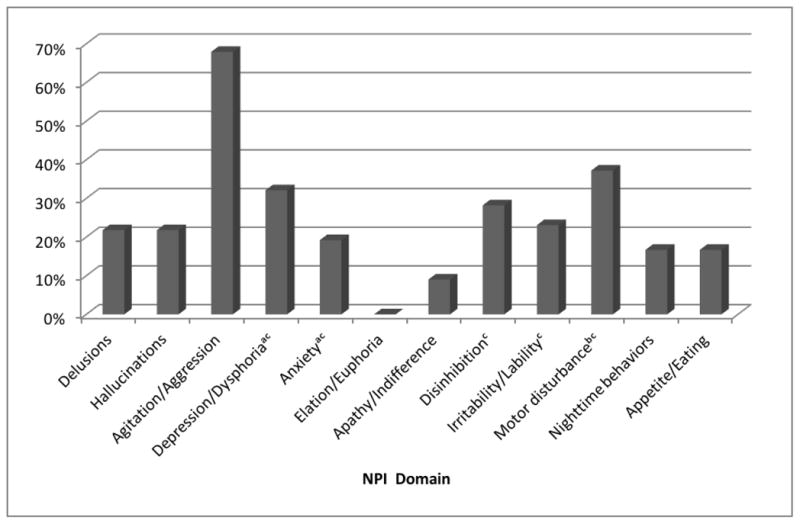
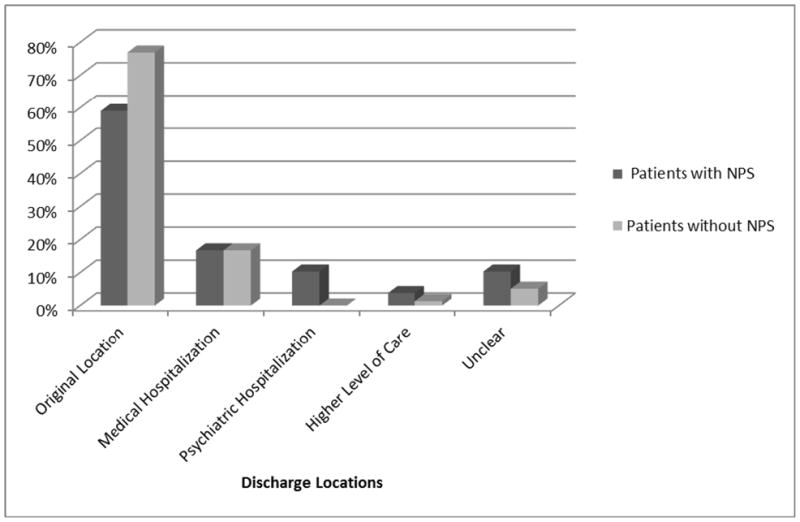
Results: Patients with NPS were more likely to have additional diagnostic testing performed and receive psychotropic medications including benzodiazepines and antipsychotics. Significantly fewer patients with NPS (59.0%) returned to their original setting from the emergency department than patients without NPS (76.9%). Among patients with NPS, those who had a motor disturbance were more likely to receive psychotropic medications than patients who did not have a motor disturbance. Depression/dysphoria, anxiety, disinhibition, irritability/lability, and motor disturbance were all associated with transfer from medical to psychiatric emergency department. Patients with depression/dysphoria or anxiety were more likely to be psychiatrically hospitalized.
Conclusions: There are significant differences in the management of dementia with and without NPS in the emergency room setting. Developing and implementing successful methods to manage NPS in the emergency department and outpatient setting could potentially lead to less emergent psychotropic administration and reduce hospitalizations. Copyright © 2016 John Wiley & Sons, Ltd.
Keywords: dementia; emergency department; neuropsychiatric symptoms.
Copyright © 2016 John Wiley & Sons, Ltd.
Conflict of interest statement
Conflicts of Interest and Source of Funding: None declared
Figures
References
-
- AMINZADEH F, DALZIEL WB. Older adults in the emergency department: A systematic review of patterns of use, adverse outcomes, and effectiveness of interventions. Annals of emergency medicine. 2002;39:238–247. - PubMed
-
- BALARDY L, VOISIN T, CANTET C, VELLAS B. Predictive factors of emergency hospitalisation in Alzheimer’s patients: results of one-year follow-up in the REAL. FR Cohort. The journal of nutrition, health & aging. 2004;9:112–116. - PubMed
-
- BYNUM JP, RABINS PV, WELLER W, NIEFELD M, ANDERSON GF, WU AW. The relationship between a dementia diagnosis, chronic illness, medicare expenditures, and hospital use. J Am Geriatr Soc. 2004;52:187–194. - PubMed
-
- CHANG CM, WU EC, CHANG IS, LIN KM. Benzodiazepine and risk of hip fractures in older people: a nested case-control study in Taiwan. Am J Geriatr Psychiatry 2008 - PubMed
MeSH terms
Substances
Grants and funding
LinkOut - more resources
Full Text Sources
Other Literature Sources
Medical
