


Patterns of physical activity and survival following cardiac resynchronization therapy implantation: the ALTITUDE activity study
- PMID: 27702867
- PMCID: PMC5834044
- DOI: 10.1093/europace/euw267
Patterns of physical activity and survival following cardiac resynchronization therapy implantation: the ALTITUDE activity study
Abstract
Aims: Cardiac resynchronization therapy with implantable defibrillator backup (CRT-D) improves outcomes, but predictors and markers of response remain limited. Physical activity information collected by CRT devices may provide insights to CRT response and the relationship between activity changes and survival.
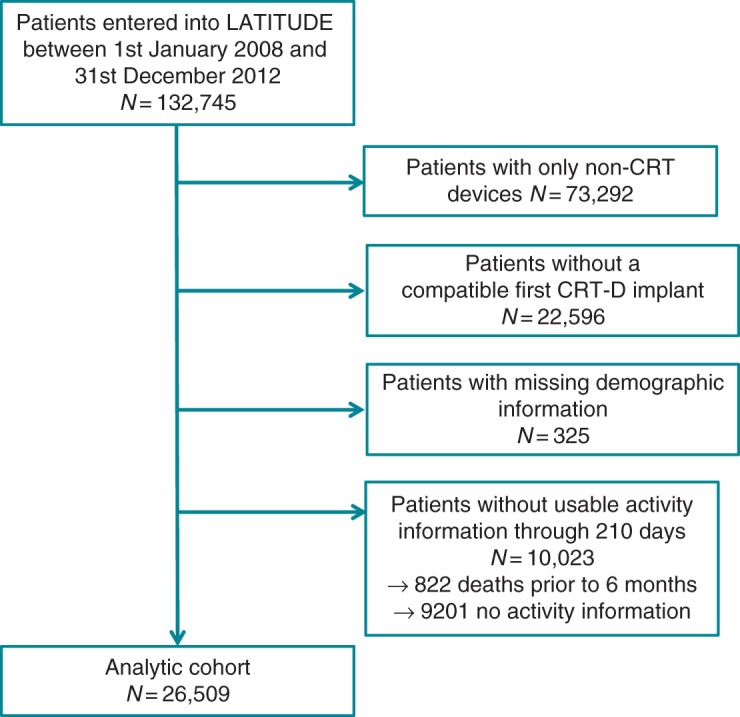
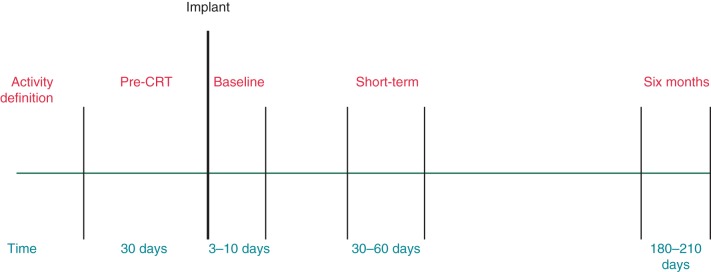
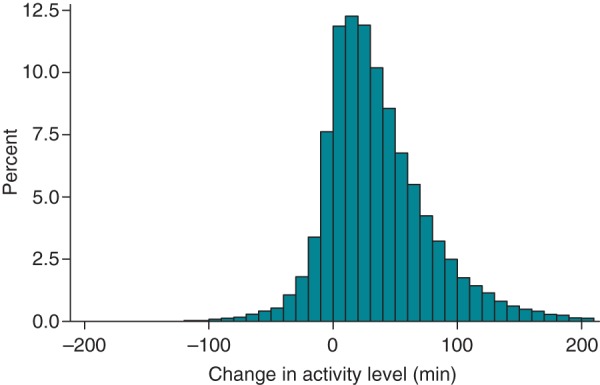
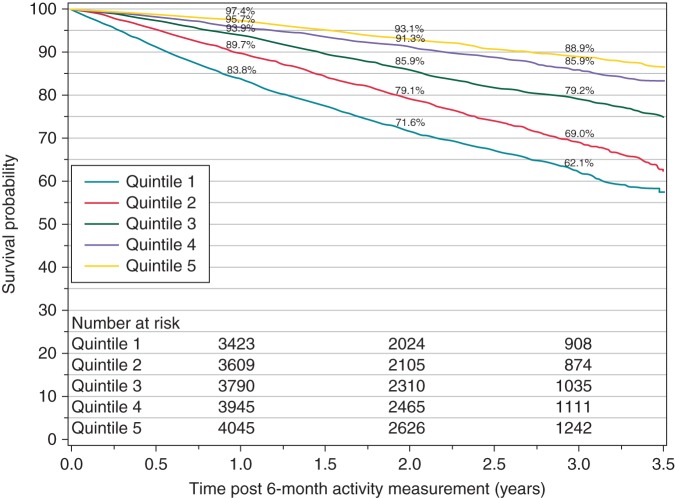
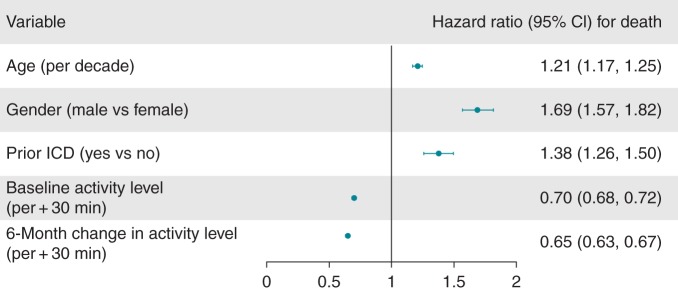
Methods and results: Patients entered into the LATITUDE remote monitoring system from 2008 to 2012 after receipt of a new CRT-D were eligible. Mean daily activity was calculated from LATITUDE uploads at baseline (first 3-10 days following implant) and 6 months (180-210 days). Pairwise differences for baseline-6-month activity were calculated, and survival according to quintiles of 6-month activity change was assessed. Cox regression was used to examine the adjusted association between survival and baseline-6-month activity change. A total of 26 509 patients were followed for a median of 2.3 years (mean age 70.2 ± 11.0 years, 70.7% male). Mean baseline activity was 66.2 ± 47.7 min/day, with mean paired increase at 6 months of 37.1 ± 48.2 min/day [95% CI (confidence interval), 36.5-37.6, P < 0.0001], though 15.5% of patients did not improve or worsened at 6 months. Survival at 3 years was significantly higher in the largest baseline-6-month activity change quintile vs. the lowest quintile (88.9% vs. 62.1%, log-rank P-value < 0.001). Adjusted for age and gender, higher 6-month activity change was associated with a lower risk of death (adjusted hazard ratios 0.65 per 30 min increase in activity, 95% CI, 0.63-0.67).
Conclusions: Change in physical activity between baseline and 6 months following CRT implantation is strongly associated with survival.
Keywords: Cardiac resynchronization therapy; Exercise; Heart failure; Outcomes research; Remote monitoring.
Published on behalf of the European Society of Cardiology. All rights reserved. © The Author 2016. For permissions, please email: journals.permissions@oup.com.
Figures
References
-
- Boriani G, Nesti M, Ziacchi M, Padeletti L. Cardiac resynchronization therapy: an overview on guidelines. Card Electrophysiol Clin 2015;7:673–93. - PubMed
-
- Cleland JG, Abraham WT, Linde C, Gold MR, Young JB, Claude Daubert J et al. An individual patient meta-analysis of five randomized trials assessing the effects of cardiac resynchronization therapy on morbidity and mortality in patients with symptomatic heart failure. Eur Heart J 2013;34:3547–56. - PMC - PubMed
-
- Daubert C, Gold MR, Abraham WT, Ghio S, Hassager C, Goode G et al. Prevention of disease progression by cardiac resynchronization therapy in patients with asymptomatic or mildly symptomatic left ventricular dysfunction: insights from the European cohort of the REVERSE (Resynchronization Reverses Remodeling in Systolic Left Ventricular Dysfunction) trial. J Am Coll Cardiol 2009;54:1837–46. - PubMed
-
- Moss AJ, Hall WJ, Cannom DS, Klein H, Brown MW, Daubert JP et al. Cardiac-resynchronization therapy for the prevention of heart-failure events. N Engl J Med 2009;361:1329–38. - PubMed
-
- Kadhiresan VA, Pastore J, Auricchio A, Sack S, Doelger A, Girouard S et al. A novel method—the activity log index—for monitoring physical activity of patients with heart failure. Am J Cardiol 2002;89:1435–7. - PubMed
MeSH terms
Grants and funding
LinkOut - more resources
Full Text Sources
Other Literature Sources
Medical
Research Materials
