


Ecological Momentary Assessment and Smartphone Application Intervention in Adolescents with Substance Use and Comorbid Severe Psychiatric Disorders: Study Protocol
- PMID: 27703435
- PMCID: PMC5028912
- DOI: 10.3389/fpsyt.2016.00157
Ecological Momentary Assessment and Smartphone Application Intervention in Adolescents with Substance Use and Comorbid Severe Psychiatric Disorders: Study Protocol
Abstract
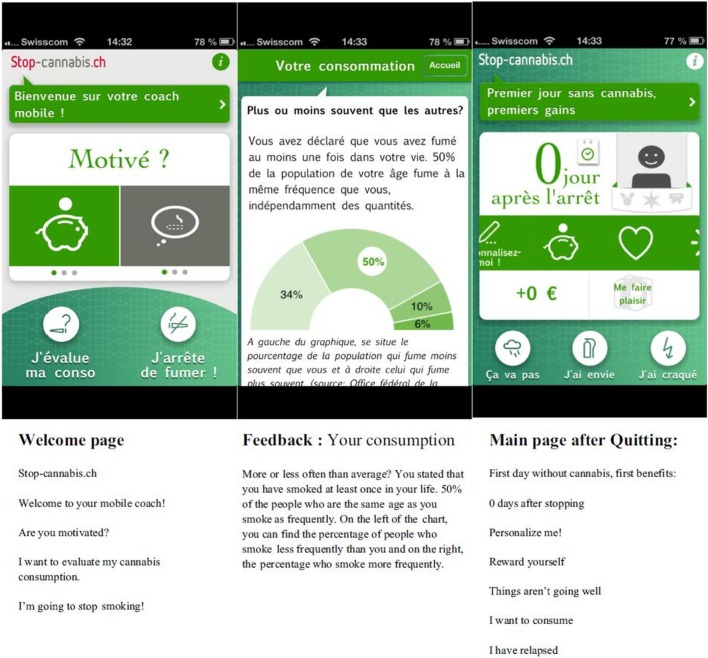
Context: Substance use disorders (SUDs) are highly prevalent among inpatient adolescents with psychiatric disorders. In this population, substance use and other psychiatric outcomes can reinforce one another. Despite the need for integrated interventions in youths with dual diagnoses, few specific instruments are available. App-based technologies have shown promising results to help reduce substance use in adolescents, but their applicability in youths with associated severe psychiatric disorders is poorly documented. We aim to evaluate the feasibility of an ecological momentary assessment (EMA) intervention for all substance users, and of a smartphone application for cannabis users (Stop-Cannabis), for outpatient treatment after hospital discharge.
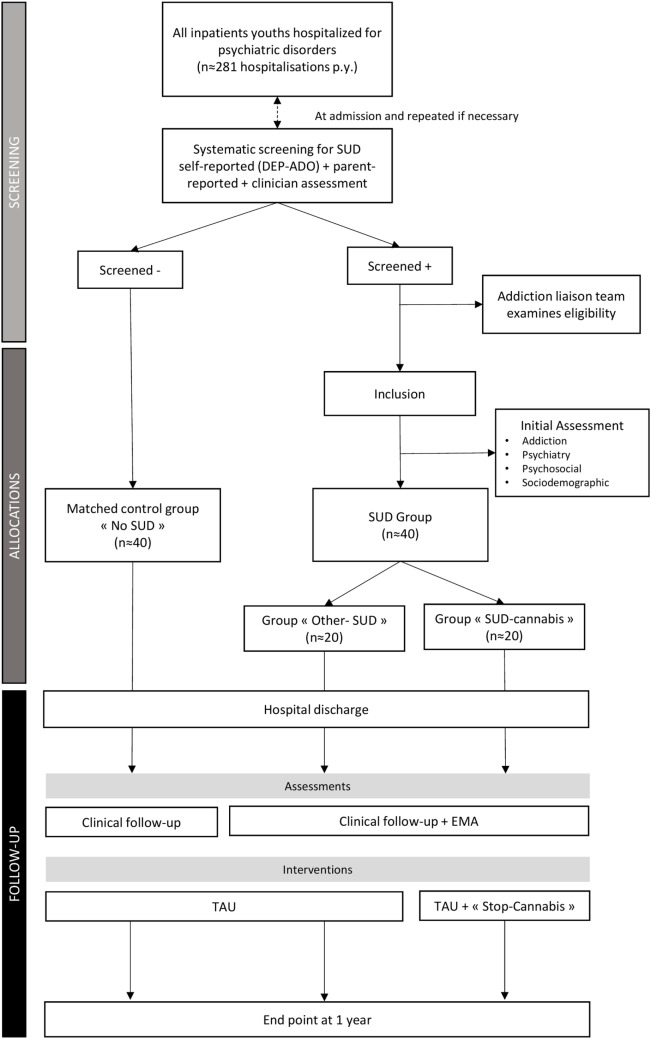
Methods and analysis: All inpatient adolescents with psychiatric disorders hospitalized between 2016 and 2018 in a university hospital will be systematically screened for SUD and, if positive, will be assessed by an independent specialist addiction team. Participants with confirmed SUDs will be invited and helped to download an EMA app and, if required, the Stop-Cannabis app, the week preceding hospital discharge. Information about the acceptability and use of both apps and the validity of EMA data in comparison to clinical assessments will be assessed after 6 months and 1 year.
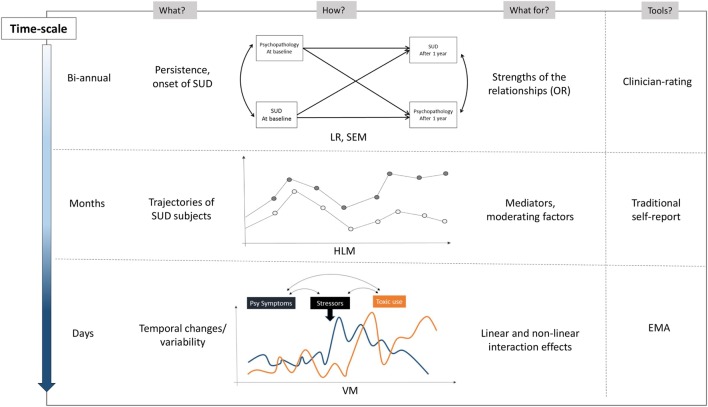
Discussion: This research has been designed to raise specific issues for consideration regarding the sequence between substance use, contextual factors, and other psychiatric symptoms among adolescents with comorbid severe psychiatric disorders. A better understanding of the mechanisms involved will inform the development of integrated treatment for dual disorders at that age.
Ethics and dissemination: The study has already been approved and granted. Dissemination will include presentations at international congresses as well as publications in peer-reviewed journals.
Trial registration: European Clinical Trials Database: Number 2016-001999-30.
Keywords: adolescents; cannabis addiction; ecological momentary assessment; ecological momentary intervention; mHealth app; prevention; smartphone app; substance use disorder.
Figures
References
-
- Deas D. Adolescent substance abuse and psychiatric comorbidities. J Clin Psychiatry (2006) 67(Suppl 7):18–23. - PubMed
LinkOut - more resources
Full Text Sources
Other Literature Sources
Research Materials
