


Neighborhood Context and Preterm Delivery among African American Women: the Mediating Role of Psychosocial Factors
- PMID: 27704384
- PMCID: PMC5126020
- DOI: 10.1007/s11524-016-0083-4
Neighborhood Context and Preterm Delivery among African American Women: the Mediating Role of Psychosocial Factors
Abstract
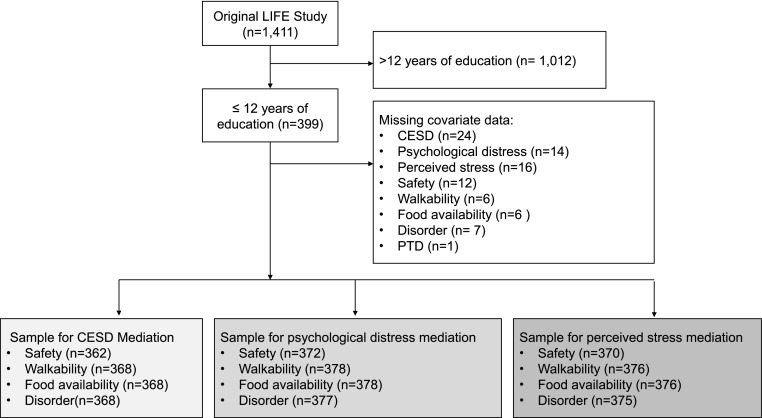
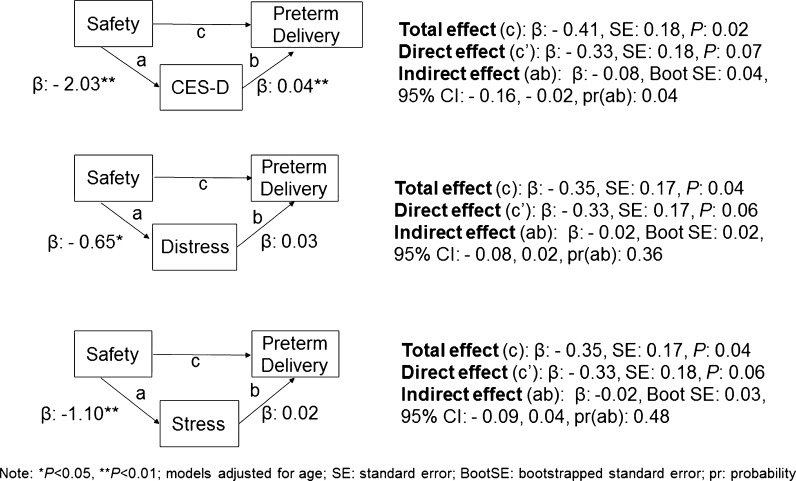
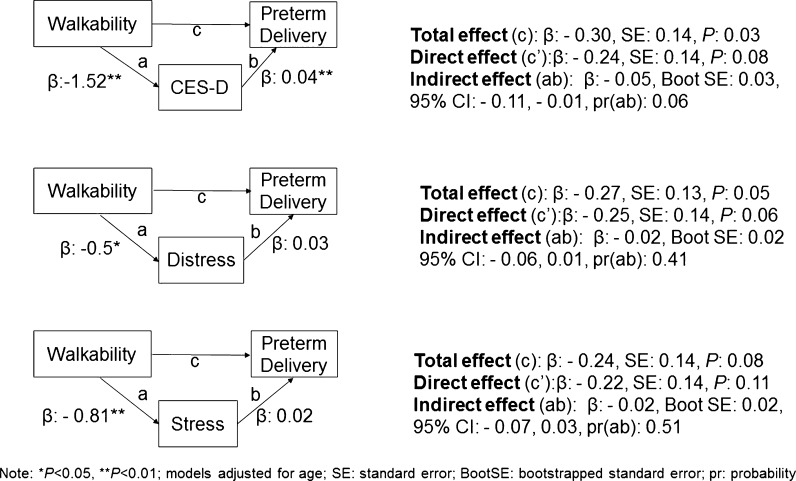
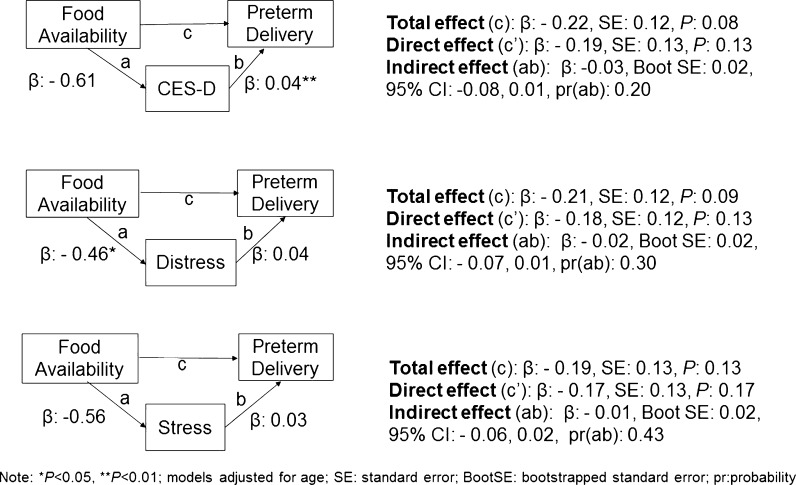
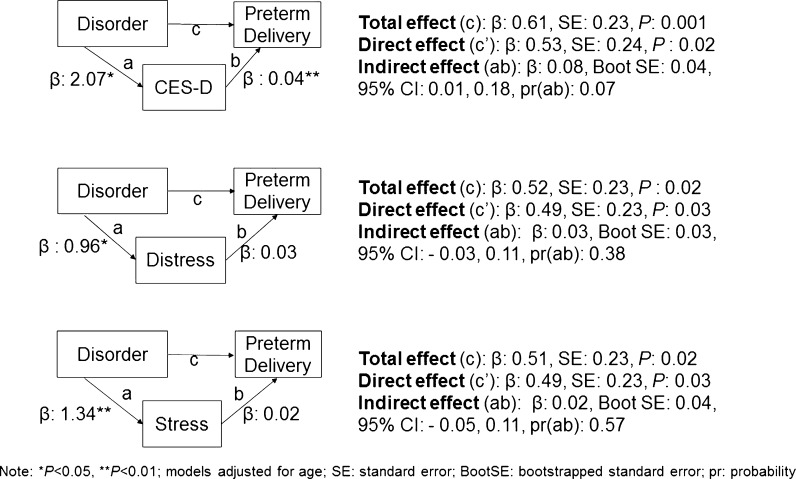
Preterm delivery (PTD), or birth before 37 completed weeks of gestation, is a serious public health issue, and racial disparities persist. In a recently published study, perceptions of the residential environment (or neighborhood context) were associated with PTD rates among urban African American women with low educational attainment (≤12 years); however, the mechanisms of these associations are unknown. Given this gap in the literature, we used data from the Life Influences on Fetal Environments Study of postpartum African American women from Metropolitan Detroit, Michigan (2009-2011; n = 399), to examine whether psychosocial factors (depressive symptomology, psychological distress, and perceived stress) mediate associations between perceptions of the neighborhood context and PTD. Validated scales were used to measure women's perceptions of their neighborhood safety, walkability, healthy food availability (higher=better), and social disorder (higher=more disorder). The psychosocial indicators were measured with the Center for Epidemiologic Studies-Depression Scale, Kessler's Psychological Distress Scale (K6), and Cohen's Perceived Stress Scale. Statistical mediation was assessed using an unadjusted logistic regression-based path analysis for estimating direct and indirect effects. The associations between perceived walkability, food availability, and social disorder were not mediated by psychosocial factors. However, perceptions of neighborhood safety were inversely associated with depressive symptoms which were positively associated with PTD rates. Also, higher perceived neighborhood social disorder was associated with higher PTD rates, net of the indirect paths through psychosocial factors. Future research should identify other mechanisms of the perceived neighborhood context-PTD associations, which would inform PTD prevention efforts among high-risk groups.
Keywords: African Americans; Depressive symptomology; Neighborhood context; Preterm delivery; Psychosocial factors; Urban health.
Conflict of interest statement
Compliance with Ethical Standards This study was approved by the institutional review boards at the University of Michigan, St. John Providence Health System, and Wayne State University. All study participants gave written informed consent.
Figures
References
-
- CDC. Reproductive Health: Preterm Birth. 2013; http://www.cdc.gov/reproductivehealth/MaternalInfantHealth/PretermBirth.htm. Accessed April 26, 2013.
-
- Martin J, Hamilton B, Osterman M, Curtin S, Matthews T. Births: Final Data for 2012. National Vital Statistics Reports; Volume 62 Number 9. Vol 62 No 9. Hyattsville, MD: U.S Department of Health & Human Services; 2013. - PubMed
-
- National Center for Health Statistics, first natality data. 2015; http://www.marchofdimes.org/Peristats/ViewSubtopic.aspx?reg=99&top=3&sto.... Accessed 8 Dec 2015.
MeSH terms
Grants and funding
LinkOut - more resources
Full Text Sources
Other Literature Sources
Medical
Miscellaneous
