


Structural basis for PPAR partial or full activation revealed by a novel ligand binding mode
- PMID: 27708429
- PMCID: PMC5052532
- DOI: 10.1038/srep34792
Structural basis for PPAR partial or full activation revealed by a novel ligand binding mode
Abstract
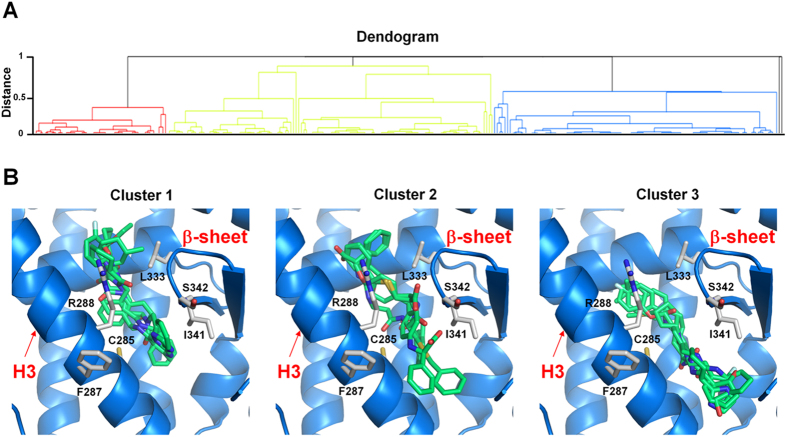
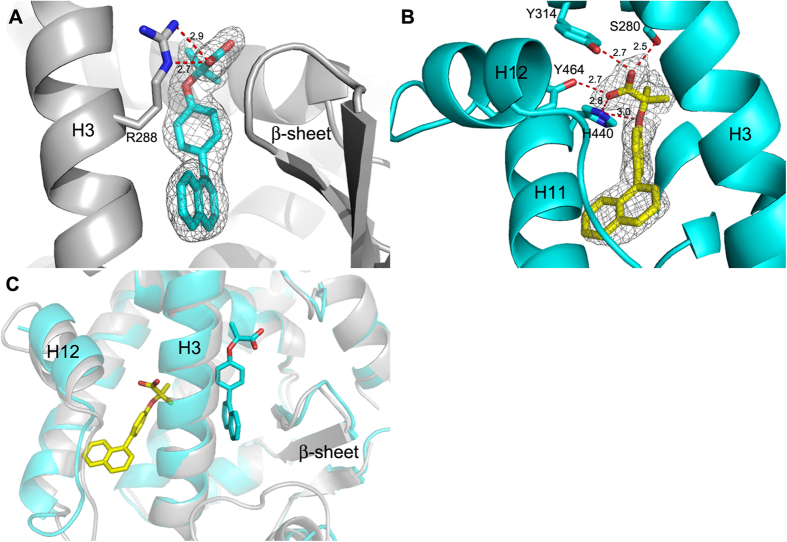
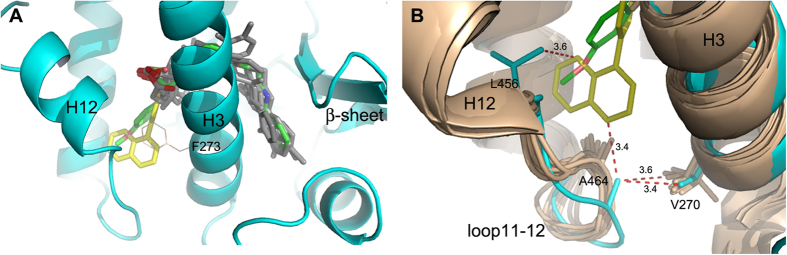
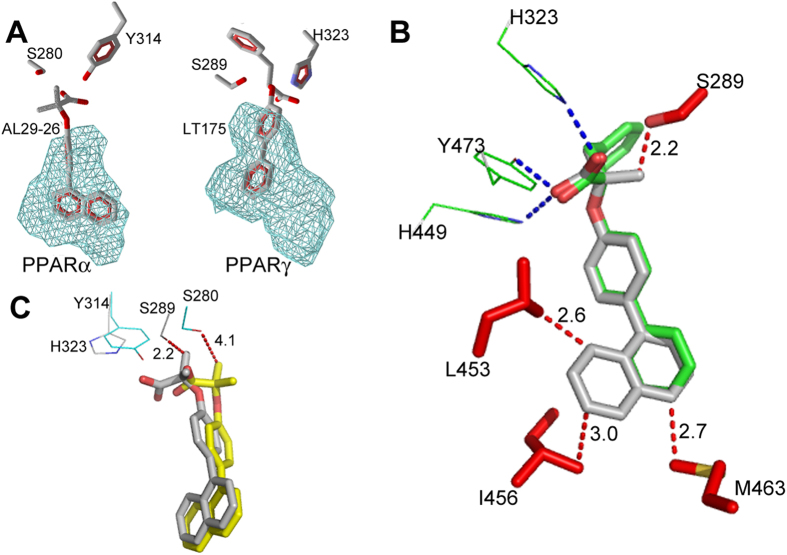
The peroxisome proliferator-activated receptors (PPARs) are nuclear receptors involved in the regulation of the metabolic homeostasis and therefore represent valuable therapeutic targets for the treatment of metabolic diseases. The development of more balanced drugs interacting with PPARs, devoid of the side-effects showed by the currently marketed PPARγ full agonists, is considered the major challenge for the pharmaceutical companies. Here we present a structure-based virtual screening approach that let us identify a novel PPAR pan-agonist with a very attractive activity profile and its crystal structure in the complex with PPARα and PPARγ, respectively. In PPARα this ligand occupies a new pocket whose filling is allowed by the ligand-induced switching of the F273 side chain from a closed to an open conformation. The comparison between this pocket and the corresponding cavity in PPARγ provides a rationale for the different activation of the ligand towards PPARα and PPARγ, suggesting a novel basis for ligand design.
Figures


References
-
- Bain D. L., Heneghan A. F., Connaghan-Jones K. D. & Miura M. T. Nuclear receptor structure: implications for function. Annual review of physiology 69, 201–220 (2007). - PubMed
-
- Umemoto T. & Fujiki Y. Ligand-dependent nucleo-cytoplasmic shuttling of peroxisome proliferator-activated receptors, PPARalpha and PPARgamma. Genes to cells : devoted to molecular & cellular mechanisms 17, 576–596 (2012). - PubMed
-
- Nettles K. W. & Greene G. L. Ligand control of coregulator recruitment to nuclear receptors. Annual review of physiology 67, 309–333 (2005). - PubMed
-
- Daynes R. A. & Jones D. C. Emerging roles of PPARs in inflammation and immunity. Nature reviews. Immunology 2, 748–759 (2002). - PubMed
Publication types
MeSH terms
Substances
LinkOut - more resources
Full Text Sources
Other Literature Sources
