


Systemic inflammation, growth factors, and linear growth in the setting of infection and malnutrition
- PMID: 27712965
- PMCID: PMC5193489
- DOI: 10.1016/j.nut.2016.06.013
Systemic inflammation, growth factors, and linear growth in the setting of infection and malnutrition
Abstract
Objectives: Deficits in weight gain and linear growth are seen frequently among children in areas where malnutrition and recurrent infections are common. Although both inflammation and malnutrition can result in growth hormone (GH) resistance, the interrelationships of infection, inflammation, and growth deficits in developing areas remain unclear. The aim of this study was to evaluate relationships between low levels of systemic inflammation, growth factors, and anthropometry in a case-control cohort of underweight and normal weight children in northern Brazil.
Methods: We evaluated data from 147 children ages 6 to 24 mo evaluated in the MAL-ED (Interactions of Malnutrition and Enteric Disease) case-control study following recruitment from a nutrition clinic for impoverished families in Fortaleza, Brazil. We used nonparametric tests and linear regression to evaluate relationships between current symptoms of infections (assessed by questionnaire), systemic inflammation (assessed by high-sensitivity C-reactive protein [hsCRP]), the GH insulin-like growth factor-1 (IGF-1) axis, and measures of anthropometry. All models were adjusted for age and sex.
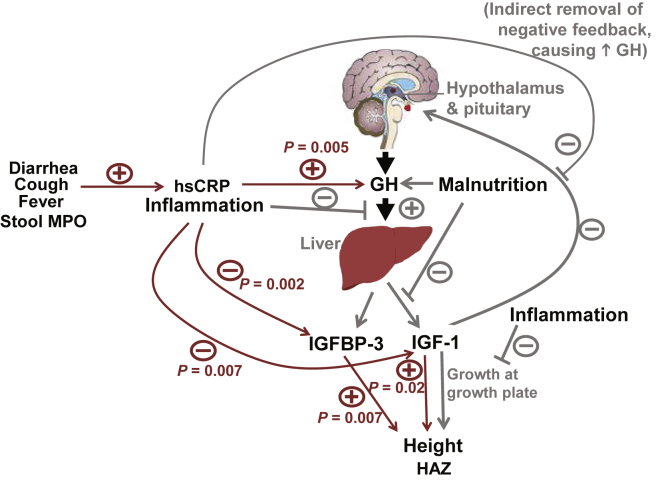
Results: Children with recent symptoms of diarrhea, cough, and fever (compared with those without symptoms) had higher hsCRP levels; those with recent diarrhea and fever also had lower IGF-1 and higher GH levels. Stool myeloperoxidase was positively associated with serum hsCRP. hsCRP was in turn positively associated with GH and negatively associated with IGF-1 and IGF-binding protein-3 (IGFBP-3), suggesting a state of GH resistance. After adjustment for hsCRP, IGF-1 and IGFBP-3 were positively and GH was negatively associated with Z scores for height and weight.
Conclusions: Infection and inflammation were linked to evidence of GH resistance, whereas levels of GH, IGF-1, and IGFBP-3 were associated with growth indices independent of hsCRP. These data implicate complex interrelationships between infection, nutritional status, GH axis, and linear growth in children from a developing area.
Keywords: Diarrhea; Growth; IGF-1; Nutrition; Stunting.
Copyright © 2016 The Authors. Published by Elsevier Inc. All rights reserved.
Figures
References
-
- Mata L.J. MIT Press; Cambridge, MA: 1978. The children of Santa Maria Cauque: a prospective field study of health and growth.
-
- Checkley W., Epstein L.D., Gilman R.H., Black R.E., Cabrera L., Sterling C.R. Effects of Cryptosporidium parvum infection in Peruvian children: growth faltering and subsequent catch-up growth. Am J Epidemiol. 1998;148:497–506. - PubMed
-
- Martorell R., Yarbrough C., Lechtig A., Habicht J.P., Klein R.E. Diarrheal diseases and growth retardation in preschool Guatemalan children. Am J Phys Anthropol. 1975;43:341–346. - PubMed
MeSH terms
Substances
LinkOut - more resources
Full Text Sources
Other Literature Sources
Medical
Research Materials
Miscellaneous
