


An epigenetic clock for gestational age at birth based on blood methylation data
- PMID: 27717399
- PMCID: PMC5054584
- DOI: 10.1186/s13059-016-1068-z
An epigenetic clock for gestational age at birth based on blood methylation data
Abstract
Background: Gestational age is often used as a proxy for developmental maturity by clinicians and researchers alike. DNA methylation has previously been shown to be associated with age and has been used to accurately estimate chronological age in children and adults. In the current study, we examine whether DNA methylation in cord blood can be used to estimate gestational age at birth.
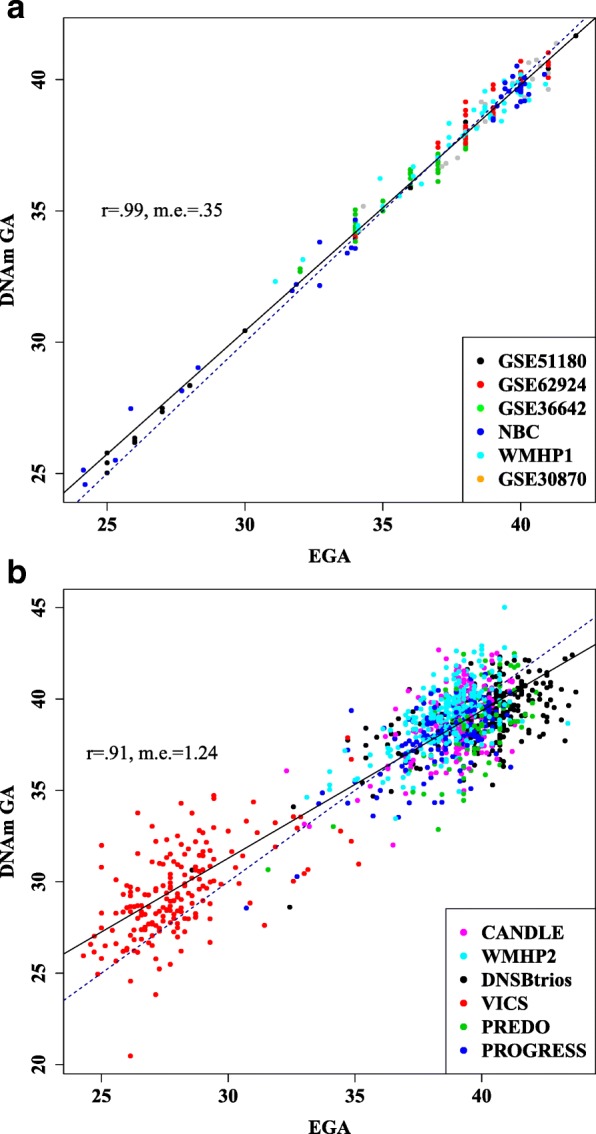
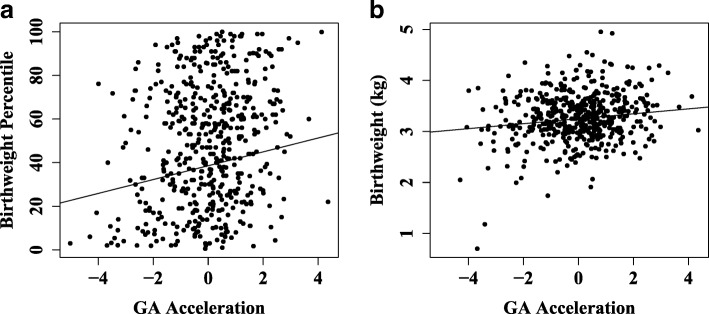
Results: We find that gestational age can be accurately estimated from DNA methylation of neonatal cord blood and blood spot samples. We calculate a DNA methylation gestational age using 148 CpG sites selected through elastic net regression in six training datasets. We evaluate predictive accuracy in nine testing datasets and find that the accuracy of the DNA methylation gestational age is consistent with that of gestational age estimates based on established methods, such as ultrasound. We also find that an increased DNA methylation gestational age relative to clinical gestational age is associated with birthweight independent of gestational age, sex, and ancestry.
Conclusions: DNA methylation can be used to accurately estimate gestational age at or near birth and may provide additional information relevant to developmental stage. Further studies of this predictor are warranted to determine its utility in clinical settings and for research purposes. When clinical estimates are available this measure may increase accuracy in the testing of hypotheses related to developmental age and other early life circumstances.
Keywords: Aging; Biomarker; Birthweight; Blood spot; Cord blood; DNA methylation; Developmental age; Epigenetic clock; Fetus; Medicaid; Preterm birth; Socioeconomic status.
Figures
References
-
- Hansen AK, Wisborg K, Uldbjerg N, Henriksen TB. Risk of respiratory morbidity in term infants delivered by elective caesarean section: cohort study. BMJ. 2008;336:85–7. doi: 10.1136/bmj.39405.539282.BE. - DOI - PMC - PubMed
Publication types
MeSH terms
Substances
Grants and funding
- P50 MH077928/MH/NIMH NIH HHS/United States
- T32 ES012870/ES/NIEHS NIH HHS/United States
- R01 ES013744/ES/NIEHS NIH HHS/United States
- P30 ES023515/ES/NIEHS NIH HHS/United States
- RC1 MH088609/MH/NIMH NIH HHS/United States
- T32 GM008490/GM/NIGMS NIH HHS/United States
- R01 MD009064/MD/NIMHD NIH HHS/United States
- R01 ES021357/ES/NIEHS NIH HHS/United States
- K99 ES023450/ES/NIEHS NIH HHS/United States
- U34 AG051425/AG/NIA NIH HHS/United States
- R00 ES023450/ES/NIEHS NIH HHS/United States
- R01 ES020268/ES/NIEHS NIH HHS/United States
LinkOut - more resources
Full Text Sources
Other Literature Sources
Medical
Molecular Biology Databases
