


An integrative view of cisplatin-induced renal and cardiac toxicities: Molecular mechanisms, current treatment challenges and potential protective measures
- PMID: 27717837
- PMCID: PMC5586594
- DOI: 10.1016/j.tox.2016.10.001
An integrative view of cisplatin-induced renal and cardiac toxicities: Molecular mechanisms, current treatment challenges and potential protective measures
Abstract
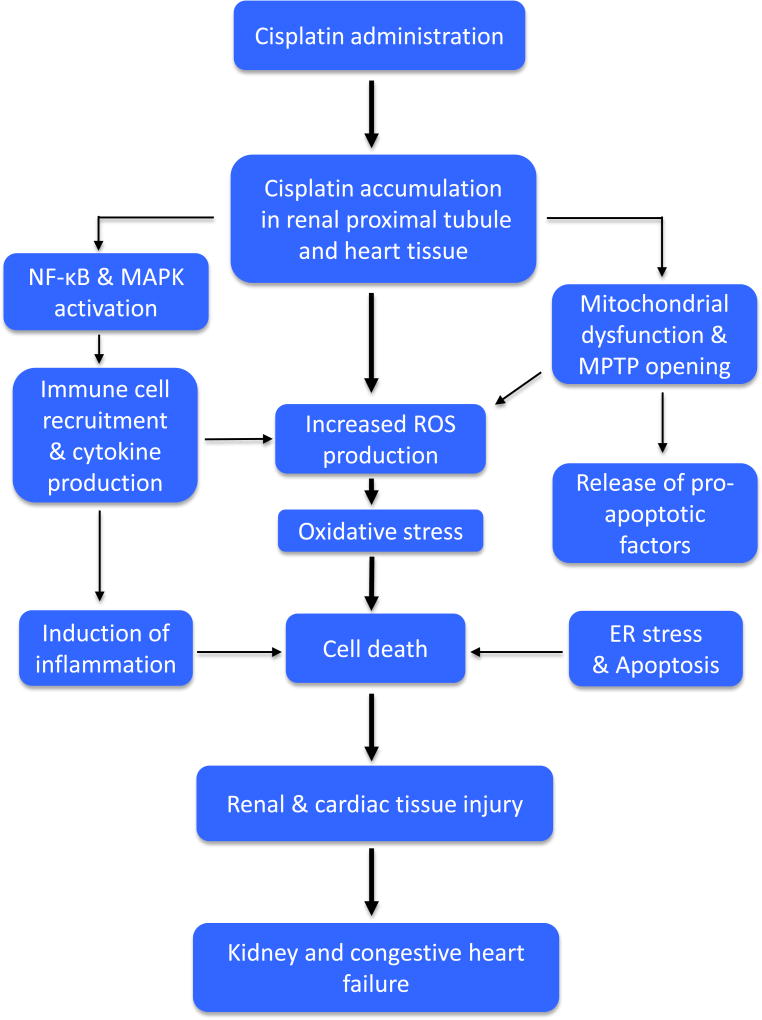
Cisplatin is currently one of the most widely-used chemotherapeutic agents against various malignancies. Its clinical application is limited, however, by inherent renal and cardiac toxicities and other side effects, of which the underlying mechanisms are only partly understood. Experimental studies show cisplatin generates reactive oxygen species, which impair the cell's antioxidant defense system, causing oxidative stress and potentiating injury, thereby culminating in kidney and heart failure. Understanding the molecular mechanisms of cisplatin-induced renal and cardiac toxicities may allow clinicians to prevent or treat this problem better and may also provide a model for investigating drug-induced organ toxicity in general. This review discusses some of the major molecular mechanisms of cisplatin-induced renal and cardiac toxicities including disruption of ionic homeostasis and energy status of the cell leading to cell injury and cell death. We highlight clinical manifestations of both toxicities as well as (novel)biomarkers such as kidney injury molecule-1 (KIM-1), tissue inhibitor of metalloproteinase-1 (TIMP-1) and N-terminal pro-B-type natriuretic peptide (NT-proBNP). We also present some current treatment challenges and propose potential protective strategies including combination therapy with novel pharmacological compounds that might mitigate or prevent these toxicities, which include the use of hydrogen sulfide.
Keywords: Apoptosis; Cisplatin; Cisplatin-induced renal and cardiac toxicities; Inflammation; Reactive oxygen species.
Copyright © 2016 Elsevier Ireland Ltd. All rights reserved.
Conflict of interest statement
None
Figures
References
-
- Al-Majed AA, Sayed-Ahmed MM, Al-Yahya AA, Aleisa MA, Al-Rejaie SS, Al-Shabanah OA. Propionyl-l-Carnitine prevents the progression of cisplatin-induced cardiotoxicity in a carnitine-depleted rat model. Pharmacol Res. 2006;53:278–286. - PubMed
-
- Ali BH, Al-Moundhri M, Tageldin M, et al. Ontogenic aspects of cisplatin-induced nephrotoxicity in rats. Food Chem Toxicol. 2008;46:3355–3359. - PubMed
Publication types
MeSH terms
Substances
Grants and funding
LinkOut - more resources
Full Text Sources
Other Literature Sources
Medical
Research Materials
Miscellaneous
