


Regulation of neuronal gene expression by local axonal translation
- PMID: 27722035
- PMCID: PMC5053097
- DOI: 10.1007/s40142-016-0085-2
Regulation of neuronal gene expression by local axonal translation
Abstract
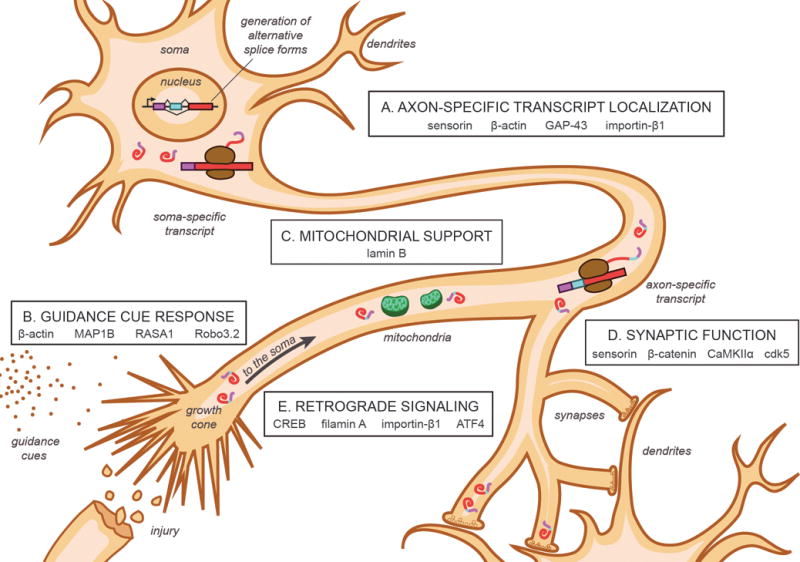
RNA localization is a key mechanism in the regulation of protein expression. In neurons, this includes the axonal transport of select mRNAs based on the recognition of axonal localization motifs in these RNAs by RNA binding proteins. Bioinformatic analyses of axonal RNAs suggest that selective inclusion of such localization motifs in mature mRNAs is one mechanism controlling the composition of the axonal transcriptome. The subsequent translation of axonal transcripts in response to specific stimuli provides precise spatiotemporal control of the axonal proteome. This axonal translation supports local phenomena including axon pathfinding, mitochondrial function, and synapse-specific plasticity. Axonal protein synthesis also provides transport machinery and signals for retrograde trafficking to the cell body to effect somatic changes including altering the transcriptional program. Here we review the remarkable progress made in recent years to identify and characterize these phenomena.
Keywords: axon guidance; local translation; mitochondria; retrograde signaling; synapse formation; synaptic plasticity.
Figures
References
-
- Kim S, Martin KC. Neuron-wide RNA transport combines with netrin-mediated local translation to spatially regulate the synaptic proteome. eLife. 2015 Feb 4;4:e04158. By investigating how presynaptic translation can be limited specifically to activated synapses despite broad distribution of presynaptic RNAs, this study identified that postsynaptic activity induces calcium-dependent release of netrin. This netrin binds to its presynaptic receptor to induce local translation only at activated synapses. - PMC - PubMed
-
- Andreassi C, Zimmermann C, Mitter R, Fusco S, De Vita S, Devita S, et al. An NGF-responsive element targets myo-inositol monophosphatase-1 mRNA to sympathetic neuron axons. Nat Neurosci. 2010 Mar;13(3):291–301. - PubMed
-
- Baleriola J, Walker CA, Jean YY, Crary JF, Troy CM, Nagy PL, et al. Axonally Synthesized ATF4 Transmits a Neurodegenerative Signal across Brain Regions. Cell. 2014 Aug 28;158(5):1159–72. Alzheimer’s pathology appears to spread over long distances between brain regions that are connected with each other. This paper reveals that axon exposure to pathogenic Aβ oligomers induces the axonal transport and subsequent axonal translation of transcripts that can induce neurodegeneration. - PMC - PubMed
Grants and funding
LinkOut - more resources
Full Text Sources
Other Literature Sources