Phase IB Study of Vemurafenib in Combination with Irinotecan and Cetuximab in Patients with Metastatic Colorectal Cancer with BRAFV600E Mutation
- PMID: 27729313
- PMCID: PMC5562357
- DOI: 10.1158/2159-8290.CD-16-0050
Phase IB Study of Vemurafenib in Combination with Irinotecan and Cetuximab in Patients with Metastatic Colorectal Cancer with BRAFV600E Mutation
Abstract
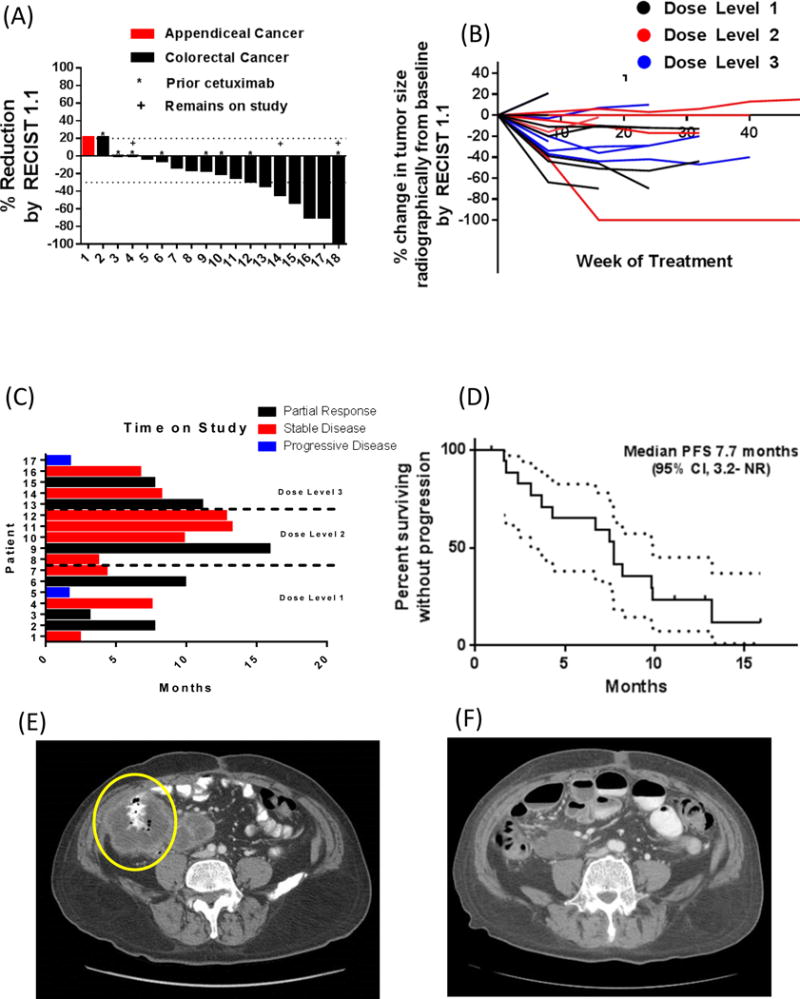
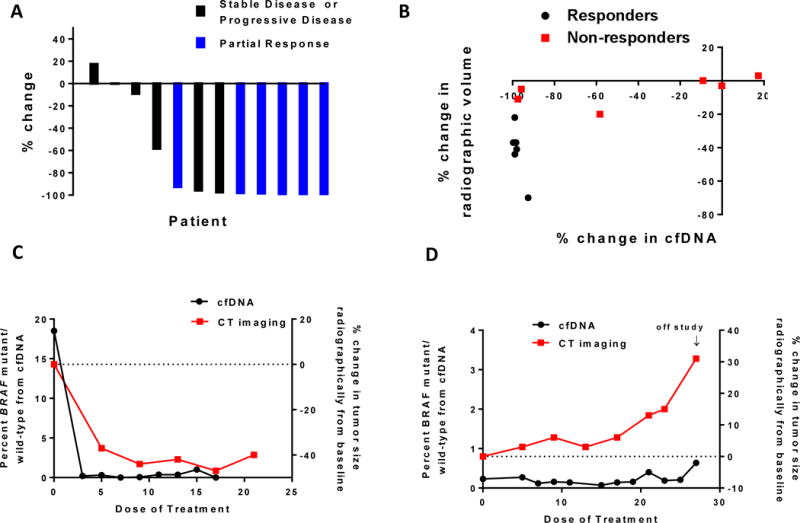
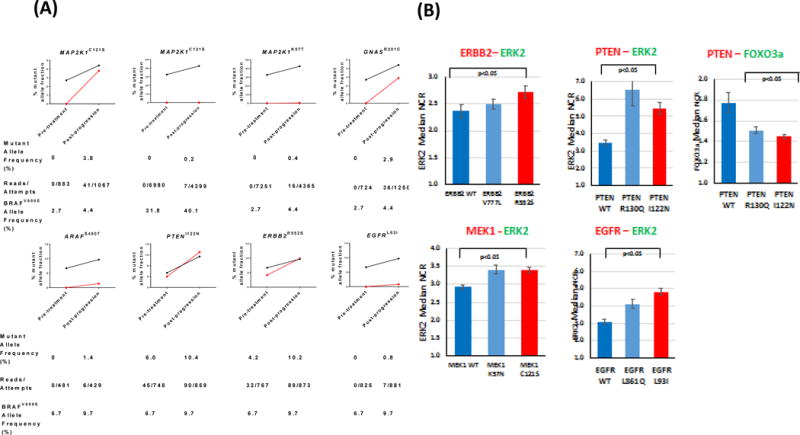
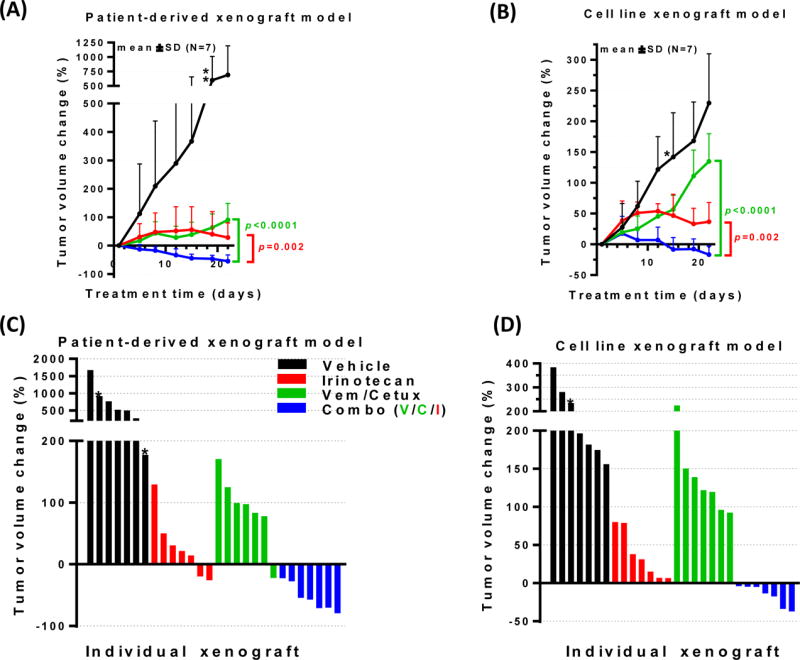
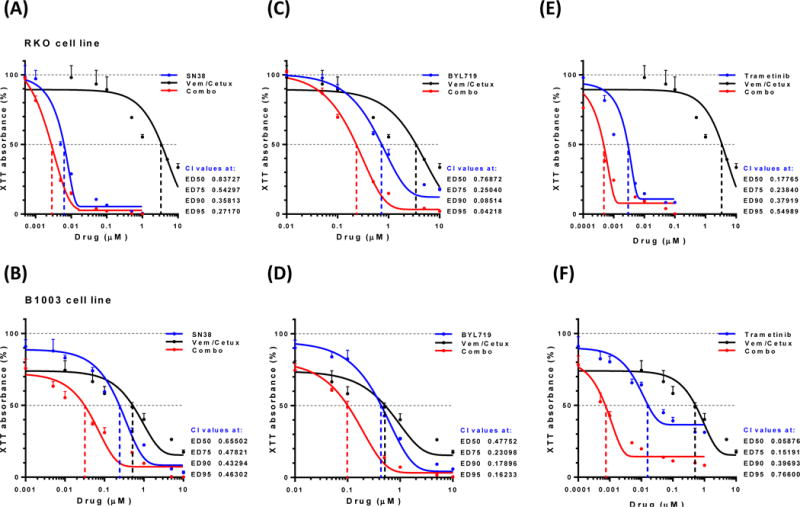
In vitro, EGFR inhibition, combined with the BRAF inhibitor vemurafenib, causes synergistic cytotoxicity for BRAFV600E metastatic colorectal cancer, further augmented by irinotecan. The safety and efficacy of vemurafenib, irinotecan, and cetuximab in BRAF-mutated malignancies are not defined. In this 3+3 phase I study, patients with BRAFV600E-advanced solid cancers received cetuximab and irinotecan with escalating doses of vemurafenib. Nineteen patients (18 with metastatic colorectal cancer and 1 with appendiceal cancer) were enrolled. Three patients experienced dose-limiting toxicities. The MTD of vemurafenib was 960 mg twice daily. Six of 17 evaluable patients (35%) achieved a radiographic response by Response Evaluation Criteria in Solid Tumors 1.1 criteria, consistent with in vivo models demonstrating tumor regressions with the triplet regimen. Median progression-free survival was 7.7 months. BRAFV600E circulating cell-free DNA (cfDNA) trends correlated with radiographic changes, and acquired mutations from cfDNA in genes reactivating MAPK signaling were observed at progression.
Significance: Vemurafenib, in combination with irinotecan and cetuximab, was well tolerated in patients with refractory, BRAF-mutated metastatic colorectal cancer, and both survival outcomes and response rates exceeded prior reports for vemurafenib and for irinotecan plus cetuximab in BRAFV600E metastatic colorectal cancer. In vivo models demonstrated regressions with the triplet, in contrast with vemurafenib and cetuximab alone. cfDNA predicted radiographic response and identified mutations reactivating the MAPK pathway upon progression. Cancer Discov; 6(12); 1352-65. ©2016 AACR.This article is highlighted in the In This Issue feature, p. 1293.
Trial registration: ClinicalTrials.gov NCT01787500.
©2016 American Association for Cancer Research.
Conflict of interest statement
Figures
References
-
- Di Nicolantonio F, Martini M, Molinari F, Sartore-Bianchi A, Arena S, Saletti P, et al. Wild-type BRAF is required for response to panitumumab or cetuximab in metastatic colorectal cancer. Journal of clinical oncology: official journal of the American Society of Clinical Oncology. 2008;26(35):5705–12. doi: 10.1200/JCO.2008.18.0786. - DOI - PubMed
-
- De Roock W, Claes B, Bernasconi D, De Schutter J, Biesmans B, Fountzilas G, et al. Effects of KRAS, BRAF, NRAS, and PIK3CA mutations on the efficacy of cetuximab plus chemotherapy in chemotherapy-refractory metastatic colorectal cancer: a retrospective consortium analysis. The Lancet Oncology. 2010;11(8):753–62. doi: 10.1016/S1470-2045(10)70130-3. - DOI - PubMed
-
- Van Cutsem E, Kohne CH, Lang I, Folprecht G, Nowacki MP, Cascinu S, et al. Cetuximab plus irinotecan, fluorouracil, and leucovorin as first-line treatment for metastatic colorectal cancer: updated analysis of overall survival according to tumor KRAS and BRAF mutation status. Journal of clinical oncology: official journal of the American Society of Clinical Oncology. 2011;29(15):2011–9. doi: 10.1200/JCO.2010.33.5091. - DOI - PubMed
Publication types
MeSH terms
Substances
Associated data
Grants and funding
LinkOut - more resources
Full Text Sources
Other Literature Sources
Medical
Research Materials
Miscellaneous