Sodium-glucose cotransporter 2 inhibition and health benefits: The Robin Hood effect
- PMID: 27730088
- PMCID: PMC5040058
- DOI: 10.4103/2230-8210.183826
Sodium-glucose cotransporter 2 inhibition and health benefits: The Robin Hood effect
Abstract
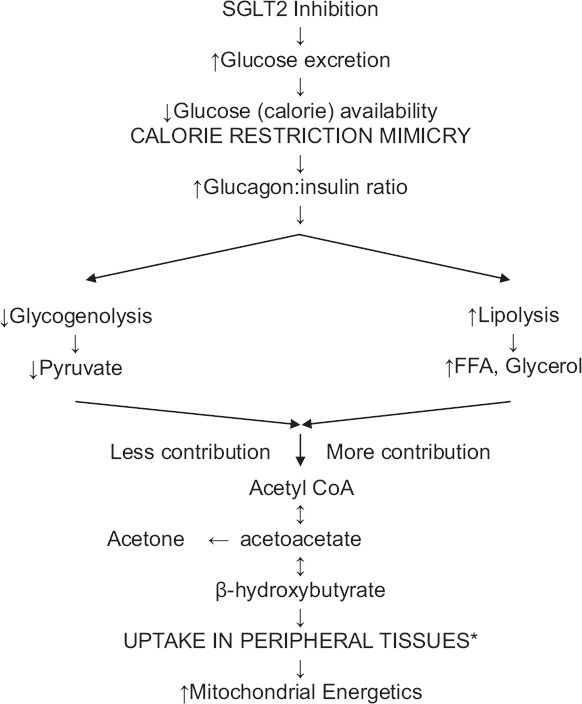
This review discusses two distinct, yet related, mechanisms of sodium-glucose cotransporter 2 (SGLT2) inhibition: Calorie restriction mimicry (CRM) and pro-ketogenic effect, which may explain their cardiovascular benefits. We term these adaptive CRM and pro-ketogenic effects of SGLT2 inhibition, the Robin Hood hypothesis. In English history, Robin Hood was a "good person," who stole from the rich and helped the poor. He supported redistribution of resources as he deemed fit for the common good. In a similar fashion, SGLT2 inhibition provides respite to the overloaded glucose metabolism while utilizing lipid stores for energy production.
Keywords: Calorie restriction mimicry canagliflozin; EMPA-REG outcome; cardiovascular outcomes; dapagliflozin; diabetes; empagliflozin; ketogenesis; ketogenic diet; liraglutide.
Figures
References
-
- Zinman B, Wanner C, Lachin JM, Fitchett D, Bluhmki E, Hantel S, et al. Empagliflozin, Cardiovascular Outcomes, and Mortality in Type 2 Diabetes. N Engl J Med. 2015;373:2117–28. - PubMed
-
- Scheen AJ. Reduction in cardiovascular and all-cause mortality in the EMPA-REG OUTCOME trial: A critical analysis. Diabetes Metab. 2016;42:71–6. - PubMed
LinkOut - more resources
Full Text Sources
Other Literature Sources