A Double-Blind, Randomized, Controlled Pilot Trial of N-Acetylcysteine in Veterans With Posttraumatic Stress Disorder and Substance Use Disorders
- PMID: 27736051
- PMCID: PMC5226873
- DOI: 10.4088/JCP.15m10239
A Double-Blind, Randomized, Controlled Pilot Trial of N-Acetylcysteine in Veterans With Posttraumatic Stress Disorder and Substance Use Disorders
Abstract
Objective: The antioxidant N-acetylcysteine is being increasingly investigated as a therapeutic agent in the treatment of substance use disorders (SUDs). This study explored the efficacy of N-acetylcysteine in the treatment of posttraumatic stress disorder (PTSD), which frequently co-occurs with SUD and shares impaired prefrontal cortex regulation of basal ganglia circuitry, in particular at glutamate synapses in the nucleus accumbens.
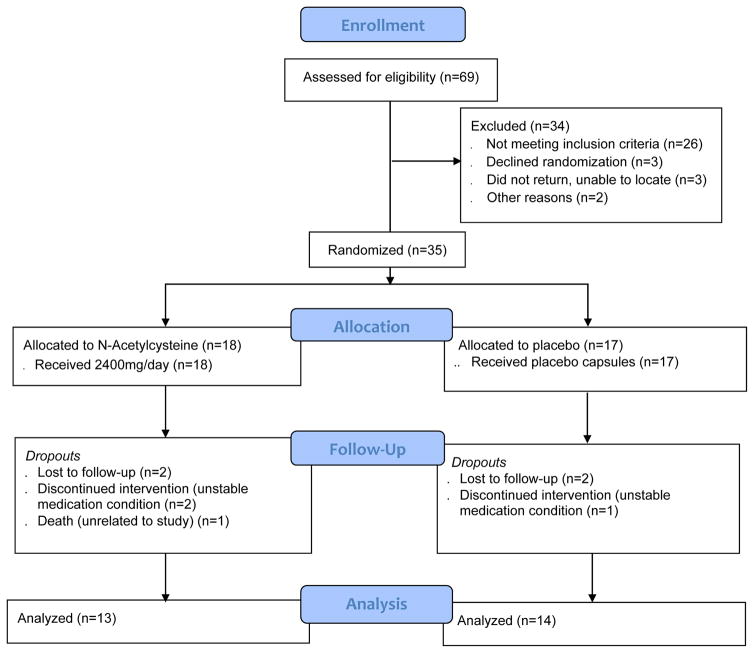
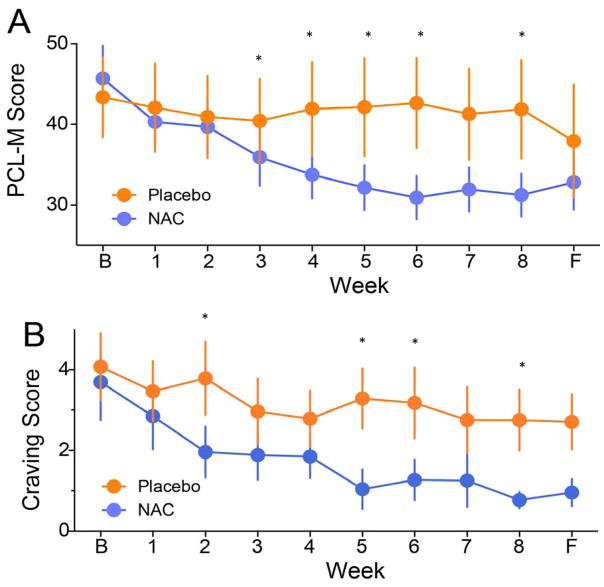
Methods: Veterans with PTSD and SUD per DSM-IV criteria (N = 35) were randomly assigned to receive a double-blind, 8-week course of N-acetylcysteine (2,400 mg/d) or placebo plus cognitive-behavioral therapy for SUD (between March 2013 and April 2014). Primary outcome measures included PTSD symptoms (Clinician-Administered PTSD Scale, PTSD Checklist-Military) and craving (Visual Analog Scale). Substance use and depression were also assessed.
Results: Participants treated with N-acetylcysteine compared to placebo evidenced significant improvements in PTSD symptoms, craving, and depression (β values < -0.33; P values < .05). Substance use was low for both groups, and no significant between-group differences were observed. N-acetylcysteine was well tolerated, and retention was high.
Conclusions: This is the first randomized controlled trial to investigate N-acetylcysteine as a pharmacologic treatment for PTSD and SUD. Although preliminary, the findings provide initial support for the use of N-acetylcysteine in combination with psychotherapy among individuals with co-occurring PTSD and SUD.
Trial registration: ClinicalTrials.gov identifier: NCT02499029.
© Copyright 2016 Physicians Postgraduate Press, Inc.
Figures
References
-
- Petrakis IL, Rosenheck R, Desai R. Substance use comorbidity among veterans with posttraumatic stress disorder and other psychiatric illness. Am J Addict. 2011;20:185–189. - PubMed
-
- Young HE, Rosen CS, Finney JW. A survey of PTSD screening and referral practices in VA addiction treatment programs. J Substan Abus Treat. 2005;28:313–319. - PubMed
-
- Hertzberg MA, Feldman ME, Beckham JC, Kudler HS, Davidson JRT. Lack of efficacy for fluoxetine in PTSD: a placebo controlled trial in combat veterans. Ann Clin Psychiat. 2000;12:101–105. - PubMed
Publication types
MeSH terms
Substances
Associated data
Grants and funding
LinkOut - more resources
Full Text Sources
Other Literature Sources
Medical
Miscellaneous