. 2016 Oct 13;12(10):e1005901.
doi: 10.1371/journal.ppat.1005901. eCollection 2016 Oct.

An RNAi-Based Control of Fusarium graminearum Infections Through Spraying of Long dsRNAs Involves a Plant Passage and Is Controlled by the Fungal Silencing Machinery

Affiliations

An RNAi-Based Control of Fusarium graminearum Infections Through Spraying of Long dsRNAs Involves a Plant Passage and Is Controlled by the Fungal Silencing Machinery

Aline Koch et al. PLoS Pathog. .

Abstract

Meeting the increasing food and energy demands of a growing population will require the development of ground-breaking strategies that promote sustainable plant production. Host-induced gene silencing has shown great potential for controlling pest and diseases in crop plants. However, while delivery of inhibitory noncoding double-stranded (ds)RNA by transgenic expression is a promising concept, it requires the generation of transgenic crop plants which may cause substantial delay for application strategies depending on the transformability and genetic stability of the crop plant species. Using the agronomically important barley-Fusarium graminearum pathosystem, we alternatively demonstrate that a spray application of a long noncoding dsRNA (791 nt CYP3-dsRNA), which targets the three fungal cytochrome P450 lanosterol C-14α-demethylases, required for biosynthesis of fungal ergosterol, inhibits fungal growth in the directly sprayed (local) as well as the non-sprayed (distal) parts of detached leaves. Unexpectedly, efficient spray-induced control of fungal infections in the distal tissue involved passage of CYP3-dsRNA via the plant vascular system and processing into small interfering (si)RNAs by fungal DICER-LIKE 1 (FgDCL-1) after uptake by the pathogen. We discuss important consequences of this new finding on future RNA-based disease control strategies. Given the ease of design, high specificity, and applicability to diverse pathogens, the use of target-specific dsRNA as an anti-fungal agent offers unprecedented potential as a new plant protection strategy.


Conflict of interest statement

I have read the journal's policy and the fact that the authors VC, JM, and TM are employed by a commercial company BASF Resesarch Triangle Park and BASF Limburgerhof does not alter our adherence to all PLOS Pathogens policies on sharing data and materials.

Figures
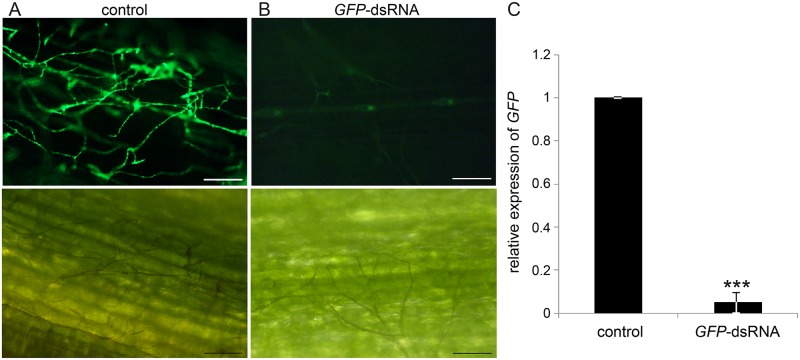
Fig 1
Fig 1. (A-C) Spray-induced gene silencing (SIGS) of GFP expression in Fusarium graminearum strain Fg-IFA65GFP.
Detached second leaves of three-week-old barley plants were locally sprayed with Tris-EDTA (TE, A, control) or GFP-dsRNA (B). Forty-eight hours after spraying, distal, non-sprayed leaf segments were drop-inoculated with Fg-IFA65GFP (20 μL of a solution containing 2 x 10⁴ conidia mL-1). GFP silencing efficiency was visualized 6 dpi using confocal microscopy. (C) GFP transcripts were quantified by qPCR at 6 dpi. The reduction in fungal GFP expression on leaves sprayed with GFP-dsRNA and infected with Fg-IFA65GFP compared with TE-sprayed controls was statistically significant (***P < 0.001; Student´s t test). Bars represent mean values ± SDs of three independent experiments. Scale bars represent 100 μm.
Fig 2
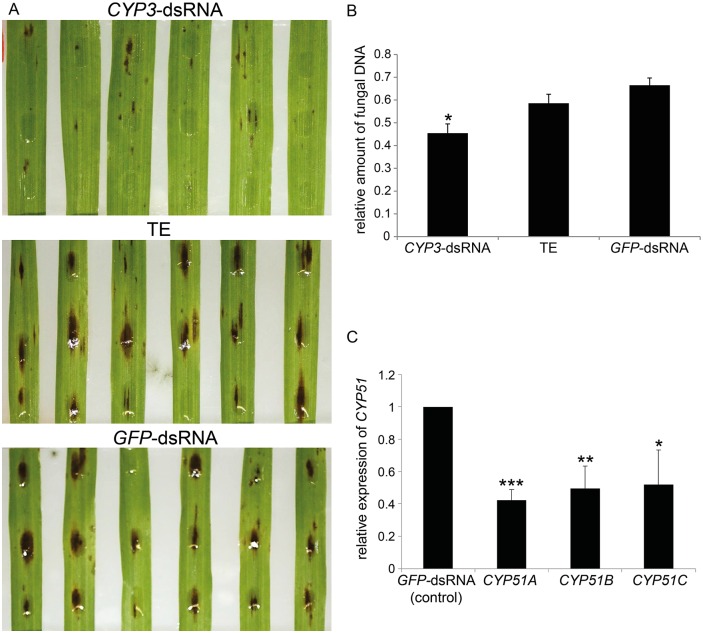
Fig 2. (A-C) SIGS-mediated control of F. graminearum on leaves sprayed with CYP3-dsRNA.
(A) Detached second leaves of three-week-old barley were sprayed evenly with CYP3-dsRNA, TE (mock control), and GFP-dsRNA (negative control), respectively. After 48 hours, leaves were drop-inoculated with 2 × 10⁴ conidia mL−1 of Fg-IFA65 onto the sprayed area and evaluated for necrotic lesions at 6 dpi. (B) The relative amount of fungal DNA at 6 dpi as measured by qPCR was reduced in CYP3-dsRNA-treated leaves compared to control leaves. Bars represent mean values ± SDs of three independent experiments. The reduction of fungal growth on CYP3-dsRNA vs. TE- or GFP-dsRNA-sprayed leaves was statistically significant (*P < 0.05; Student´s t test). (C) Gene-specific qPCR analysis of fungal CYP51A, CYP51B, and CYP51C transcripts at 6 dpi (corresponding to 8 d after spraying). The reduction in fungal CYP51 gene expression on CYP3-dsRNA-sprayed leaves as compared with GFP-dsRNA-sprayed controls was statistically significant (*P < 0.05, **P < 0.01, ***P < 0.001; Student´s t test).
Fig 3
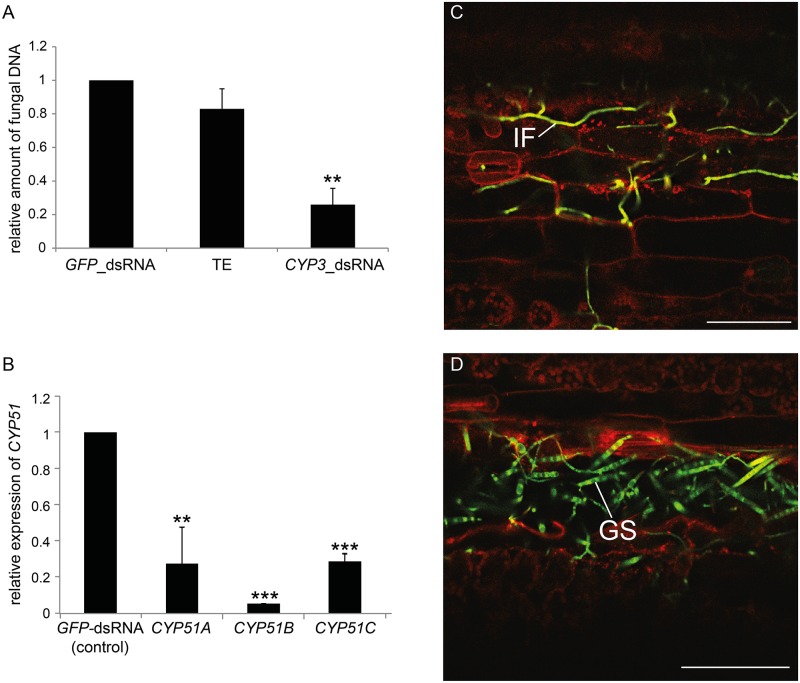
Fig 3. (A-D) SIGS-mediated semi-systemic control of Fusarium graminearum.
(A) Upper parts of detached second leaves of three-week-old barley were sprayed evenly with CYP3-dsRNA, TE, and GFP-dsRNA, respectively. After 48 h, the non-inoculated, semi-systemic (distal) tissue was drop-inoculated with 2 × 10⁴ conidia mL−1 of Fg-IFA65GFP; the relative amount of fungal DNA in distal tissue, as measured by qPCR at 6 dpi, was reduced in CYP3-dsRNA-treated leaves. Bars represent mean values ± SDs of three independent experiments. The reduction of fungal growth on CYP3-dsRNA-sprayed leaves was statistically significant (**P < 0.01; Student´s t test). (B) Gene-specific qPCR analysis of CYP51A, CYP51B, and CYP51C transcripts at 6 dpi in distal leaf areas. Bars represent mean values ±SDs of three independent sample collections. The reduction in CYP51 expression in leaves sprayed with CYP3-dsRNA compared with GFP-dsRNA-sprayed controls was statistically significant (**P < 0.01, ***P < 0.001; Student´s t test). (C,D) Microscopy of fungal growth at semi-systemic sites of drop-inoculation with Fg-IFA65GFP. (C) Successful fungal colonization (green) on TE-sprayed leaves. Profuse hyphal growth is seen inside the cells (plasma membrane stained with RH414 is highlighted in red) (D) Hyphal formation is strongly reduced and confined to the inoculated leaf area on CYP3-dsRNA-sprayed leaves. Impaired spore germination was observed in the area around the inoculation site while the surrounding cells remained free of colonization. (IF, infection hyphae; GS, germinating spore). Photographs for C and D were taken at 6 dpi.
Fig 4
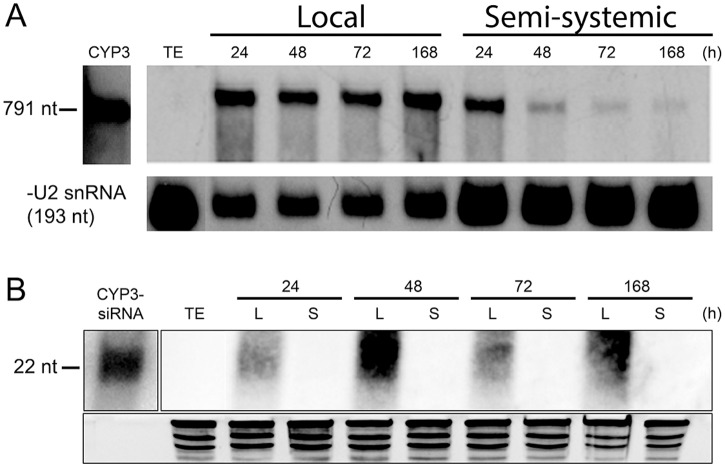
Fig 4. (A,B) Northern gel blot analysis of CYP3-dsRNA and CYP3-dsRNA-derived siRNA accumulation in local and distal (semi-systemic) barley leaf areas.
(A) Detection of 791 nt long CYP3-dsRNA precursor in pooled leaf tissue from non-infected leaves using [α-32P]-dCTP labeled CYP3-dsRNA as probe. Local (L) and distal (semi-systemic [S]) leaf segments were sampled separately at the indicated times after spraying with CYP3-dsRNA. No signal was detected in samples from TE-sprayed plants. (B) Recording CYP3-dsRNA-derived small RNAs in local and distal (semi-systemic) leaf areas using [α-32P]-dCTP labeled CYP3-dsRNA as probe. In this experiment, small RNAs could not be detected in distal (non-sprayed) tissues. siRNA generated in vitro by a commercial Dicer preparation from CYP3-dsRNA was used as positive control. No signal was detected in samples from TE-sprayed plants. Ethidium bromide-stained rRNA served as the loading control. Signals originate from the same membrane but different exposure times.
Fig 5
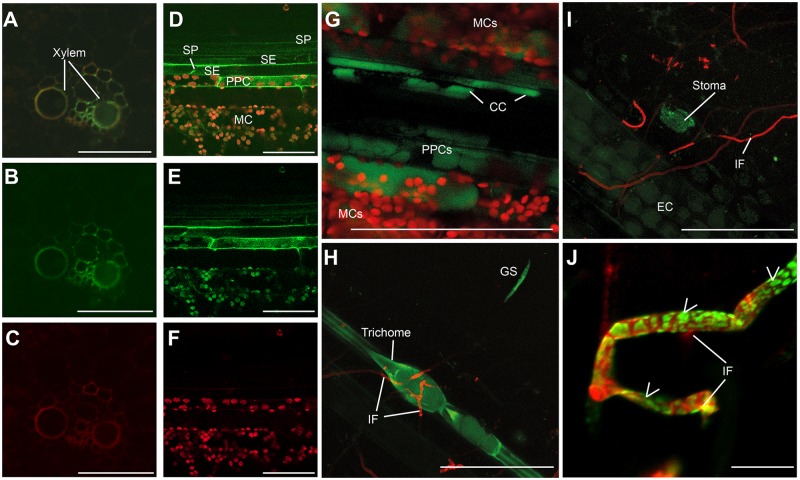
Fig 5. (A-J) Confocal laser scanning microscopy of ATTO 488-labeled CYP3-dsRNAA488 in locally sprayed barley leaves.
(A-C) Detection of CYP3-dsRNAA488 (green) in xylem vessels of vascular bundles 24 h after spraying. (D-G) Longitudinal sections reveal uptake of CYP3-dsRNAA488 by cells of the phloem tissue at 24 h after spraying. SE, sieve element; CC, companion cell; SP, sieve plate; PPC, phloem parenchyma cell; MC, mesophyll cell. The red cells result from the autofluorescence of chloroplasts (F,G). (H-J) Leaf hair cells (trichome), stomata, germinating spores (GS) and fungal hyphae strongly accumulated CYP3-dsRNAA488. Fungal hyphae (IF) are stained with chitin-specific dye WGA-Alexa Fluor 594 (red) 24 h after inoculation. EC, epidermal cells. RNA signals in germinated conidia are marked by arrow heads. Scale bars 100 μm (A-H), 20 μm (F), and 10 μm (J).
Fig 6
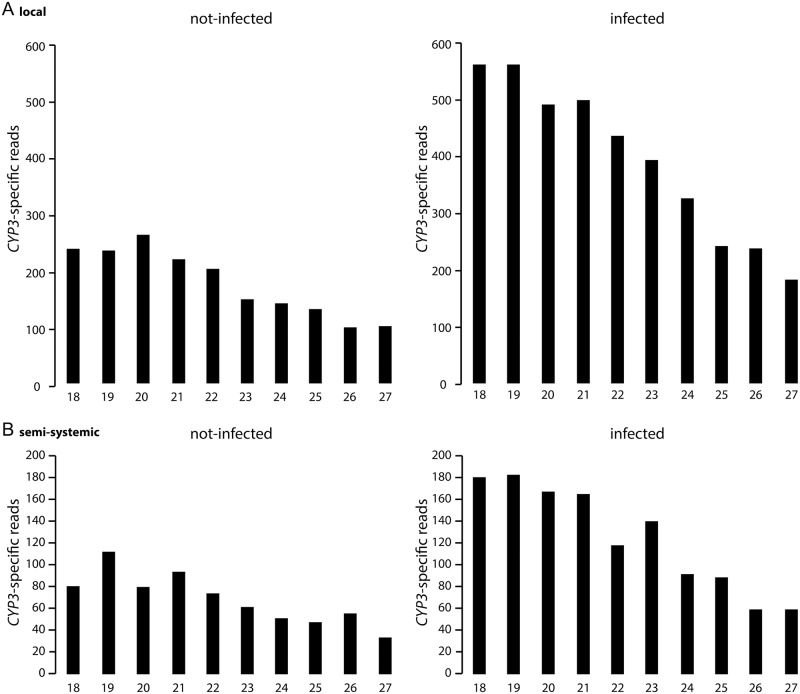
Fig 6. (A,B) RNA profiling (RNAseq analysis) of CYP3-dsRNA-derived RNAs in local and distal tissue of CYP3-dsRNA-treated barley leaves on Illumina HiSeq.
Higher numbers of reads of CYP3-dsRNA-derived sRNAs were found in infected vs. non-infected leaves both in the sprayed (local [A]) and non-sprayed (semi-systemic [B]) leaf area at 6 dpi with strain Fg-IFA65.
Fig 7
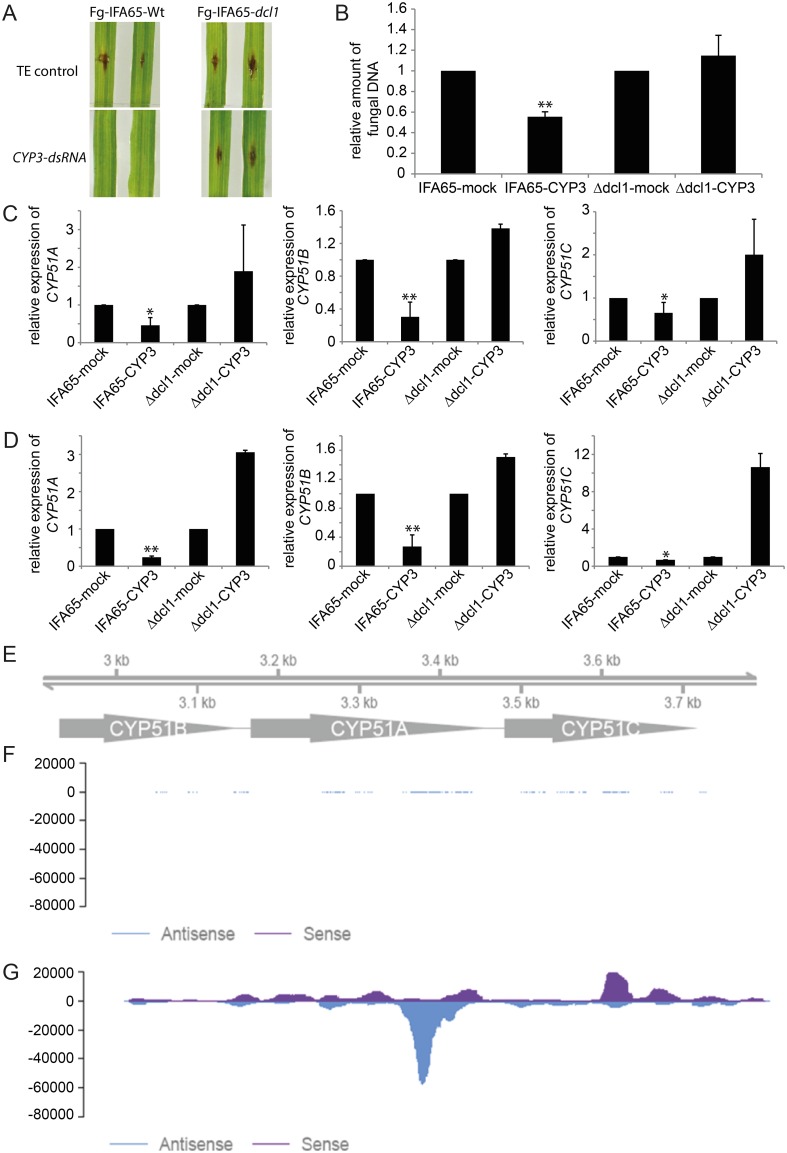
Fig 7. (A-E) The fungal silencing machinery is required for efficient SIGS in distal leaf parts.
(A,B) The fungal dicer-like-1 mutant Fg-IFA65Δdcl-1 heavily infected barley leaves despite a prior spray-treatment with CYP3-dsRNA. Photographs were taken at 6 dpi. (C) Gene-specific qPCR analysis of CYP51A, CYP51B, and CYP51C transcripts in the wild type Fg-IFA65 and the mutant Fg-IFA65Δdcl-1 at 6 dpi in the distal, semi-systemic leaf areas. (D) Inhibition of CYP51 gene expression upon CYP3-dsRNA treatment of axenically grown Fg-IFA65- Bars represent mean values ±SDs of three independent sample collections. The reduction in CYP51 expression in samples treated with CYP3-dsRNA compared with mock-treated controls was statistically significant (*P < 0.05, **P < 0.01; Student´s t test). (E-G) Profiling of CYP3-dsRNA-derived sRNAs in axenically grown Fg-IFA65. (E) Scaffold of the 791 nt long CYP3-dsRNA. The fragments of CYP51 genes are indicated. (F,G) Total sRNAs were isolated from axenically-cultured Fg-IFA65. sRNA reads of fungal sRNAs from untreated (F) and CYP3-dsRNA-treated (G) fungal cultures are mapped to the sequence of CYP3-dsRNA.
Fig 8
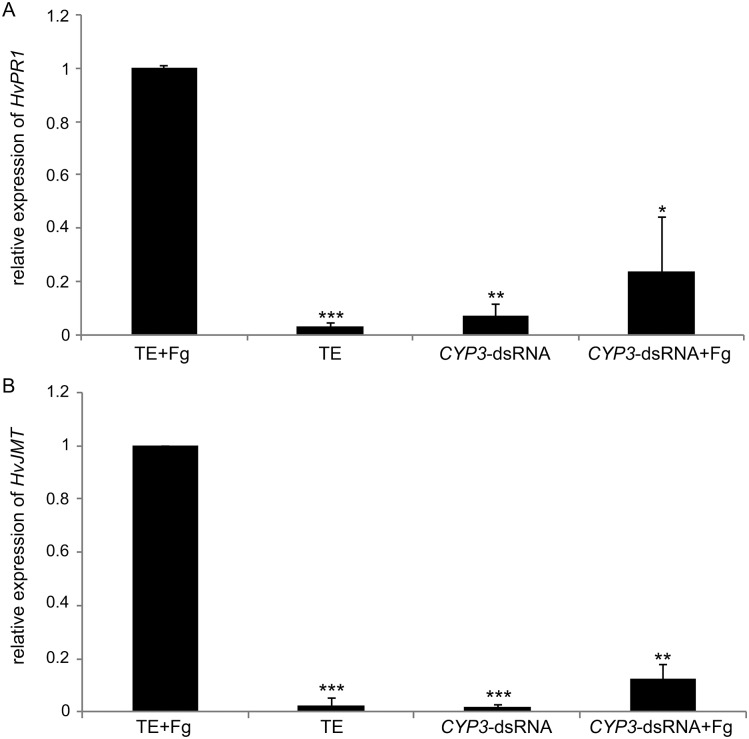
Fig 8. (A,B) Defense-related salicylate- and jasmonate-responsive genes are not induced by CYP3-dsRNA.
Detached second leaves of three-week-old barley were sprayed with 20 ng μL-1 CYP3-dsRNA or TE (control), respectively, and 48 h later drop-inoculated with Fg-IFA65. Leaves were harvested 6 dpi and analyzed for gene expression by qPCR: (A) Pathogenesis-related 1 (HvPR1) and (B) S-adenosyl-l-methionine:jasmonic acid carboxyl methyltransferase (HvJMT). Both genes are highly responsive to Fg-IFA65 but not to CYP3-dsRNA or TE treatment. Please note that a combined treatment of CYP3-dsRNA followed by Fg-IFA65 48 h later also did not induce these marker genes, which shows independently that fungal development on CYP3-dsRNA-treated leaves is strongly inhibited.

Comment in

References

    1. FAO. FAO Statistical Yearbook. World Food and Agriculture. Part 3: Feeding the World (ISBN 978-92-5-107396-4). Accessed from Food and Agriculture Organization of the United Nations website: http://www.fao.org (2013)
    1. Bai G, Shaner G. Management and resistance in wheat and barley to Fusarium head blight. Annu Rev Phytopathol. 2004; 42:135–61. 10.1146/annurev.phyto.42.040803.140340 - DOI - PubMed
    1. Broekaert N, Devreese M, De Baere S, De Backer P, Croubels S. Modified Fusarium mycotoxins unmasked: From occurrence in cereals to animal and human excretion. Food Chem Toxicol. 2015; 80:17–31. 10.1016/j.fct.2015.02.015 - DOI - PubMed
    1. Merhej J, Richard-Forget F, Barreau C. Regulation of trichothecene biosynthesis in Fusarium: Recent advances and new insights. Appl Microbiol Biotechnol. 2011; (3):519–28. 10.1007/s00253-011-3397-x - DOI - PubMed
    1. Kazan K, Gardiner DM, Manners JM. On the trail of a cereal killer: recent advances in Fusarium graminearum pathogenomics and host resistance. Mol Plant Pathol. 2012; 13(4):399–413. 10.1111/j.1364-3703.2011.00762.x - DOI - PMC - PubMed

MeSH terms