The circadian coordination of cell biology
- PMID: 27738003
- PMCID: PMC5057284
- DOI: 10.1083/jcb.201603076
The circadian coordination of cell biology
Abstract
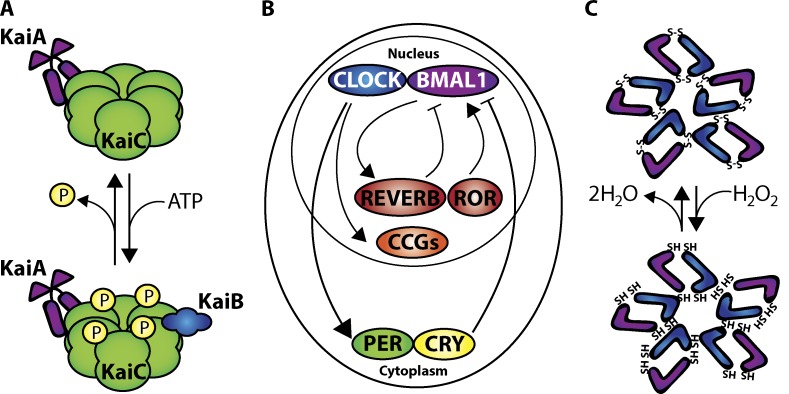
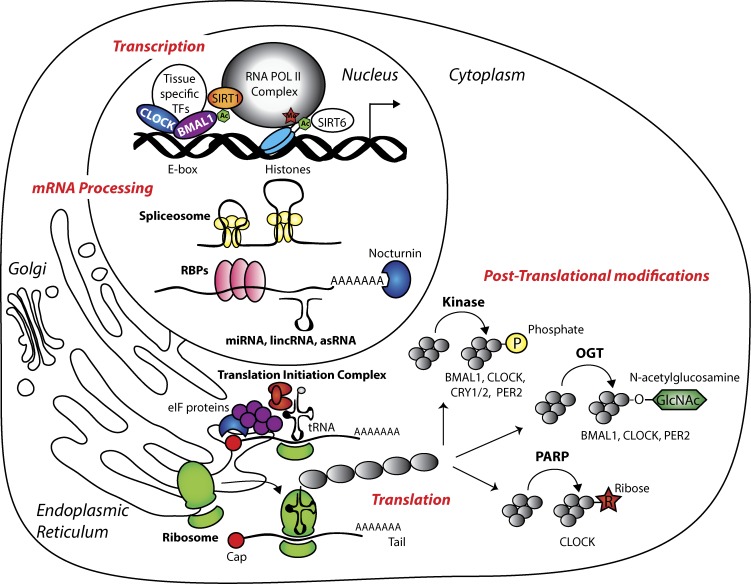
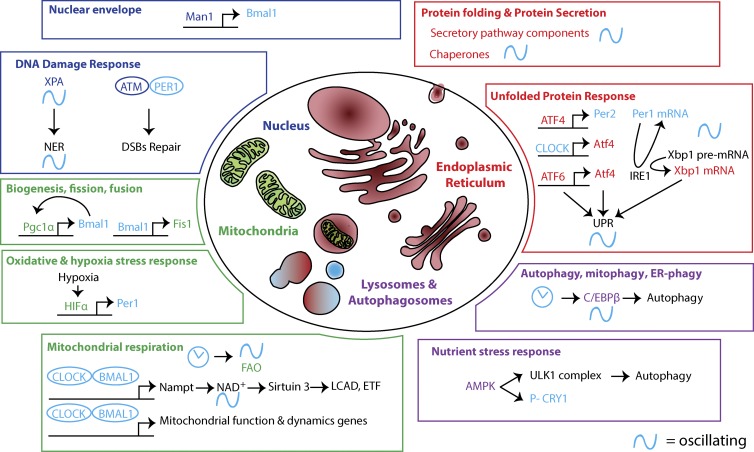
Circadian clocks are cell-autonomous timing mechanisms that organize cell functions in a 24-h periodicity. In mammals, the main circadian oscillator consists of transcription-translation feedback loops composed of transcriptional regulators, enzymes, and scaffolds that generate and sustain daily oscillations of their own transcript and protein levels. The clock components and their targets impart rhythmic functions to many gene products through transcriptional, posttranscriptional, translational, and posttranslational mechanisms. This, in turn, temporally coordinates many signaling pathways, metabolic activity, organelles' structure and functions, as well as the cell cycle and the tissue-specific functions of differentiated cells. When the functions of these circadian oscillators are disrupted by age, environment, or genetic mutation, the temporal coordination of cellular functions is lost, reducing organismal health and fitness.
© 2016 Chaix et al.
Figures
References
-
- Atger F., Gobet C., Marquis J., Martin E., Wang J., Weger B., Lefebvre G., Descombes P., Naef F., and Gachon F.. 2015. Circadian and feeding rhythms differentially affect rhythmic mRNA transcription and translation in mouse liver. Proc. Natl. Acad. Sci. USA. 112:E6579–E6588. 10.1073/pnas.1515308112 - DOI - PMC - PubMed
Publication types
MeSH terms
Grants and funding
LinkOut - more resources
Full Text Sources
Other Literature Sources