


Early physical and functional rehabilitation of trauma patients in the Médecins Sans Frontières trauma centre in Kunduz, Afghanistan: luxury or necessity?
- PMID: 27738078
- PMCID: PMC5181549
- DOI: 10.1093/inthealth/ihw039
Early physical and functional rehabilitation of trauma patients in the Médecins Sans Frontières trauma centre in Kunduz, Afghanistan: luxury or necessity?
Abstract
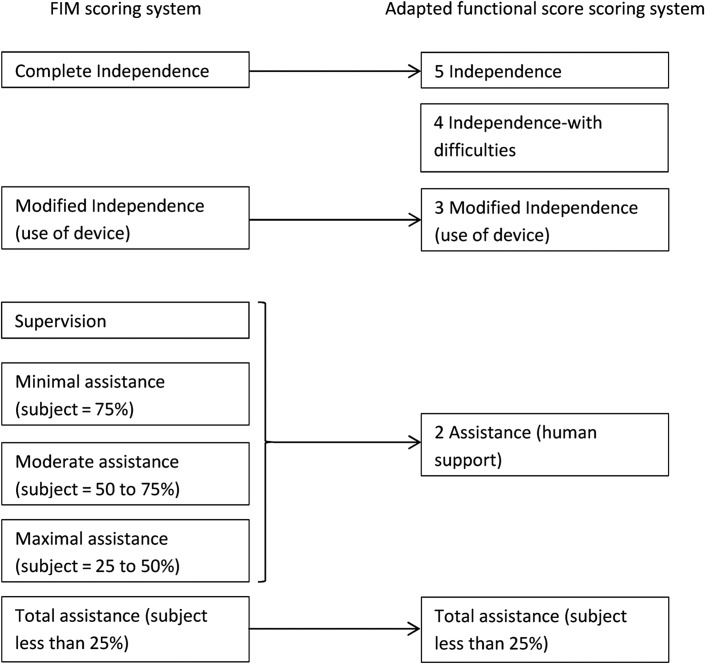
Background: In Afghanistan, Médecins Sans Frontières provided specialised trauma care in Kunduz Trauma Centre (KTC), including physiotherapy. In this study, we describe the development of an adapted functional score for patient outcome monitoring, and document the rehabilitation care provided and patient outcomes in relation to this functional score.
Methods: A descriptive cohort study was done, including all patients admitted in the KTC inpatient department (IPD) between January and June 2015. The adapted functional score was collected at four points in time: admission and discharge from both IPD and outpatient department (OPD).
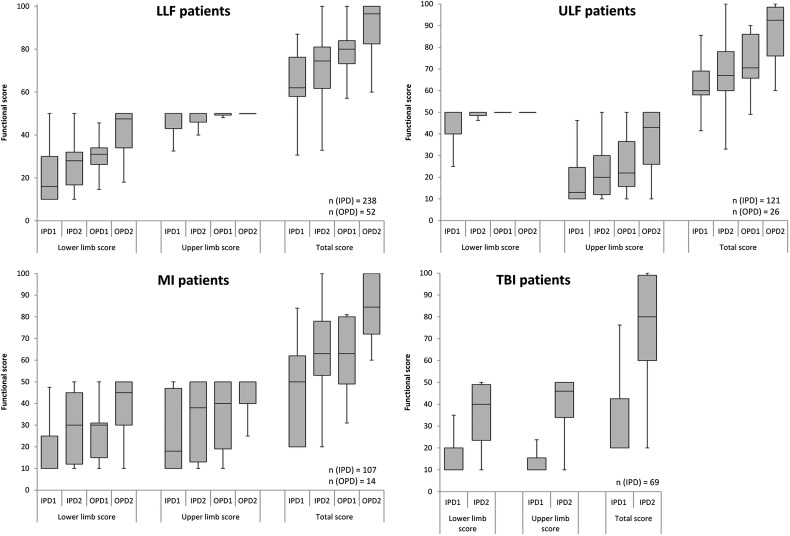
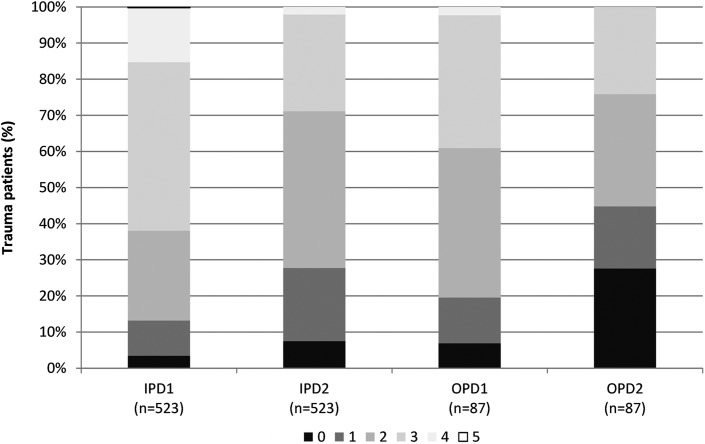
Results: Out of the 1528 admitted patients, 92.3% (n = 1410) received at least one physiotherapy session. A total of 1022 patients sustained either lower limb fracture, upper limb fracture, traumatic brain injury or multiple injury. Among them, 966 patients received physiotherapy in IPD, of whom 596 (61.7%) received IPD sessions within 2 days of admission; 696 patients received physiotherapy in OPD. Functional independence increased over time; among patients having a functional score taken at admission and discharge from IPD, 32.2% (172/535) were independent at discharge, and among patients having a functional score at OPD admission and discharge, 79% (75/95) were independent at discharge.
Conclusions: The provision of physiotherapy was feasible in this humanitarian setting, and the tailored functional score appeared to be relevant.
Keywords: Function; MSF; Operational Research; Outcome measure; Rehabilitation; Trauma.
© The Author 2016. Published by Oxford University Press on behalf of Royal Society of Tropical Medicine and Hygiene.
Figures
References
-
- Landry MD, O'Connell C, Tardif G, Burns A.. Post-earthquake Haiti: the critical role for rehabilitation services following a humanitarian crisis. Disabil Rehabil 2010;32:1616–8. - PubMed
-
- May-Teerink T. A survey of rehabilitative services and people coping with physical disabilities in Uganda, East Africa. Int J Rehabil Res 1999;22:311–6. - PubMed
-
- WCPT WCPT Report : The Role of Physical Therapists in Disaster Management. London: World Confederation for Physical Therapy; 2016. http://www.wcpt.org/sites/wcpt.org/files/files/resources/reports/WCPT_Di... [accessed 1 April 2016].
-
- Rathore FA, Gosney JE, Reinhardt JD et al. Medical rehabilitation after natural disasters : why, when, and how . Arch Phys Med Rehabil 2012;93:1875–81. - PubMed
Publication types
MeSH terms
LinkOut - more resources
Full Text Sources
Other Literature Sources
Medical
Miscellaneous
